


Skillsoft
Skillsoft is a global leader in corporate learning, providing digital training and education solutions to help businesses improve workforce productivity, reduce risk, and increase innovation.

.webp)
Few shifts have moved through the HR function faster than the arrival of intelligent automation. What began three years ago as experimental resume-screening pilots has, by 2026, become a foundational layer of modern talent operations—reshaping how organizations source, hire, develop, retain, and promote their people. AI talent management is no longer a competitive edge for early adopters; it is the operating baseline for HR teams that intend to scale their impact without scaling their headcount. The question facing HR leaders today is not whether to adopt intelligent systems, but how to deploy them strategically, responsibly, and in a way that genuinely improves outcomes for both the organization and the workforce.
This guide is written for CHROs, VPs of People, Talent Acquisition heads, and HR business partners who need a clear, practical, executive-grade view of where AI fits in the talent lifecycle today, what it can credibly deliver, where it must not be trusted alone, and how to build the governance frameworks that turn intelligent automation into a long-term advantage rather than a short-term liability. We will cover the most mature use cases, the measurable benefits, the unavoidable risks, and the implementation playbook that separates successful AI talent transformations from cautionary tales.
By the end of this guide, you will have a complete map of the AI-enabled talent function in 2026—and the framework to decide which capabilities your organization should invest in first, second, and not yet.
The phrase covers a wide range of capabilities, and one of the first jobs of any HR leader evaluating this space is to develop a precise mental model of what intelligent systems can and cannot do. Loose definitions create unrealistic expectations on both ends—either overestimating what a chatbot can handle or underestimating what a well-tuned skills-matching model can accomplish at enterprise scale.
At its core, the use of AI in talent management means deploying machine learning, natural language processing, generative AI, and predictive analytics across the workforce lifecycle to augment human decisions, automate repetitive work, and surface patterns that would be invisible to manual analysis. The technologies behind these capabilities differ significantly, and so do the maturity levels at which they can be safely deployed today.
Modern HR teams encounter four broad categories of intelligent systems. Understanding the distinction matters because the governance, risk profile, and ROI expectations vary dramatically across them.
Machine learning models that forecast outcomes—attrition risk, hiring success probability, time-to-competency. The most mature category, with proven ROI when models are properly trained and continuously monitored.
Models that produce content—job descriptions, learning materials, interview questions, performance review summaries. The fastest-growing category, dramatically reducing administrative work but requiring strong human-review processes.
Systems that connect people to roles, learning paths, mentors, or internal opportunities based on skills and goals. Mature in recruiting; rapidly expanding into internal mobility and L&D personalization.
Chatbots and virtual agents that handle policy questions, schedule interviews, deliver onboarding content, and support employee self-service. High-volume use case with strong cost savings and improved employee experience when designed well.
All four categories rely on data quality, governance, and a clear use case definition to deliver value. The difference lies in whether they replace or augment human judgment. Predictive AI and recommendation systems typically inform human decisions—they generate insights, but the final call rests with a person. Generative AI produces outputs that humans then review and approve. Conversational AI handles interactions within its defined scope autonomously, with escalation paths to human staff for anything outside its design.
This distinction matters because the right governance model differs by category. A bias audit for a predictive attrition model looks very different from a content quality check on AI-generated learning material, which in turn differs from the privacy and accuracy requirements for an HR chatbot. Treating "AI" as one homogenous capability creates governance gaps that come back to haunt organizations later.
The fastest-progressing HR teams in 2026 are not the ones deploying the most AI tools—they are the ones with the clearest map of which AI category fits which talent decision. A 2025 Mercer survey found that organizations with explicit AI capability frameworks were 3.2× more likely to report measurable ROI from their HR AI investments than those deploying tools opportunistically.
The most accurate way to understand the impact of ai talent management is to walk the talent lifecycle stage by stage. AI is not deployed evenly across HR—some stages are now deeply augmented by intelligent systems, while others remain largely manual. Knowing which is which helps HR leaders sequence investments and set realistic expectations with executive stakeholders.
AI analyzes historical hiring patterns, business growth signals, and external labour market data to forecast which roles will be needed and when. Predictive workforce planning surfaces hiring needs months earlier than traditional manual processes, giving talent acquisition teams runway to source rather than react.
Maturity: Mid · ROI: HighSourcing platforms use AI to identify passive candidates across thousands of sources, match them to open roles based on skills rather than keywords, and rank prospect lists by likelihood of interest and fit. This is one of the most mature AI use cases—and the source of the largest immediate productivity gains for recruiting teams.
Maturity: High · ROI: HighAI-powered resume screening, structured skills assessments, and asynchronous video analysis dramatically reduce time-to-screen and improve consistency across hiring managers. The risk profile is highest here—bias and regulatory exposure require strong human oversight—but the productivity uplift is undeniable when governance is in place.
Maturity: High · ROI: High · Risk: HighPersonalized onboarding journeys, AI-generated welcome content, intelligent tutorial sequencing, and conversational support agents shorten the time between offer acceptance and full productivity. Modern AI-driven onboarding programs are now adapting in real time to each new hire's pace and prior skill set.
Maturity: Mid · ROI: HighAI-powered learning experience platforms generate personalized learning paths, recommend content based on role requirements and current skill profiles, and surface micro-learning opportunities in the flow of work. The AI-driven LXP is one of the most clearly ROI-positive AI investments in the talent stack.
Maturity: High · ROI: Very HighPredictive models flag retention risk months before resignation, sentiment analysis surfaces engagement issues from open-ended survey data, and AI-assisted performance reviews reduce manager bias and improve feedback quality. Sensitive use cases that require strong privacy and transparency frameworks.
Maturity: Mid · ROI: High · Risk: MediumAI matches employees to open internal roles based on skills profiles, suggests stretch opportunities, and recommends development steps to close the gap between current and target roles. This is where AI starts to materially shift retention economics—employees with visible internal pathways stay significantly longer.
Maturity: Mid · ROI: Very HighThe most useful conversations about AI and talent management start not with technology capabilities but with measurable business outcomes. The benefits described below come from documented case studies and industry surveys conducted across 2024 and 2025, representing the experience of organizations that have moved beyond the pilot phase into operational deployment.
The most immediate benefit is administrative time recovery. Tasks that previously consumed hundreds of hours per quarter—resume screening, interview scheduling, onboarding content generation, policy question handling, performance review summarization—are now substantially automated. The recovered capacity does not eliminate HR roles; it shifts them upward, freeing senior practitioners to focus on strategy, manager coaching, and the relational work that AI cannot do.
When properly governed, AI improves the consistency and accuracy of high-volume talent decisions. Structured assessments produce more reliable signals than unstructured interviews. Skills-based matching surfaces qualified candidates who would have been filtered out by credential screening. Predictive retention models flag at-risk employees in time to intervene, rather than producing post-mortem analyses after departures.
| Metric | Pre-AI Baseline | Post-AI (Mature) | Improvement |
|---|---|---|---|
| Time-to-screen (per role) | 14 days | 3 days | −78% |
| Cost-per-hire | $5,200 | $3,400 | −35% |
| Time-to-productivity (onboarding) | 92 days | 61 days | −34% |
| Internal mobility rate | 22% | 41% | +86% |
| 12-month retention (new hires) | 71% | 83% | +12 pts |
| L&D engagement (active learners) | 34% | 72% | +112% |
| HR admin hours / 1,000 employees / week | 340 hrs | 185 hrs | −46% |
These numbers are not aspirational projections. They represent the median performance improvements reported by organizations that have completed end-to-end AI talent transformations across at least 18 months of operation. The variance is real—some organizations exceed these benchmarks substantially, others fall short—and the difference correlates closely with the quality of governance, data infrastructure, and change management investment.
"The headline isn't that AI is faster than us. It's that AI is faster and more consistent, while we get our time back for the work that requires judgment."
— VP of Talent Acquisition, Global Financial Services Firm, 2025Beyond the productivity metrics, mature AI talent systems deliver experience improvements that show up in engagement scores and exit interview data but are harder to translate into financial terms. These include faster, more relevant responses to HR questions, learning experiences that adapt to individual pace and skill level, visible internal career pathways with clear development steps, and reduced friction in routine HR transactions. Employees in organizations with mature AI-enabled HR report a meaningful uplift in perceived fairness and responsiveness compared to organizations relying on legacy systems.
Every advantage delivered by AI in talent management comes with a corresponding risk profile that must be actively managed. The organisations that have stumbled in their AI deployments did not do so because the technology failed—they stumbled because they treated AI as a productivity tool while ignoring its implications for fairness, transparency, employee trust, and legal exposure. The risks below are not theoretical. Each one has produced documented failure cases in major organisations over the past three years.
AI models trained on historical hiring data can reflect and amplify the biases present in that data. Unaudited screening models have been shown to disadvantage women, older candidates, and applicants from non-traditional backgrounds in multiple documented cases.
When employees cannot understand how AI is contributing to decisions that affect them—hiring outcomes, performance reviews, learning recommendations—trust erodes quickly. Black-box decisions are difficult to defend in both employee relations and legal contexts.
AI talent systems consume large volumes of personal data—resumes, performance data, communication patterns, behavioural signals. Without explicit consent frameworks and data minimisation, organisations risk regulatory exposure under GDPR, India's DPDP Act, and similar frameworks worldwide.
The EU AI Act classifies many HR AI use cases as "high-risk" with strict documentation, testing, and human oversight requirements. New York City Local Law 144, Illinois AI Video Interview Act, and emerging Indian AI regulations add further compliance complexity.
When recruiters rely on AI screening without periodic manual review, their own evaluation skills atrophy. When managers delegate performance interpretation to AI summaries, they lose direct contact with employee context. Both are real, documented effects.
If employees discover AI is being used in talent decisions without disclosure—or worse, in ways they perceive as unfair—the trust damage extends well beyond the specific use case and can affect engagement across the organisation.
In 2024, a major retailer faced significant reputational damage and regulatory action when its AI-driven internal mobility system was found to systematically underweight applications from employees who had taken parental leave. The model had learned the pattern from historical promotion data—where parental leave had been an informal disadvantage—and was simply automating the existing bias at scale. The system was suspended, but the damage to employee trust took 18 months to repair.
Mitigating these risks does not require slowing down AI adoption. It requires building governance into the foundation of every deployment. The most effective governance models share five elements.
Most organizations do not need an enterprise-wide AI transformation strategy. They need a credible 90-day plan that proves value on a defined use case, builds organizational confidence, and creates the foundation for sequenced expansion. The roadmap below is structured to do exactly that—and to do it without the catastrophic risk of betting everything on a single large deployment.
One use case, structured measurement, governance baseline established, change management for the HR pilot team, executive update at 90 days.
Scale the proven use case across the function, add one to two adjacent use cases, integrate with HRIS and learning systems, broaden HR team training.
AI capabilities embedded across the talent lifecycle, full governance framework operational, ROI reporting integrated with HR strategy reviews, and continuous improvement cadence.
For most HR teams, the answer is buy—or more precisely, buy a platform that includes AI capabilities natively. Building custom AI talent systems requires data science expertise, infrastructure investment, and ongoing model maintenance that almost no HR function can sustain efficiently. The exceptions are organizations with unique talent processes that justify custom development and the data science capability to support it. For everyone else, a modern AI-powered talent and learning platform delivers most of the benefit at a fraction of the cost and risk.
The single biggest predictor of successful AI deployment is not technical sophistication—it is disciplined scope. Organizations that pilot narrowly, measure rigorously, and expand sequentially consistently outperform those that attempt enterprise-wide rollouts. Start with one well-defined use case, do it well, then earn the right to expand.
Among all the use cases reviewed in this guide, three deliver returns that compound rather than plateau: skills intelligence, predictive retention, and internal mobility. These are the areas where investment today builds an organizational asset that becomes more valuable every quarter, rather than a productivity tool that delivers fixed efficiency gains.
Every advanced talent AI use case ultimately depends on the quality of skills data underneath it. AI matching cannot work without a skills taxonomy. AI learning recommendations cannot personalize without a current skill profile per learner. AI internal mobility cannot operate without verified, role-mapped competency data. This is why AI-powered skills benchmarking is increasingly the first investment HR leaders make when building toward an integrated talent AI strategy.
Organizations that build a strong skills data foundation early discover that the same data unlocks value across multiple use cases: hiring becomes more accurate, learning becomes more personalized, internal mobility becomes operational, succession planning becomes data-driven, and workforce planning becomes predictive. One data investment compounds across every downstream capability.
Traditional retention work begins after an employee resigns. AI-driven retention work begins six to nine months before. Predictive models trained on engagement signals, learning activity, performance trends, manager relationship changes, and internal mobility activity can identify employees at elevated risk of leaving with meaningful lead time—long enough for a manager conversation, a development opportunity, or a role adjustment to change the trajectory.
The economic case is unambiguous. Replacing a mid-level professional employee costs 50% to 150% of their annual salary. Even a modest reduction in unwanted attrition—from 22% to 17%, for example—delivers millions of dollars in retained capability for organizations above a few hundred employees. Integrated employee development and retention systems with embedded AI signals are now the operational backbone of this capability.
Internal mobility is the use case where AI most clearly transforms HR economics. When every employee has a verified skill profile, and every open role has clearly defined skill requirements, internal matching becomes an automated process rather than a serendipitous one. The financial impact is significant—internal promotions cost a fraction of external hires—but the longer-term cultural impact is even larger.
"We used to call internal mobility a retention strategy. Now we call it a talent operating system. The shift in language reflects the shift in capability."
— CHRO, Asia-Pacific Technology Company, 2025Evaluating talent AI platforms in 2026 requires looking past the marketing surface and asking a specific set of technical, governance, and operational questions. Vendor demos are excellent at showing the bright-side capabilities. The checklist below is designed to surface the questions that matter once the demo ends and procurement begins.
Vendors who answer these questions cleanly tend to be the ones whose platforms survive a 24-month integration and continue to deliver value. Vendors who deflect or generalize on these questions tend to be the ones whose deployments quietly stall after the initial launch enthusiasm fades.
The capabilities that feel cutting-edge in 2026 will be table stakes by 2028. HR leaders building strategy today should anticipate four shifts that are already visible in early production deployments and will be widespread within three years.
AI agents will handle end-to-end multi-stage workflows—sourcing through interview scheduling, full onboarding journeys, learning path management—with human oversight rather than human execution at every step.
Employees will interact with most HR services through conversational interfaces first, with web and form-based interfaces serving as escalation paths rather than primary channels.
Skill profiles will update automatically based on work activity, learning engagement, and project involvement—eliminating the assessment refresh cycle that limits today's skills data freshness.
AI governance systems will monitor talent decisions continuously for bias, regulatory compliance, and policy adherence—shifting governance from periodic audit to continuous assurance.
The organizations that benefit most from these three-year shifts will be those that invest in AI in talent management infrastructure now—skills taxonomies, governance frameworks, integrated data layers—rather than those waiting for the technology to mature further. The platform investments made in 2026 are the foundation on which 2028 capabilities will run.
The most important thing for HR leaders to internalize about AI talent management in 2026 is that the technology is no longer the limiting factor. The platforms exist. The capabilities are real. The ROI is documented. What separates organizations that genuinely transform their talent function from those that simply add another vendor to the stack is not the choice of technology—it is the discipline of governance, the clarity of use case scope, and the commitment to keeping human judgment at the centre of decisions that affect people's careers.
AI will continue to absorb the repetitive, high-volume, pattern-matching work that has historically consumed disproportionate HR capacity. That is the right outcome. It frees HR teams to invest more deeply in the work that requires uniquely human capabilities: building manager capability, designing culture, navigating complex employee situations with empathy and judgment, and shaping the long-term workforce strategy that no algorithm can write for you.
The HR function that emerges from this transition will be smaller in headcount but larger in strategic impact. It will be more data-driven without being mechanistic. It will be faster without being careless. And it will be more measurably valuable to the business than the HR function of even five years ago—because every talent decision will be backed by data, every outcome will be tracked, and every investment will be defensible.
If your organization is ready to take the next step on this journey, explore how Skills Caravan's AI-powered learning experience platform and corporate training solutions give HR leaders the integrated foundation to build skills intelligence, retention analytics, and internal mobility capabilities responsibly and at scale.
Everything CHROs, VPs of People, and HR business partners need to know about deploying AI across the talent lifecycle responsibly in 2026.
AI in talent management refers to the use of artificial intelligence technologies—including machine learning, natural language processing, and generative AI—to automate, augment, and improve decisions across the talent lifecycle. This includes sourcing, screening, hiring, onboarding, learning and development, performance management, internal mobility, and retention. AI enables HR teams to process vastly larger volumes of talent data, identify patterns that would be invisible to manual analysis, and make better-informed decisions at every stage.
AI is used across talent management for resume screening and candidate matching, skills assessment and benchmarking, personalized learning path recommendations, predictive attrition modeling, internal mobility matching, performance review analysis, succession planning, employee sentiment analysis, and conversational HR support. The most mature use cases are in recruitment screening and learning personalization, while predictive retention and AI-assisted career pathing are growing rapidly in adoption among forward-looking organizations.
The benefits include faster hiring (50–70% reduction in time-to-screen), better role-to-skill matching, personalized employee development at scale, earlier identification of retention risks, more accurate succession planning, reduced administrative burden on HR teams, and the ability to surface patterns in employee data that inform strategic workforce decisions. Organizations using mature AI talent systems consistently report improvements in hiring quality, retention rates, and L&D ROI.
Key risks include algorithmic bias (AI systems can reflect or amplify bias present in training data), lack of transparency in automated decisions, employee privacy concerns, over-reliance on AI recommendations without human judgment, regulatory non-compliance in jurisdictions with strict AI hiring laws, and the potential for poorly designed systems to make worse decisions than the human processes they replace. Responsible deployment requires explicit governance frameworks, regular bias auditing, and clear human-in-the-loop checkpoints.
AI improves hiring by automating resume screening at scale, matching candidates to roles based on skills rather than credentials, conducting initial structured assessments, scheduling interviews intelligently, reducing time-to-hire by 40–60%, and surfacing internal candidates who might otherwise be overlooked. AI also helps recruiters identify passive candidates, write more inclusive job descriptions, and predict which candidates are most likely to accept offers and succeed in the role.
No. AI augments HR professionals rather than replacing them. It handles repetitive administrative tasks, processes large volumes of data, and surfaces insights that inform decisions—but the final judgment on hiring, promotion, performance, and people-related matters must remain with humans. The most effective deployments position AI as a productivity tool that frees HR teams to focus on strategic, relational, and ethically sensitive work that requires human judgment.
Responsible implementation requires: a clear governance framework defining acceptable use cases, regular bias auditing of AI models, transparency about when AI is being used in talent decisions, mandatory human review for high-stakes outcomes (hiring, promotion, termination), explicit data privacy protections, compliance with regional AI regulations such as the EU AI Act, and ongoing employee training on responsible AI use. Organizations should also establish appeal mechanisms for AI-influenced decisions.
Beyond 2026, AI in talent management will move from automation to genuine augmentation—with AI agents handling complex workflows like multi-stage recruitment, AI-generated personalized career roadmaps for every employee, real-time skills intelligence that updates continuously, predictive workforce planning at the role level, and conversational HR interfaces that employees use as their primary interaction point. The organizations that build the right data infrastructure and governance frameworks in 2026 will be positioned to benefit the fastest from these advances.
Skills Caravan delivers AI-driven skills benchmarking, personalized learning, and integrated talent intelligence—built with the governance and transparency HR leaders require in 2026.
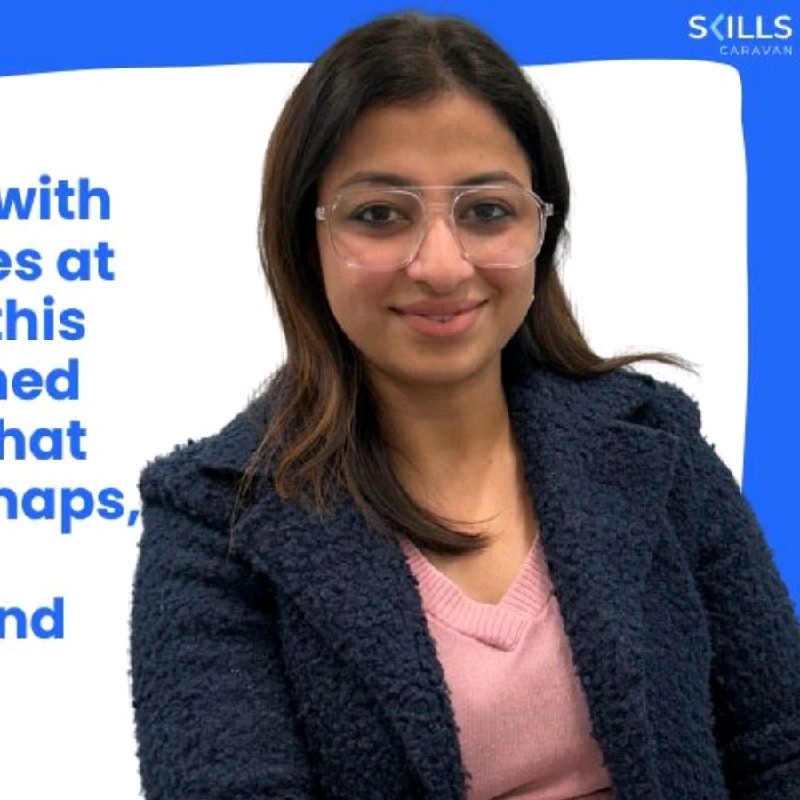

Shreya Verma is the VP of Product and Customer Success at Skills Caravan, where she leverages her decade-long expertise in learning & development (L&D) and human resources to shape an impactful, learner-centric platform. Her deep understanding of user needs, honed through hands-on L&D roles in leading companies, empowers her to translate insights into high-engagement interventions. At Skills Caravan, she bridges the gap between technology and people, ensuring learning experiences are not only effective but genuinely meaningful.


.png)
.png)
.png)
%20(1).png)
.png)


.webp)






Skillsoft is a global leader in corporate learning, providing digital training and education solutions to help businesses improve workforce productivity, reduce risk, and increase innovation.

FinShiksha provides a practical and industry-relevant approach to finance education, with courses designed by industry experts and delivered through interactive and engaging methods.

Wall Street Prep offers best-in-class financial training for aspiring finance professionals and corporate clients.

Udemy Business offers an unparalleled learning experience for organizations looking to upskill their workforce with over 155,000 courses taught by expert instructors.


.webp)


