


Skillsoft
Skillsoft is a global leader in corporate learning, providing digital training and education solutions to help businesses improve workforce productivity, reduce risk, and increase innovation.


.webp)
If you are evaluating the best LMS in India for your organisation in 2026, you are buying into a market that grew from ₹58 crore in 2023 to a projected USD 34.64 billion in corporate training spend by 2034 — yet 63 percent of Indian employers still report that skill gaps are the single biggest barrier to growth. The platform you pick determines whether that gap closes or widens.
This guide compares ten Indian and global LMS platforms head-to-head — Skills Caravan, Disprz, TalentLMS, Zoho Learn, Keka LMS, Moodle, Docebo, iSpring Learn, Adobe Learning Manager, and Cornerstone OnDemand. We cover what each is genuinely good at, where each falls short for Indian buyers, and how each performs against the criteria that actually matter for HR teams in Bengaluru, Mumbai, Delhi NCR, Chennai, and Hyderabad — POSH compliance automation, multilingual delivery, Darwinbox and Keka integration, mobile and offline learning, and INR pricing transparency.
You will leave this article with: a named platform-by-platform comparison, a feature matrix scored against Indian-workforce realities, INR pricing benchmarks for SMB, mid-market, and enterprise tiers, a five-step buying framework, and a final recommendation grounded in real deployments.
In this guide
Platform-by-platform breakdown · Comparison matrix · Indian-buying criteria · SMB vs Enterprise needs · INR pricing in 2026 · 5-step selection framework · 8 FAQs · Final recommendation
.webp)
The ten platforms below were selected on a single rule: each must be in active use at Indian organisations of at least 100 employees, with documented support for POSH compliance, regional-language content, or local HRIS integration. We list each platform with its primary strength, Indian-context fit, INR pricing where published, and the honest limitations Indian buyers should weigh before signing. Order reflects suitability for Indian workforce realities, not a global feature ranking.
Skills Caravan is an AI-powered Learning Experience Platform (LXP + LMS) built in India for Indian organisations. It is in active use at Hero MotoCorp, Tata Mutual Funds, Hyundai Glovis, and Wagh Bakri, covering manufacturing, BFSI, logistics, and FMCG workforces. The platform combines skills benchmarking, multilingual navigation, POSH workflow automation, and AI-recommended learning paths in one configurable system.
Skills Caravan's AI-powered LXP makes it particularly strong for organisations moving beyond basic LMS to skills-based learning — with native support for Indian HRIS platforms like Darwinbox and Keka.
Disprz is a Chennai-headquartered, skills-led learning platform that has grown rapidly across India and Southeast Asia. It is built around skills frameworks, micro-learning, and frontline upskilling, with strong adoption in BFSI, retail, and pharma. Disprz is one of the few Indian platforms that ships with a mature mobile-first interface for frontline workers.
TalentLMS, made by Epignosis, is a Greece-based cloud LMS popular with Indian SMBs that want a no-fuss, fast-to-launch training platform. It ships with a clean interface, gamification, and a ready content library covering compliance basics. Implementation in under two weeks is typical for organisations under 500 users.
Zoho Learn is part of the Chennai-based Zoho One suite, which is already in use across thousands of Indian SMBs. The LMS module focuses on knowledge management plus structured course delivery, integrates tightly with Zoho People, Zoho CRM, and Zoho Desk, and is priced aggressively for the Indian SMB segment. For organisations already on Zoho One, it is often the lowest-friction LMS option.
Keka launched as an Indian HRIS platform and added learning as part of its broader people operations suite. Keka LMS is best understood as a learning module bundled with the wider Keka HR platform — strongest when training is a secondary need alongside payroll, leave, performance, and attendance. It is widely adopted across mid-market Indian IT services and professional firms.
Moodle is the world's most widely deployed open-source LMS, originally built for higher education and now used by enterprises and government bodies across India. Licence cost is zero, which makes it tempting for budget-conscious Indian buyers, but the trade-off is implementation and customisation effort. Most Indian Moodle deployments run through certified partners, not the in-house IT team.
Docebo is an Italian-Canadian global LMS popular with multinational enterprises and software companies operating in India. It is strong in extended-enterprise scenarios — customer training, partner enablement, and reseller education — and ships with AI-powered course recommendations. For Indian arms of global companies that already have Docebo at headquarters, adoption is straightforward.
iSpring Learn pairs a straightforward cloud LMS with iSpring's well-regarded authoring suite (iSpring Suite). It is widely used by Indian SMBs and mid-market firms in BFSI, manufacturing, and healthcare for compliance training where SCORM-based courses are still the norm. Mobile and offline learning are first-class — relevant for frontline use in India.
Adobe Learning Manager (formerly Captivate Prime) is Adobe's enterprise LMS, well known for AI-powered recommendations, polished UI, and strong content authoring through Captivate. It is used by Indian enterprises in IT services, retail, and BFSI that already standardise on Adobe Creative Cloud. The platform handles extended enterprise scenarios well.
Cornerstone is one of the most established global LMS vendors, with a deep talent-suite product (learning, performance, recruiting, succession). In India, it is most often found at large enterprises in IT services, BFSI, and global captive centres that need an end-to-end talent platform. The learning module alone is a heavy-weight choice — strong on compliance, certifications, and complex audit trails.
Use this matrix as a one-glance overview before diving into platform-by-platform calls. Mobile/Offline, Multilingual, POSH Module, and Indian HRIS Integration are the four columns that most often decide an Indian buying decision — pricing matters, but it rarely determines fit on its own.
| Platform | Best For | Mobile / Offline | Multilingual | POSH Module | Indian HRIS Integration | Pricing Model | Free Trial |
|---|---|---|---|---|---|---|---|
| Skills Caravan | AI-powered LXP for Indian mid-market & enterprise | ✓ Native | ✓ Multi-language | ✓ Built-in | ✓ Darwinbox, Keka | Custom INR | ✓ Demo |
| Disprz | Skills-led upskilling at scale | ✓ Mobile-first | ✓ Yes | ✓ Yes | ~ Major HRIS | Custom INR/USD | ✓ Demo |
| TalentLMS | Indian SMBs (50–500 users) | ✓ Mobile | ~ Limited Indic | ~ Upload SCORM | ~ API-only | Per active user (USD) | ✓ Free tier |
| Zoho Learn | Zoho-suite SMBs | ✓ Yes | ✓ Yes | ~ Configurable | ✓ Zoho People | Per user (INR) | ✓ 15-day |
| Keka LMS | Indian HRIS-first companies | ✓ Yes | ~ EN + selected | ✓ Built-in | ✓ Native (Keka) | Bundled with HR (INR) | ✓ Demo |
| Moodle | Universities & large enterprises | ~ App available | ✓ Community packs | ✗ Custom build | ✗ Plugin-based | Open source + impl. | ✓ Free (self-host) |
| Docebo | Global enterprises & extended-enterprise | ✓ Yes | ✓ Yes | ~ Configurable | ~ API-only | Custom (USD) | ✓ Demo |
| iSpring Learn | SCORM-heavy compliance for SMB/mid | ✓ Offline-first | ~ Limited Indic | ~ Upload SCORM | ~ API-only | Per user (USD) | ✓ 30-day |
| Adobe Learning Manager | Adobe-stack enterprises | ✓ Yes | ✓ Yes | ~ Configurable | ~ API-only | Custom (USD) | ✓ Demo |
| Cornerstone OnDemand | Large enterprises (2,000+) needing talent suite | ✓ Yes | ✓ Yes | ~ Configurable | ~ Through SAP/Workday | Custom (USD) | ✓ Demo |
How to read this: ✓ = native / first-class support; ~ = partial, configurable, or workaround required; ✗ = not natively available. POSH module "configurable" means SCORM upload of a third-party POSH course is supported but no built-in workflow. Indian HRIS sync via API-only typically requires middleware or custom integration work.
The six criteria below decide whether your platform succeeds or quietly underperforms in the Indian context. Each one ties directly to a real-world legal, operational, or workforce reality that does not apply the same way in the US or Europe.
The Sexual Harassment of Women at Workplace (Prevention, Prohibition and Redressal) Act, 2013 — POSH Act — mandates that every Indian organisation with 10 or more employees conduct sexual-harassment prevention training and constitute an Internal Complaints Committee (ICC). An LMS must automate enrolment of every new joiner, schedule annual refreshers, track completion to the individual learner level, issue date-stamped certificates, and produce audit-ready reports for the ICC and statutory inspections. Manual tracking on spreadsheets is not defensible if a complaint is filed.
The four consolidated Labour Codes — Code on Wages, Industrial Relations, Social Security, and Occupational Safety, Health and Working Conditions — bring obligations for safety, hazard, and skill training across factories, warehouses, and offices. HR teams need an LMS that can schedule role-based mandatory training, document attendance with timestamps, and generate sector-specific evidence for inspections. The Occupational Safety, Health and Working Conditions (OSH) Code in particular pushes documented safety training to the foreground for manufacturing, logistics, and construction.
The default Indian HRIS stack in 2026 is Darwinbox, Keka, Zoho People, and greytHR — with global tools like SAP SuccessFactors and Workday present in the upper enterprise tier. Native integration to these platforms means new hires appear in the LMS automatically with the right department, manager, and location, and training assignments update as the org chart changes. Without native sync, HR teams end up reconciling CSV exports every week, which is the single most common cause of stale LMS data in Indian deployments.
India recognises 22 official languages, and a frontline workforce across Maharashtra, Tamil Nadu, West Bengal, Karnataka, and Uttar Pradesh expects content in their first language — not English. At minimum, your LMS should deliver content and interface in Hindi, Tamil, Telugu, Marathi, and Bengali; for FMCG, retail, BFSI, and manufacturing, add Kannada, Malayalam, Gujarati, and Punjabi. An English-only LMS rolls out cleanly to head office but stalls at the field level — which is where 70 percent of training-hours actually need to land.
India's manufacturing, retail, logistics, and field-sales workforce is overwhelmingly mobile-first, and large portions work in factories, warehouses, and rural areas with patchy connectivity. Offline mobile learning is non-negotiable — workers must be able to download a module on the depot Wi-Fi, complete it on a delivery route, and sync results when they next reach a signal. The app should run on entry-level Android phones with under 50MB footprint. Browser-only platforms exclude the largest learner segment in the country.
The subscription line item is rarely the largest cost. Implementation, content migration, localisation into Indian languages, integration with HRIS, manager enablement, and ongoing support all add up — and open-source platforms like Moodle that show zero licence cost can carry ₹2-8 lakh in implementation and ongoing partner fees. Calculate a three-year total cost of ownership before signing. A ₹120 per user/month SaaS LMS with native Indian HRIS sync often beats a ₹50 per user/month platform that needs ₹6 lakh of integration work.
Related deep-dive
For a detailed walk-through of compliance training requirements, audit trails, and reporting workflows, see our guide to compliance training software for regulated industries.
The same vendor can be wrong for a 200-person Pune services firm and exactly right for a 4,000-person Mumbai bank. Buying decisions split clearly on size and operating model — get this distinction right and the shortlist shrinks fast.
What an Indian SMB actually needs
For organisations between 50 and 500 employees, the priorities are affordable INR pricing, an implementation timeline under two weeks, an interface that a non-technical HR generalist can administer without IT support, and basic compliance tracking for POSH and induction. Most Indian SMBs do not need advanced analytics, skills graphs, or multi-tenant architecture in year one — they need a clean LMS that fires on day fifteen.
What an Indian enterprise actually needs
For organisations above 500 employees, the decisive criteria shift: native HRIS integration with Darwinbox, Keka, or SAP SuccessFactors; multi-tenant architecture for separate business units, geographies, or extended-enterprise audiences; advanced analytics tied to skills and performance; SCORM/xAPI for content portability; and rigorous audit trails for SEBI, RBI, or sector-specific regulators. Implementation is measured in two to four months, not two weeks, and change management is a project in itself.
Across both tiers, the connection between learning and retention is the same: when employees see a clear development path, they stay longer. We covered this with data in our deep-dive on how learning & development drives employee retention.
LMS quotes in India in 2026 span three pricing models, two currencies (INR for Indian vendors, USD for most global platforms), and a range that varies more than buyers expect — often two to three times for similar feature sets. Understand the model and the hidden costs before benchmarking the headline number.
Per registered user
You pay for every employee in the LMS database, whether they log in or not. Predictable for HR, expensive for organisations with high inactive headcount.
Per active learner
You pay only for users who logged in during the billing month. Better economics for organisations with seasonal or frontline workforces.
Annual flat licence
Fixed annual fee for unlimited users within a tier. Strong fit for enterprises with stable 1,000+ headcount and predictable budgeting cycles.
Hidden cost watch · Open-source LMS
Moodle's licence is free, but Indian enterprise implementations typically incur ₹2-8 lakh in setup and customisation through a certified partner, plus ongoing hosting (₹50,000+ per year on AWS Mumbai/Hyderabad) and partner support retainers. The total three-year TCO often exceeds a comparable SaaS LMS — the calculation is rarely "open source = free."
For CFO-level conversations on what learning investment actually returns, see our framework on the L&D metrics that matter to the CFO in 2026 — covers the productivity, retention, and skill-gap math finance teams use to evaluate LMS spend.
Skills Caravan offers flexible pricing based on team size and use case — book a free demo for a tailored quote.
The shortlist of platforms above is a starting point, not a verdict. Use this five-step framework to filter ten options down to two before you start booking demos — and to pressure-test those two with structured comparison rather than vendor charm.
Pick one of four primary jobs: onboarding (new joiners, induction, ramp-up), compliance (POSH, anti-bribery, sector-specific), upskilling (skills-based development for existing staff), or sales enablement (product, pitch, certification for the sales org). Platforms optimise for different jobs. Compliance-first buyers waste budget on AI skills features; skills-first buyers find pure compliance LMS too thin.
List every statutory or sector training mandate that applies to your business: POSH Act 2013 (universal, 10+ employees), the four consolidated Labour Codes (OSH for factories/warehouses; Social Security and Industrial Relations for documentation), SEBI and RBI for BFSI organisations, FSSAI for food and beverage, IRDAI for insurance. The LMS must support automated assignment, refresher cycles, and audit-ready exports for each.
Confirm your HRIS — Darwinbox, Keka, Zoho People, greytHR, SAP SuccessFactors, Workday — and ask each vendor to demonstrate the integration, not describe it. Native connector beats API-only. "Yes, we support it" should mean a live, pre-built data sync that updates within minutes when the org chart changes — not a scheduled CSV that someone reconciles on Friday afternoons.
Recruit a cross-section: one frontline worker, one mid-level manager, one senior leader, one non-technical HR generalist, and one IT admin. Have them try the mobile app (offline mode included), complete a sample course in a regional language, and submit feedback through a structured form. Two weeks is enough to surface 80 percent of the issues that demos never show.
Build a TCO model with these line items: annual subscription, implementation, content migration, localisation into Indian languages, integration with HRIS, ongoing support, internal admin headcount, and renewal escalations (typically 5-10 percent annually). The cheapest year-one quote often loses by year three once integrations and localisation costs land.
Skills Caravan's L&D consultants offer a free needs assessment tailored to your industry and team size. No generic product tour — a structured conversation that pressure-tests your specific compliance, HRIS, and multilingual needs. Book a free consultation →
If your buying conversation has started to shift from "which LMS" to "what skills do we actually need to build", that is the moment to broaden the lens. Our analysis of how a skills-first talent strategy delivers measurable ROI covers the architecture that connects LMS, HRIS, and skills graph data into one decision-grade view.
Choosing an LMS in India is not about features alone — it is about finding a platform built for Indian workforce realities. POSH compliance and Labour Code documentation. Regional-language content for distributed teams across Maharashtra, Tamil Nadu, Bengal, and beyond. Native integration with Darwinbox, Keka, Zoho People, and greytHR. Offline mobile learning for frontline workers in factories, warehouses, and field operations. The platform that ticks four of those boxes will outperform the platform that ticks two of them, even if the second platform looks more polished in a demo.
Every organisation has different priorities — the comparison matrix and the five-step buying framework above are starting points, not final answers. Build your own shortlist from the ten platforms covered here, weigh each against your sector's compliance burden and workforce profile, and run the two-week pilot before signing anything.
If your team is ready to evaluate where Skills Caravan fits in your shortlist, we explain how the platform extends beyond an LMS into a full Learning Experience Platform in our deep-dive on what makes a modern LXP work for enterprise teams.
If you are evaluating LMS platforms for your Indian team, Skills Caravan offers a free 30-minute demo where our L&D consultants assess your specific requirements — from POSH compliance modules to Darwinbox integration. No generic product tour. A conversation built around your organisation.
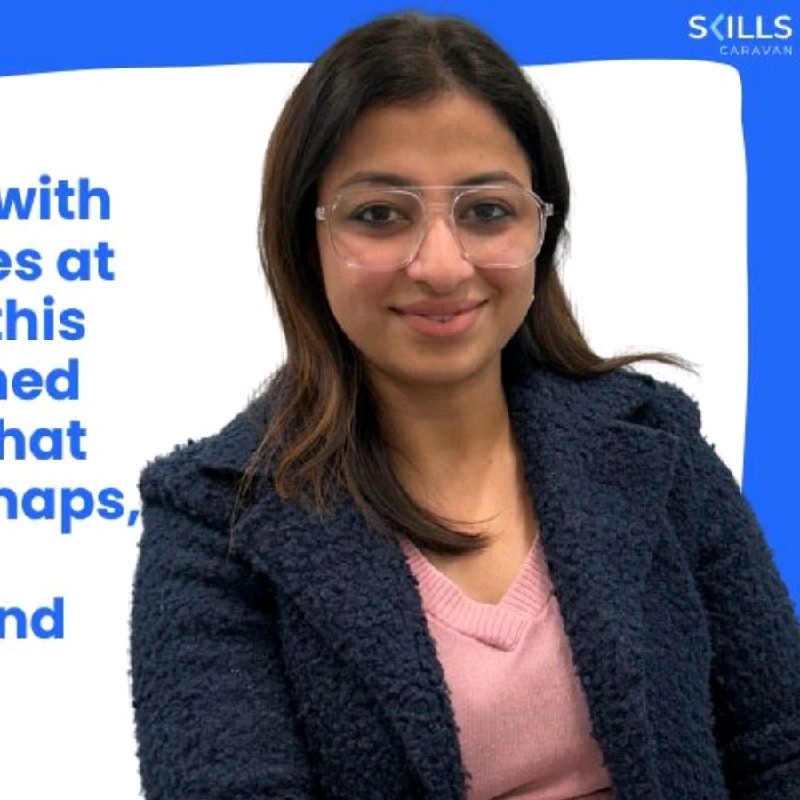

Shreya Verma is the VP of Product and Customer Success at Skills Caravan, where she leverages her decade-long expertise in learning & development (L&D) and human resources to shape an impactful, learner-centric platform. Her deep understanding of user needs, honed through hands-on L&D roles in leading companies, empowers her to translate insights into high-engagement interventions. At Skills Caravan, she bridges the gap between technology and people, ensuring learning experiences are not only effective but genuinely meaningful.
See how enterprises close skill gaps with AI. We'll email your brochure instantly.
Please enter your name, a valid email, and your phone number.
We respect your privacy. No spam — unsubscribe anytime.
Your platform overview is on its way. You can also download it right now.
Download Brochure


.png)
.png)
.png)
%20(1).png)
.png)


.webp)






Skillsoft is a global leader in corporate learning, providing digital training and education solutions to help businesses improve workforce productivity, reduce risk, and increase innovation.

FinShiksha provides a practical and industry-relevant approach to finance education, with courses designed by industry experts and delivered through interactive and engaging methods.

Wall Street Prep offers best-in-class financial training for aspiring finance professionals and corporate clients.

Udemy Business offers an unparalleled learning experience for organizations looking to upskill their workforce with over 155,000 courses taught by expert instructors.


.webp)

