


Skillsoft
Skillsoft is a global leader in corporate learning, providing digital training and education solutions to help businesses improve workforce productivity, reduce risk, and increase innovation.


.webp)
Choosing an LMS for corporate training at scale is a different exercise from choosing one for a single team, and the difference is not size. It is that three problems which barely exist at 500 learners become the dominant constraints at 15,000: how business units are separated inside one platform, how much administrative labour the system consumes every month, and in what order units go live. Feature comparisons say almost nothing about any of them.
Enterprise learning programmes rarely fail on capability. They fail eighteen months in, when shared services is drowning in enrolment tickets, three units have built shadow catalogues, and no one can produce a group-level compliance report because each unit defined completion differently. Every one of those was decided during selection and rollout design, not in the demo.
Tenancy model. Can one instance give each business unit its own branding, catalogue and admin rights — or does autonomy require separate instances? This is the least reversible decision you will make.
Administrative load. Automated provisioning and delegated admin, or manual enrolment and central ticket queues? The gap between a well-automated platform and a poorly automated one is typically four to six full-time roles at 10,000 learners — recurring annually, and usually larger than the licence difference.
Rollout sequence. Wave-based deployment with a representative pilot, or simultaneous launch across all units? Big-bang launches remove the learning loop that makes later waves cheap.
Governance split. Which content is centrally locked, which is unit-owned, and who can waive a mandatory assignment. Agree this before wave one, because retrofitting it across units that each invented their own rules is far harder.
The sections below work through each in the order a deployment meets them, then apply the criteria to the platforms enterprises shortlist. If you are still scoping functional requirements, our enterprise LMS evaluation checklist covers that stage, and the corporate LMS fundamentals guide sets out the category itself.
Read the middle two cards together, and the economics are clear. A platform that saves five administrative roles pays for a meaningful licence premium in year one, then keeps paying. One that costs five extra roles never appears as a line item — it appears as a shared services team permanently behind, which is far harder to attribute and to fix.
Because a demo runs on a clean tenant with twelve users, one brand and no history. Scale introduces what the demo environment is designed to hide: units with conflicting requirements, employees moving between them, contractors who never enter the HR system, and a compliance function needing one number across all of it. These are the failure modes behind most stalled programmes.
Units need different branding, catalogues and admin rights. If the platform cannot separate them cleanly, one of two things happens: everything is forced into a single flat structure nobody trusts, or each unit gets its own instance, and group reporting dies.
Early tell: a unit asks for its own logo and the answer involves a services quoteManual enrolment scales linearly with headcount while the admin team does not. Ticket queues lengthen, managers stop trusting completion data, and the platform becomes a records system that lags reality by weeks.
Early tell: enrolment requests arrive by email and are actioned by handWithout an agreed split between locked global training and unit-owned content, units build parallel catalogues. Within a year, the same course exists in four versions and no one can say which is current.
Early tell: two units independently commission the same compliance moduleWhen provisioning is not automated, leavers keep access, movers keep old assignments, and joiners wait days. Each is a security and audit finding rather than an inconvenience.
Early tell: user accounts are created from a monthly CSV exportIf units define completion differently — passed the quiz, opened the module, manager signed off — group-level numbers become uncomparable, and every board report needs manual reconciliation.
Early tell: compliance percentages are assembled in a spreadsheetDeployments designed around corporate email quietly exclude the frontline. Adoption looks acceptable in aggregate while the population with the highest operational risk never logs in.
Early tell: login requires a company email addressEvery one is an architecture or process decision, cheap to fix before wave one and expensive after. Tenancy is close to irreversible: restructuring it once three units hold live data means migrating records, remapping permissions, and re-earning trust you already spent.
At enterprise scale, the platform you are buying is a tenancy model and a provisioning pipeline. The learning experience sits on top of both and cannot compensate for either.
Administrative creep deserves separate attention because it is invisible in every business case. Licence cost appears in procurement documents; the four coordinators needed to run enrolment manually appear as ordinary shared services headcount, attributed to nothing. Nobody writes the memo connecting them, so the cheaper platform keeps winning selections while costing more.
Surface it with arithmetic, not argument. Ask each vendor how one routine event is handled — 400 people transfer between two units on the first of the month — and count the human steps in the answer. A platform where the HRIS sync reassigns unit membership and adjusts mandatory training automatically is a structurally different cost base from one where an administrator processes a list. That pipeline is covered in our guide to LMS implementation strategy.
The question that predicts admin load. "Show me the screens a unit administrator uses on a normal Tuesday." Not the learner view or the executive dashboard — the routine workflow. Vendors rehearse the first two and rarely the third, and how readily they show it reveals how much thought went into the people operating the system daily for five years.
The first architectural decision, and the hardest to undo. Three patterns exist, and vendors describe all three with the same vocabulary — "multi-tenant", "sub-organisations", "portals" — so you have to ask what each term does in their product rather than trust the label.
All units share one catalogue, one brand and one admin team. Units are distinguished only by group membership and audience rules. Simple to run and cheap to configure, but no unit can own its own experience, and permissions get progressively harder to reason about as exceptions accumulate.
One platform, shared identity and group-level reporting, with each unit receiving its own branded portal, catalogue subset, enrolment rules and delegated administrators. The right answer for most large enterprises: units get real autonomy, the centre keeps one source of truth.
Full autonomy and full isolation. Justified by data-residency law, an imminent divestment, or genuinely unrelated regulatory regimes. Otherwise it multiplies integration work, upgrade cycles and licence minimums while making group compliance reporting a manual merge exercise.
| Requirement | A — Flat instance | B — Sub-orgs / portals | C — Separate instances |
|---|---|---|---|
| Unit-level branding | No | Yes | Yes |
| Unit-owned catalogue | Via audience rules only | Yes | Yes |
| Delegated admin, scoped to unit | Partial | Yes | Yes |
| Single group-level compliance report | Yes | Yes | Manual merge |
| Employee moves between units cleanly | Yes | Yes | Re-provision required |
| Shared global mandatory training | Yes | Push from centre | Duplicated per instance |
| Integration effort | One pipeline | One pipeline | One per instance |
| Data residency per region | No | Vendor-dependent | Yes |
| Realistic admin headcount | Low, until exceptions accumulate | Low centre + part-time unit admins | Multiplied per instance |
Pattern B is where the language is loosest, so test it specifically. Can a unit admin create and publish a course visible only to their unit, without central approval and without seeing other units' data? When an employee transfers, does completion history follow while unit-specific assignments are replaced automatically? Can the centre publish a mandatory course that unit admins can schedule but not edit, waive or delete?
Yes to all three means real delegated multi-tenancy. Yes to the first only means branded folders, which hold together for about a year. The difference appears on no feature matrix, and it decides whether your central team spends its time on learning design or permission tickets. Our breakdown of the essential LMS features for employee training covers the capability layer that sits above this structure.
One caveat: Pattern C is sometimes correct. If a unit operates under a data-residency regime the others do not, or is being prepared for sale, isolation is a feature and the reporting cost is worth paying. The mistake is defaulting to separate instances because units asked for autonomy, when Pattern B grants autonomy without the fragmentation.
Every evaluation of an LMS for corporate training at scale should include an administrative labour model, and almost none do. The reason is that licence cost is quoted and admin cost is absorbed — it lands in shared services headcount where nobody attributes it to the platform decision that caused it. Making it visible requires only one thing: counting human steps in routine operations.
| Routine operation | Manual platform | Automated platform |
|---|---|---|
| New joiner gets correct assignments | Admin creates account, assigns role, enrols in courses — 5 to 10 minutes each | HRIS event triggers provisioning and rule-based enrolment — zero touch |
| 400 people transfer between units | Export, remap, bulk-upload, verify, fix failures — 2 to 4 days | Sync updates unit membership; assignments adjust automatically |
| Leaver access revoked | Depends on a ticket being raised — often missed | Deprovisioned on the HRIS event, records retained |
| Annual mandatory training cycle | Rebuild audiences, re-enrol, chase manually | Recurring rules re-trigger with automated escalation |
| Unit wants its own course live | Central ticket, queued behind other work | Unit admin publishes within their own scope |
| Monthly compliance report per unit | Export, merge, reconcile definitions in a spreadsheet | Scheduled report per tenancy, aggregating natively |
| Contractor onboarding, outside HRIS | Manual account creation, frequently forgotten | Separate enrolment route with expiry rules |
Take a 10,000-person enterprise with normal churn — roughly 15% annual joiners and leavers, 8% internal moves, four mandatory courses a year, eight units. Manually that is around 1,500 joiner setups, 800 transfer remappings, 40,000 mandatory enrolments and 96 unit-level reports. At conservative handling times, five to eight full-time roles. Automated, the same volume is absorbed by rules — one to two central administrators plus part-time unit champions.
Ask what a routine month costs in human hours, not what the licence costs. One is quoted to you; the other is quietly paid by a team that will never be asked to justify it.
That difference — four to six recurring roles — usually exceeds the entire licence gap between the platform that automates well and the one that does not. It is also what makes a business case land with finance, because it is a cost avoided rather than a benefit projected. Our guide to maximising platform ROI covers how to frame that argument.
One nuance: automation is not free. Rule-based enrolment requires clean HR data — accurate roles, grades, locations and manager relationships. Enterprises with messy HRIS records often find the platform capable of automation their data cannot yet support. That is a data-quality project, not a platform problem, and better found in week three than month six.
Identity and HR data, in that order — everything else is secondary until those work. Worth stating bluntly, because integration requirements in enterprise RFPs are usually written as long connector inventories that treat a CRM integration as comparable in weight to automated user provisioning. It is not. Without provisioning, every other integration decorates a manual process.
Enterprises with large non-desk populations hit a structural problem: the identity architecture assumes a corporate directory entry, and much of the workforce has none. Contract staff, retail floor teams, plant operators and field technicians are often absent from the HRIS or present without email. A rollout built purely on SSO and HRIS sync shows healthy adoption while silently excluding the population carrying the most operational and safety risk.
The fix must be designed in from the start: an alternative enrolment route by phone number or employee ID, shared-device and kiosk modes, offline playback on entry-level Android, and expiry rules so contractor access lapses automatically. Language depth matters too — content in the language people work in, not an interface translation wrapped around English video. Our guide to multilingual and regional-language delivery covers what genuine language depth requires, and our overview of employee onboarding shows how provisioning and day-one experience connect.
This is frequently true and rarely sufficient. The questions that matter are whether the integration is pre-built or scoped as a services project, who maintains it when the HRIS updates, and whether it carries structured attributes or only identity fields. Ask for a named reference running the same HRIS you do.
Sequence integration before content. The most common rollout error is loading the catalogue first because it looks like progress, then rebuilding provisioning around an audience structure the content already assumes. Identity, attributes and enrolment rules first; content second. Costs nothing to adopt, saves weeks per wave.
Assessed against the deployment criteria above rather than overall capability, because a platform can be excellent and still be the wrong shape for an LMS for corporate training at scale across many units. A note on the rankings elsewhere: page one for this query is entirely numbered vendor listicles — EducateMe's 19-platform roundup, iSpring, LearningLight, G2's category page and its own seven-platform review, MapleLMS. All are organised by review volume and general capability; none evaluate tenancy architecture or administrative load, the two things that decide a multi-unit rollout.
Strongest fit for Indian enterprises with multiple units and mixed desk plus frontline workforces
Sub-organisation tenancy with delegated unit administration, native provisioning against Indian HR stacks — Keka, Darwinbox, greytHR, Zoho People, FactoHR — plus SAP SuccessFactors and Workday, and an open API beyond that. The frontline route is designed in rather than bolted on: email-free login, offline Android playback, shared-device modes, contractor enrolment outside the HRIS. Competency framework and skill matrix let unit reporting express capability, not only completion. Clients include Hero MotoCorp, IndusInd Bank, Indian Oil, Shoppers Stop and Tata Mutual Funds.
Best for: multi-BU Indian enterprises, mixed workforces, INR budgeting, DPDP and POSH evidence Watch-out: less on-the-ground implementation presence across the Gulf and Southeast Asia than the global vendorsStrongest multi-portal architecture and automation engine for global groups
The most mature multi-portal model here, with genuinely delegated administration, deep automation rules and a large integration ecosystem. If you need many audiences under one roof — internal units plus partners plus customers — this is the reference implementation. Trade-offs: USD billing exposed to forex at renewal, a longer configuration phase, and India-specific compliance content and HRMS connectors that must be built rather than arriving ready.
Best for: multinationals, extended enterprise, complex automation across many audiences Watch-out: configuration depth becomes a dependency; thin India localisation out of the boxRight when learning must sit inside an integrated HR and talent suite
Roughly 7,000 enterprise customers and the broadest talent footprint here — recruiting, performance, succession and learning in one system, with organisational-unit structures that map naturally onto complex group hierarchies. The right answer when HR technology owns the decision and the driver is suite consolidation. Consistent trade-offs: desktop-first interface, Western-centric content, and consulting-led rollouts of three to six months before the first unit goes live.
Best for: suite consolidation, succession planning, heavily regulated global groups Watch-out: heaviest implementation on this list; frontline experience is not its strengthDefault consideration when the HR core is already SAP
Provisioning and organisational structure come almost free when employee central is already the system of record, removing the integration work that dominates most rollouts. Strong statutory and curriculum management for regulated industries. The cost is learner experience and speed of change: administration is powerful but heavy, configuration is specialist work, and unit-level self-service is limited next to the purpose-built platforms above.
Best for: existing SAP HR estates, regulated curriculum management, minimal integration appetite Watch-out: specialist administration; learner experience trails modern platformsFor groups with engineering capacity and data-residency mandates
Multi-tenancy, delegated organisation hierarchies, certification workflows and HRIS integration, sold through certified partners at custom pricing. Real architectural flexibility and per-region hosting, which makes it a genuine answer where data residency forces separation. The cost is ownership: hosting, upgrades, plugin maintenance and administrator expertise all become yours, and total cost is frequently higher than the licence comparison suggests.
Best for: in-house engineering teams, regional hosting requirements, unusual workflow needs Watch-out: longest time to first wave; ongoing maintenance burden sits with youFast to deploy, but assess the tenancy ceiling before committing
Both deploy quickly at competitive price points, and Paradiso adds rupee billing and a broad integration catalogue. Grouped because they share a profile against these criteria: excellent for a single unit or a mid-market organisation, with branching or sub-account models that work to a point and then need workarounds as unit autonomy and delegated governance demands grow. The honest test is whether you expect eight units each wanting their own catalogue and admin rights, or three happy to share one.
Best for: single-unit deployments, mid-market groups, fast time to value, cost-sensitive procurement Watch-out: tenancy and delegated-admin depth is the constraint, not featuresFor a wider view of the Indian market beyond deployment architecture, our roundups of the top 10 learning management systems in India and the best learning management system in India cover the full field on general capability.
Wave-based, always — and the pilot unit choice matters more than the schedule. Launching every unit at once is the most common cause of failed enterprise rollouts, because it removes the only mechanism that makes later waves cheaper: learning from earlier ones. A big-bang launch converts every configuration mistake into an organisation-wide mistake, discovered at maximum exposure.
| Phase | Duration | What must be true before moving on |
|---|---|---|
| Architecture and governance design | 2–4 weeks | Tenancy model chosen; central-versus-unit content split agreed in writing; completion definitions standardised |
| Identity and HR data integration | 3–5 weeks | SSO live; provisioning tested on joiner, mover and leaver events; attribute quality validated against a sample |
| Pilot unit, with baseline captured | 4–6 weeks | Operational metric measured before launch; adoption and admin-hours tracked; issue log closed |
| Wave 1 — two to three units | 3–4 weeks | Pilot lessons applied to configuration; unit admins trained and certified |
| Waves 2 to N | 3–4 weeks each | Each wave's admin-hours per learner is flat or falling versus the previous wave |
| Steady state and decommission | 2–4 weeks | One full compliance cycle completed cleanly; legacy platform records exported and retained |
The instinct is to pilot with the most enthusiastic team, and it is wrong. An eager 60-person team produces a successful pilot that proves nothing, because none of the hard parts appeared: no delegated admin conflict, no contractor population, no boundary disputes, no manager accountability problem. You meet all of them in wave one with nothing to draw on.
Pick a unit that is representative rather than easy: a mix of desk and non-desk roles, a real compliance obligation, a manager layer prepared to hold people accountable, and enough scale to be credible without being unrecoverable. Five hundred to fifteen hundred people is usually right. It should be slightly uncomfortable — that discomfort is the information you are buying.
A pilot that succeeds easily has told you nothing. Choose the unit where the architecture will be tested, not the one where it will be applauded.
Track administrative hours per learner, per wave. If wave two costs more per learner than the pilot, something is being handled manually that should be automated, and adding waves multiplies the problem rather than amortising it. A healthy rollout shows that figure falling as rules mature and unit admins become self-sufficient — the best early-warning indicator available, and free to measure.
Adoption is the metric everyone reports, but it lags and is easy to flatter with launch comms. Admin-hours per learner is leading, unglamorous, and honest. Our guide to choosing the right learning management system covers the selection-stage criteria that feed into this, and our overview of corporate training programme design covers what runs on the platform once it is live.
When a big-bang launch is defensible. Two cases only: a regulatory deadline leaving no room for waves, or a legacy contract that genuinely cannot be extended. In both, accept the trade explicitly and over-resource support for six weeks — roughly double a wave rollout. What does not justify it is executive impatience, which is usually the actual reason.
Governance is the decision most enterprises defer and most regret deferring. The symptom is predictable: eighteen months in, the same compliance course exists in four unit-authored versions, two out of date, and the centre finds out during an audit. Preventing it requires only a written content split agreed before wave one — much harder to impose once units have set their own conventions.
Statutory and regulatory training, code of conduct, information security, safety-critical certification. The centre owns the content, the completion definition and the record. Unit admins may schedule and communicate; they cannot edit, waive or delete. Every exception is logged and time-limited.
Leadership, professional skills, general capability content. The centre maintains a quality-assured catalogue; units select what applies to their roles and sequence it into their own pathways. Prevents duplicate commissioning without forcing uniform programmes.
Product, process, equipment and site-specific training. Units author, publish and retire freely within their tenancy. The only central requirement is that it is tagged to the shared skills taxonomy, so group reporting stays coherent even when content is local.
| Decision | Central L&D | Unit admin | IT / Security |
|---|---|---|---|
| Tenancy structure and permissions model | Owns | Consulted | Approves |
| Mandatory training list and completion definition | Owns | Informed | — |
| Unit catalogue and learning pathways | Consulted | Owns | — |
| Skills taxonomy | Owns | Contributes | — |
| Enrolment automation rules | Owns | Requests | Consulted |
| Identity, provisioning and access review | Consulted | Informed | Owns |
| Data retention and export | Consulted | Informed | Owns |
| Waiving a mandatory assignment | Approves | Requests | — |
| Group-level reporting standards | Owns | Informed | — |
The most under-appreciated governance item is the definition of completion. If one unit counts a module complete on opening it, another on passing an assessment, and a third on manager sign-off, group percentages become arithmetic without meaning, and every board report needs manual reconciliation that quietly encodes someone's judgement. Agreeing one definition, with a documented exception path for genuinely different regulatory contexts, takes a single meeting before launch and is close to unwinnable after.
The same applies to the skills taxonomy. Units always want local vocabulary, and the workable compromise is a shared core taxonomy with unit extensions mapped to it, rather than enforced uniformity or a free-for-all. Our framework for what makes an LMS skill-centric sets out how that taxonomy layer is built, and our guide to competency-based platforms covers how it connects to role-level reporting.
Write the exception path, not just the rule. Governance models more often fail from rigidity than looseness — a unit with a legitimate regulatory difference finds no sanctioned route, builds a workaround outside the system, and the centre loses visibility entirely. Define who approves an exception, how long it lasts, how it is recorded. A documented exception is governance working; an undocumented workaround is governance that has already failed.
Score shortlisted vendors on the dimensions that actually govern a multi-unit rollout. The weights reflect how much each factor drives total cost and risk over five years, not how much attention it gets in a demo. Adjust them to your context, but resist flattening them — equal weighting is how feature-rich platforms with weak tenancy models win selections.
| Dimension | Weight | What earns a top score |
|---|---|---|
| Tenancy and delegated admin | 20% | Unit-scoped branding, catalogue and admin rights in one instance, with logged central override |
| Automated provisioning | 18% | SCIM or equivalent handling joiner, mover and leaver events with structured HR attributes |
| Administrative effort per routine operation | 15% | Demonstrated zero-touch handling of transfers, cycles and contractor access |
| Group-level reporting across tenancies | 12% | Native aggregation with a single completion standard; raw export to your BI stack |
| Non-desk and contractor access | 10% | Email-free login, offline mobile, shared devices, expiry rules, real language depth |
| Rollout model and time to first wave | 8% | Wave-based method with a named reference at comparable scale and structure |
| Security, residency and audit evidence | 7% | Current SOC 2 or ISO 27001, documented residency, audit-grade export formats |
| Skills and capability layer | 6% | Shared taxonomy with unit extensions; reporting expresses capability, not only completion |
| Commercial predictability | 4% | Currency of billing, renewal uplift stated, implementation and integration costs itemised |
Send these in writing before the demo and ask for written answers. Written responses can be held to in a contract; demo answers cannot, and the difference in candour between the two formats is consistently informative.
Question eight is the one vendors find hardest, and buyers skip most often. A reference at comparable structure with a stated administrator count turns every claim in this article into a verifiable number. If none exists, that is not disqualifying — but you would be first at your shape, and should price the risk accordingly. For the layers beneath this, our enterprise LMS evaluation checklist and our overview of enterprise LMS requirements for distributed workforces go deeper.
Score the answers, not the impression. Have two people score independently against the weights, then compare before any group discussion. Selection committees converge on the most confident presenter with unnerving reliability, and independent scoring is the cheapest correction available. Where two scorers diverge sharply, that is usually where the vendor's answer was ambiguous — ask again.
Each is a decision made during selection or the first eight weeks of deployment, and each is far cheaper to avoid than correct. They appear in roughly this order of frequency when an LMS for corporate training at scale programme stalls — and none are about the platform's feature set.
Tenancy should be a selection criterion, not an implementation decision. Discovering in week six that unit-level branding requires separate instances means renegotiating architecture and commercials from a position of no leverage.
Content feels like visible progress, so it happens first. Then provisioning is rebuilt around an audience structure the catalogue already assumes. Identity, attributes and enrolment rules first — always.
An enthusiastic small team produces a pilot that proves nothing, because none of the hard parts of scale appeared. You then meet all of them in wave one with no learning to apply.
Without an agreed central-versus-unit content model before wave one, units build parallel catalogues. Imposing a split after three units have set their own conventions is a political project, not a configuration change.
Adoption gets reported; admin load does not. The cost of a poorly automated platform stays invisible, absorbed by a shared services team permanently behind on tickets and unable to say why.
The best platform for a large enterprise is not the one with the strongest feature list — at this tier features have largely converged, and the market's growth is accelerating that parity. What differentiates is architecture: how units are separated, how identity flows, and how much human labour a routine month consumes.
All three are answerable before you sign, and they predict five years of cost and credibility better than anything in a demo. Get tenancy right, automate provisioning properly, write the governance split down before wave one, and pilot somewhere that will genuinely test the design. The learning experience matters — but it sits on top of all of this and cannot compensate for any of it.
If your requirements are shaped by sector rather than structure — manufacturing safety, BFSI regulatory cycles, retail enablement — see our industry-specific solutions hub covers what changes by vertical, and our compliance training overview covers the mandatory layer in detail.
Give us your unit structure, HR stack and workforce mix, and we will map the tenancy model, provisioning pipeline and wave plan against it — including where we are not the right fit.
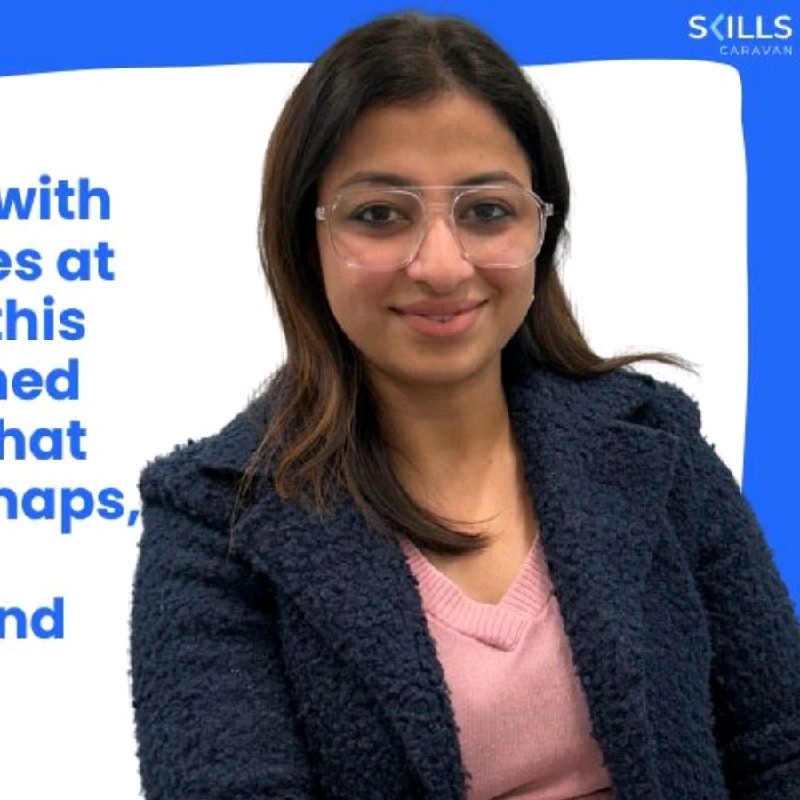

Shreya Verma is the VP of Product and Customer Success at Skills Caravan, where she leverages her decade-long expertise in learning & development (L&D) and human resources to shape an impactful, learner-centric platform. Her deep understanding of user needs, honed through hands-on L&D roles in leading companies, empowers her to translate insights into high-engagement interventions. At Skills Caravan, she bridges the gap between technology and people, ensuring learning experiences are not only effective but genuinely meaningful.
See how enterprises close skill gaps with AI. We'll email your brochure instantly.
Please enter your name, a valid email, and your phone number.
We respect your privacy. No spam — unsubscribe anytime.
Your platform overview is on its way. You can also download it right now.
Download Brochure




.png)
.png)
.png)
%20(1).png)
.png)


.webp)








Skillsoft is a global leader in corporate learning, providing digital training and education solutions to help businesses improve workforce productivity, reduce risk, and increase innovation.

FinShiksha provides a practical and industry-relevant approach to finance education, with courses designed by industry experts and delivered through interactive and engaging methods.

Wall Street Prep offers best-in-class financial training for aspiring finance professionals and corporate clients.

Udemy Business offers an unparalleled learning experience for organizations looking to upskill their workforce with over 155,000 courses taught by expert instructors.


.webp)

