


Skillsoft
Skillsoft is a global leader in corporate learning, providing digital training and education solutions to help businesses improve workforce productivity, reduce risk, and increase innovation.


.webp)
She scans in at 8:58, clocks a 40-second gap between deliveries, and never once opens a laptop that day. Multiply her by the security guard checking a QR code at a warehouse gate, the technician on a rooftop with one bar of signal, and the retail associate handling a Saturday queue — and you have most of India's workforce. None of them have a desk. All of them still need onboarding, certification, and current policy and safety knowledge.
That mismatch is why a generic LMS with a mobile app bolted on keeps failing frontline teams, and why finding a genuine mobile learning platform India employers can deploy at scale has become an L&D priority. This guide covers what such a platform needs, which 2026 vendors are worth evaluating, and how to roll one out without the pilot quietly dying after month two.
Not every LMS with a mobile app qualifies. A true mobile-first platform is designed for phones from the ground up: offline lesson downloads, sessions under ten minutes, login without a company email, and interfaces that work on a mid-range Android device over patchy 4G. A mobile-responsive LMS — a desktop system that resizes to fit a smaller screen — is a weaker, different thing that still assumes broadband and uninterrupted time frontline shifts rarely allow.
The distinction matters more in India than almost anywhere else, given the scale of the deskless workforce and the bandwidth reality most of it operates under. Get the category wrong, and no amount of good content fixes the adoption problem underneath it.
The sections ahead move from definitions to a working shortlist. Short on time? Jump to Section 4 for the feature checklist and Section 5 for the platform list.
Mobile-first training for deskless teams has been technically possible for years. What changed is that three shifts landed in the same window, turning it from an option into an operational expectation for employers with a distributed frontline workforce.
Mobile penetration in India is estimated at over 86% for FY 2025-26, and data costs remain among the lowest in the world. A smartphone in a worker's pocket is now a more reliable channel than a desktop that was never provisioned for a shop-floor role.
As India's four labour codes move through phased state-level implementation, employers face tighter expectations around documented onboarding and safety induction — obligations that apply to a warehouse crew as much as head-office staff.
NITI Aayog projects India's gig workforce expanding from roughly 7.7 million in 2020-21 to 23.5 million by 2029-30. Faster churn means onboarding-speed training, not annual classroom sessions, becomes the only model that keeps pace.
"Most of the Indian frontline workforce has never sat through a desktop training module — and platforms still designed around that assumption are training a shrinking minority of the workforce."
These shifts are already visible in how L&D budgets are being reallocated in 2026, with more spend moving toward platforms that reach deskless employees and away from classroom-only or desktop-only tools that a shrinking share of the workforce can use. Frontline roles already carry the highest attrition in most Indian sectors, and training that never reaches new joiners in their first week does nothing to slow it — see our guide to effective employee retention strategies for how faster onboarding fits into that picture.
The next section draws the line that matters most when evaluating a platform against this reality: the difference between something that merely opens on a phone, and something built for one.
Every vendor in this category will tell you their platform "works on mobile." That sentence hides three different products, and only one was actually built for a frontline workforce. Confusing the three is the most common reason a promising pilot stalls once it leaves the head office.
| Capability | Desktop LMS, browser only | Mobile-responsive LMS | True mobile-first platform |
|---|---|---|---|
| Offline access | None | Rarely, browser-dependent | Native, with background sync |
| Login method | Corporate email + password | Corporate email + password | Phone number OTP, QR code, or employee ID |
| Typical lesson length | 30-60 minutes | 20-40 minutes, unchanged content | 3-10 minutes, purpose-built microlearning |
| Bandwidth tolerance | Assumes broadband | Needs stable mobile data | Degrades gracefully on 3G/4G, offline-first |
| Regional language delivery | Rare, text-only if present | Occasional subtitles | Voice-over in 5-8+ Indian languages |
| Push notifications / nudges | Email only | Browser notification, easily missed | Native app push, SMS, or WhatsApp |
Ranges reflect typical vendor configurations evaluated across current Indian frontline LMS deployments in 2026, not any single platform.
The middle column is the trap. A mobile-responsive LMS looks like a mobile solution in a demo, but the underlying assumptions never changed — it still expects a stable connection and a corporate login most frontline employees were never issued. For background on these platform categories, our guide to learning management software covers the fundamentals.
The next section turns this distinction into a concrete checklist of ten features worth verifying before any platform reaches a shortlist.
Most vendor pitches will claim all ten. Few actually deliver them. Use this as a demo scorecard, not a marketing checklist to take on faith.
Learners download a lesson once, complete it with no signal, and progress syncs automatically on reconnect — no re-download, no lost data.
Video and audio should auto-compress or offer a data-saver setting, so a lesson does not eat a day's data recharge on 3G.
Phone number plus OTP, a QR code at a noticeboard, or an employee ID — never a corporate email most frontline and gig workers were never issued.
Hindi plus four to five regional languages at minimum, delivered as voice-over rather than subtitles, since many frontline learners listen better than they read.
Lessons under ten minutes, built for a break between shifts — not a 45-minute desktop course opened on a smaller screen.
For workforces where an app download is itself a barrier, delivery through a channel employees already check daily removes the biggest obstacle.
Reminders that reach the lock screen, not an inbox nobody checks — including manager-tier escalation when a learner falls behind.
New hires auto-enrol, transfers inherit location-specific content, and exits are handled automatically — the biggest reason manual coverage breaks at scale.
A store, shift, or site-level view of completions, so a manager can chase gaps without waiting on a monthly HR report.
Points and leaderboards drive daily engagement; timestamped, tamper-evident records give compliance teams evidence that survives an audit.
Integration depth matters enough to call out on its own: our breakdown of integrating a Darwinbox HRMS with a learning platform shows joiner-mover-leaver sync in practice. With the checklist set, the next section turns to platforms Indian employers are evaluating against it in 2026.
This is the working shortlist for a mobile learning platform India employers are evaluating in 2026 — India-first specialists alongside global tools with a credible mobile record. Order reflects fit for a broad frontline-plus-compliance use case, not a ranking.
AI-powered LXP+LMS with offline-first delivery and native India HRIS integration.
Best for: Mid-to-large Indian enterprises needing mobile-first frontline training alongside broader skilling.
Built India-first: offline downloads, gamified microlearning, voice-over in eight-plus Indian languages, connected natively to Darwinbox, Keka, Zoho People, and greytHR.
Skill-intelligence platform with strong India presence in retail, telecom, and logistics.
Best for: Large enterprises wanting mobile training combined with AI skill mapping.
Multilingual, gamified microlearning with skill-gap analytics and offline access, proven at large deskless-workforce scale.
WhatsApp-first microlearning for gig and frontline teams across India, SEA, and the GCC.
Best for: Gig or delivery-fleet employers wanting a zero-app pilot running within days.
Delivery happens inside WhatsApp itself, removing the app-download barrier for workforces that already communicate through it daily.
India-built, gamified mobile learning for sales and frontline enablement.
Best for: India sales and distribution teams needing gamified, mobile-native enablement.
Strong gamification mechanics tuned for Indian frontline sales behaviour, narrower in scope than a full compliance-and-skilling LXP.
Free-to-start mobile microlearning with a large template library and AI content creation.
Best for: SMEs wanting a free-tier mobile-first tool to pilot before committing budget.
Offline access, gamified quizzes, and push notifications come standard, with a generous free tier for smaller teams.
Widely used SME LMS with a native mobile app and offline capabilities.
Best for: Fast-deploying SMEs wanting a straightforward mobile-capable LMS.
Quick, low-IT-overhead setup, though a general-purpose LMS rather than one engineered specifically for deskless India delivery.
Global daily-microlearning platform built for frontline retail and grocery.
Best for: Global retail chains extending an established North American frontline programme into India.
A proven daily 3-5 minute microlearning method, though India-specific language coverage and local HRIS ties are limited.
Seven credible options, from India-first specialists to proven global tools. The next section is a transparent look at where Skills Caravan fits within that range, and where it does not.
Rather than a generic pitch, here is how Skills Caravan approaches frontline mobile delivery, and honestly, who it fits best — and who it does not.
Lessons download once and run with zero connectivity; progress syncs automatically on reconnect.
Hindi, Tamil, Telugu, Kannada, Marathi, Bengali, Malayalam, and English, delivered as audio.
Auto-compressed video and a data-saver setting keep a lesson from eating a day's data recharge.
Native connections to Darwinbox, Keka, Zoho People, and greytHR keep enrolment accurate through every joiner and exit.
Store or site-level dashboards so a manager can chase gaps without a monthly report.
Points, streaks, and spaced-repetition refreshers built to hold attention across short sessions.
A representative view of what a frontline L&D lead sees mid-rollout. Numbers below are illustrative, not a live data feed.
If your need is a single-language, zero-setup WhatsApp pilot for a small delivery fleet, a lighter tool like Leap10x may get you moving faster. Skills Caravan is built for organisations that need mobile-first delivery to scale into a system of record. See the full Skills Caravan LXP overview, or book a 30-minute demo to see the mobile experience against your own workforce profile.
By the third demo, every vendor sounds identical: mobile-first, offline-capable, multilingual, HRIS-integrated. When shortlisting a mobile learning platform India teams can rely on, these seven questions separate what a platform genuinely does from what the slide deck claims.
"Ask the vendor to switch off Wi-Fi mid-demo. What happens next tells you more than anything in the pitch deck."
A genuinely offline-first platform keeps working; a mobile-responsive one stalls — exactly what will happen on a warehouse floor.
Ask for an actual megabyte figure, not a general "low bandwidth" claim — vendors that have solved this have the number ready.
Phone OTP, employee ID, or a noticeboard QR code should be standard options, not a custom-development request.
Vendors often list ten "supported languages" where only two have real voice-over. Ask them to play a sample, unscripted.
This question predicts whether coverage holds up six months in, once the novelty of a launch has worn off.
Frontline managers need to see their own location's completion status without waiting on a monthly HR export.
Frontline and gig workforces churn fast — per-registered-user pricing can quietly inflate cost as headcount turns over.
Vertical guidance can sharpen this further — our walkthrough on choosing the right LMS for hospitality training applies these same questions to one of India's largest frontline sectors. With a shortlisted vendor in hand, the next section covers rolling it out without the pilot stalling.
The platform decision is the easy part. Most rollouts stall not because the software was wrong, but because they skipped a pilot, launched every region at once, or never trained the managers meant to drive adoption. Here is the five-step sequence that avoids that.
Choose one store, warehouse, or delivery hub — not the head office — and test under real conditions before wider rollout.
Connect the HRIS before scaling, then roll out region by region along language lines rather than launching every site at once.
Frontline managers make or break adoption. Train them on the dashboard before the wider workforce ever sees the app.
Initial curiosity fades fast. Gamification and well-timed nudges keep completion rates from sliding after the first fortnight.
Mobile learning is not a one-time launch. Content ages and workforces turn over, so build a standing quarterly review into the calendar.
Directional example based on typical industry-reported benchmarks, not a guaranteed outcome.
A rollout this structured borrows the same discipline good onboarding uses more broadly — see mastering virtual onboarding for the same first-week principles. The next section covers the mistakes that derail even a well-planned rollout.
Most failed rollouts do not fail because the platform was wrong. They fail on execution details that are entirely preventable once you know to look for them.
Opening a 45-minute desktop course on a phone does not make it mobile learning — attention spans and context are entirely different on a shop floor.
English-only content quietly excludes a large share of a factory, retail, or field workforce — and subtitles alone rarely fix it for learners who listen better than they read.
Many frontline and gig workers were never issued a corporate email, and a mandatory app download adds friction before training even starts.
Skipping the pilot means every configuration mistake surfaces across the entire workforce at once instead of one manageable site.
If frontline managers cannot see their own site's completion status, they have no reason to chase it, and adoption stalls at the layer meant to drive it.
India's frontline workforce is not a niche to accommodate with an afterthought app — it is the majority of the workforce, and the platforms winning in 2026 are built around that: offline-first, multilingual, no-email login, and integrated natively with the HRIS systems Indian enterprises already run.
The seven platforms in Section 5 each suit a different profile. Whichever you choose, the feature checklist, vendor questions, and rollout plan above will get a pilot live and a full deployment stable within a quarter.
See our overview of employee development and retention, or explore industry-specific solutions for frontline-heavy sectors.
Training software built for smartphones rather than desktops, for employees who do not sit at a desk. It typically supports offline downloads, short lessons, login without a corporate email, and regional-language delivery.
Most frontline employees never log into a desktop LMS because they never sit at a desk. Mobile-first platforms use short sessions, offline access, and phone-native login, which is why they see far higher completion among deskless employees than desktop-first systems with a mobile app bolted on.
There is no single best mobile learning platform India offers every employer — it depends on workforce size, language spread, and whether compliance tracking matters. Skills Caravan suits enterprises needing offline delivery, HRIS-native integration, and eight-plus Indian languages; Disprz and Leap10x are also widely evaluated, for large deskless workforces and WhatsApp-first delivery respectively.
Yes, if the platform is built for it. Genuine mobile-first platforms let learners download lessons and complete them offline, syncing automatically once connectivity returns — essential given how often Indian factory floors and delivery routes have patchy or no signal.
Hindi plus four to five regional languages is the practical minimum, delivered as voice-over rather than subtitles, since many frontline learners listen better than they read.
Yes. The best platforms use phone-OTP, an employee ID, or a QR code instead, removing the biggest adoption barrier for gig workers and hourly employees never issued a company email.
Native integrations sync employee records automatically, so joins, transfers, and exits update assignments without manual HR work. Skills Caravan connects natively with Darwinbox, Keka, Zoho People, and greytHR — key for accurate coverage through high frontline turnover.
Pricing usually follows a per-active-user or tiered-subscription model rather than a flat licence, since frontline workforces log in irregularly. Platforms serving large deskless workforces typically quote custom enterprise pricing, so a scoped demo gives the most accurate figure.
A 30-minute walkthrough on a mid-range Android phone with Wi-Fi switched off — offline sync, regional-language voice-over, and your HRIS integration, demoed the way your frontline teams will actually experience it.
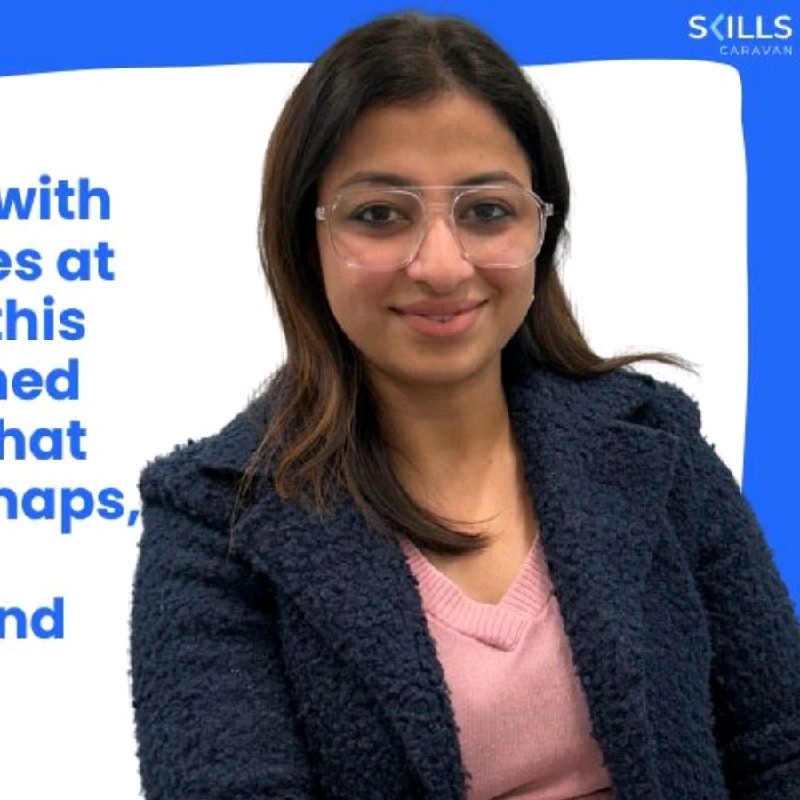

Shreya Verma is the VP of Product and Customer Success at Skills Caravan, where she leverages her decade-long expertise in learning & development (L&D) and human resources to shape an impactful, learner-centric platform. Her deep understanding of user needs, honed through hands-on L&D roles in leading companies, empowers her to translate insights into high-engagement interventions. At Skills Caravan, she bridges the gap between technology and people, ensuring learning experiences are not only effective but genuinely meaningful.


.png)
.png)
.png)
%20(1).png)
.png)


.webp)







Skillsoft is a global leader in corporate learning, providing digital training and education solutions to help businesses improve workforce productivity, reduce risk, and increase innovation.

FinShiksha provides a practical and industry-relevant approach to finance education, with courses designed by industry experts and delivered through interactive and engaging methods.

Wall Street Prep offers best-in-class financial training for aspiring finance professionals and corporate clients.

Udemy Business offers an unparalleled learning experience for organizations looking to upskill their workforce with over 155,000 courses taught by expert instructors.


.webp)


