


Skillsoft
Skillsoft is a global leader in corporate learning, providing digital training and education solutions to help businesses improve workforce productivity, reduce risk, and increase innovation.

.webp)
Selecting an enterprise LMS platform is one of the few technology decisions that touches every employee in the organisation, carries a multi-year contract, and is usually led by people who will never write a line of the integration code it depends on. It is also a decision where the loudest available guidance comes from vendors describing their own strengths. This checklist is deliberately vendor-agnostic: no rankings, no shortlist, no recommended platform. Just the framework, the questions, and the evidence to demand before signing.
The framing matters because most selections fail at the wrong layer. Teams run thorough feature comparisons and still end up with a system nobody uses, because what actually determines success — identity architecture, governance at scale, the real three-year cost — is exactly what a demo cannot show you.
A defensible evaluation scores vendors across six domains rather than one long feature list. Weightings below are a starting point for a regulated, multi-site organisation — adjust them to your own risk profile before you score anything.
Before weighting anything, separate pass/fail gates from differentiators. Gates are non-negotiable and verified by evidence — SOC 2 Type II, SAML or OAuth single sign-on, standard-format data export, a defined P1 support SLA, and data residency where required. Differentiators decide between the vendors that clear the gates.
That sequencing is the highest-leverage move in the process. Teams that define five to seven mandatory checks routinely eliminate most unfit vendors before the first demo is booked, concentrating evaluation effort on genuine contenders.
If you are still deciding what category of system you are buying rather than which vendor within it, resolve that first — our explainer on what learning management software does covers the category boundaries. Everything below assumes you have settled that question and are now running a formal evaluation.
Rarely because the technology was bad. Platforms on a typical enterprise shortlist are competent products with real customers succeeding on them. Failure is a fit-and-adoption problem, consistent enough that you can design the evaluation to catch it.
Requirements written as a feature list reward the vendor with the longest list. Every credible platform ticks AI personalisation, mobile learning and analytics — the list cannot separate them, so the decision quietly defaults to price or demo polish.
Tell: your requirements document has more rows than your scoring matrix has weights"Integrates with your HRIS" spans everything from a documented API your team uses in an afternoon to a quoted multi-week vendor project. The gap surfaces during implementation, when the contract is already signed.
Tell: nobody from IT attended the technical demoPlatforms deployed without change management, internal champions, or a clear explanation of why training moved systems routinely see engagement collapse inside the first ninety days. The software works; nobody opens it.
Tell: the project plan ends at go-liveGovernance, not throughput, is the usual ceiling. Systems that work for one business unit break when twelve units need separate administrators, distinct branding, isolated reporting, and different compliance rules.
Tell: the pilot was run by the team that will own the platformRegistered-user pricing against an intermittently active frontline workforce, or a licence that assumed 3,000 users when hiring plans said 5,000. The invoice diverges from the business case in year two.
Tell: the quote was modelled on today's headcount onlyThe rollout succeeds operationally but cannot prove it. Without a pre-pilot measurement of the business metric you intended to move, the renewal conversation becomes an argument about anecdotes.
Tell: success criteria are expressed as completion ratesNotice what these share. None is a question a demo answers, and none appears on a feature grid. They are questions about your organisation — its stack, its governance, its appetite for change — which is why this framework starts with your risk profile rather than with capabilities.
The evaluation is not a test of the platforms. It is a test of how honestly you have described your own organisation to yourself.
The distinction is not headcount but the number of independent stakeholders who must all be satisfied at once. A mid-market purchase has one buyer, one workflow, one compliance context. An enterprise purchase has business units with conflicting priorities; IT with architecture standards; security with a vendor-risk process; legal with data-protection obligations; finance modelling a three-year commitment; and a frontline population whose conditions look nothing like head office. The winner is rarely the highest scorer on any single dimension — it is the platform that clears every stakeholder's veto.
This is why category must be settled before vendor. A group evaluating course-delivery systems and one evaluating capability systems will disagree permanently, because they score against different definitions of success — a distinction our breakdown of LMS, LXP and skills platforms sets out in detail.
A useful early exercise. Before writing requirements, ask each stakeholder group to name the one thing that would make them veto a platform. You will get five to seven answers; they will rarely overlap, and they are your pass/fail gates. An afternoon's work that prevents the most expensive category of late-stage surprise.
Most scoring matrices produce a dead heat because they score everything equally. The fix is a two-axis sort applied before any weighting: rate each requirement on importance to you, and on how much it actually varies between vendors. That places every requirement in one of four boxes — and only one deserves real effort.
SCORM support, basic reporting, mobile access, SSO. Every serious platform has these. Verify once as a yes/no and move on — scoring them wastes effort and inflates every vendor's total equally.
Skills modelling depth, integration model, frontline delivery, governance at multi-unit scale, admin workload. Implementation quality differs enormously here. Press hard in demos and reference calls.
Capabilities that differ visibly but do not affect your use case — social feeds, e-commerce, gamification depth. Vendors will demo these enthusiastically because they differentiate. Do not let them earn points.
The bulk of a typical 200-line requirements spreadsheet. Cutting these does not weaken the evaluation; it concentrates it, and it shortens vendor response time considerably.
Run this honestly and a 200-row requirements list collapses to roughly fifteen scored criteria and six or seven gates. That is not lost rigour — it is the difference between a matrix that produces 7.3 versus 7.8 and one that produces an answer.
Published weightings are a starting point, not a standard. The right distribution depends on which failure would hurt you most.
| Your context | Weight up | Weight down | Why |
|---|---|---|---|
| Regulated — BFSI, pharma, energy | Security & governance to ~30% | Learning experience | Audit failure is existential; a mediocre interface is survivable |
| Frontline-heavy workforce | Adoption & delivery to ~30% | Advanced analytics | A platform deskless staff cannot access scores zero on everything else |
| Complex system landscape | Integration to ~25% | Content library | Integration debt compounds annually; content can be sourced separately |
| Rapid headcount growth | Scalability & TCO to ~25% | Current feature depth | You are buying for the organisation you will be, not the one you are |
| Multi-country operations | Architecture & residency to ~25% | Local content depth | Data residency and language rules are structural; content is procurable |
| Lean L&D team | Admin workload & support to ~20% | Configurability | A powerful platform nobody has time to administer delivers nothing |
One discipline makes weighted scoring trustworthy: record the reasoning, not just the number. When someone senior asks why the runner-up lost, "it scored 6 on integration" is indefensible; "it scored 6 because provisioning was a vendor project rather than API access, quoted at four weeks" survives scrutiny — and later tells you whether implementation matched the promise.
If weighting keeps circling back to skills and capability rather than course delivery, that signals category rather than vendor. Our guide to competency-based learning systems covers what that architecture requires, and it is far easier to specify upfront than to retrofit.
Score on evidence, not claims. One rule for the whole committee: a criterion scores above the midpoint only if the vendor demonstrated it live, supplied documentation, or gave a reference who confirmed it. Anything asserted but unevidenced caps at the midpoint. This removes most of the gaming risk weighted scoring invites.
An enterprise LMS platform holds more sensitive personal data than most buyers register at purchase — employment records, assessment scores, disciplinary and compliance training histories, manager observations, and in many deployments the contact details of contract workers who are not on your payroll. It is a Data Processor in the legal sense, and your organisation carries the Data Fiduciary obligations regardless of what the vendor's contract says.
Weight this domain highest in regulated sectors. The exposure is concrete: India's Digital Personal Data Protection Act authorises penalties reaching ₹250 crore for serious violations, its Rules were notified in November 2025 with compliance phased over eighteen months, and IBM reported the average Indian data breach at roughly ₹22 crore in 2025.
| Requirement | Evidence to demand | Type |
|---|---|---|
| SOC 2 Type II | The current report under NDA — not a badge. Check the audit period, scope and any exceptions noted | Gate |
| ISO 27001 | Certificate with scope statement and expiry date; confirm the certified entity matches the contracting entity | Gate |
| Encryption | TLS 1.2+ in transit, AES-256 at rest, and who holds the keys. Ask specifically about backups and logs | Gate |
| Role-based access control | A live demonstration of granular admin roles — the difference between four fixed roles and configurable permissions is large at scale | Differentiator |
| Audit logging | Which administrative actions are logged, retention period, and whether logs are exportable to your SIEM | Differentiator |
| Breach notification | Contractual timeline in hours, not "promptly". Confirm it aligns with your own regulatory reporting obligations | Gate |
| Data residency | Named hosting regions and whether residency is contractual or best-effort. Note that DPDP carries no blanket localisation mandate as of 2026, but sectoral rules may still apply | Gate |
| Sub-processor disclosure | A current list, notification terms for changes, and your right to object. AI features often introduce sub-processors buyers never reviewed | Differentiator |
| Penetration testing | Cadence, whether by an independent third party, and a summary of the most recent findings and remediation | Differentiator |
| Data processing agreement | Purpose limitation, security obligations, assistance with data-principal rights, breach notification and deletion on termination | Gate |
| Data export and deletion | Format, completeness, timeline and cost at contract end — in the contract, not in a support article | Gate |
| AI data handling | Whether your content or learner data trains vendor models, whether it can be disabled, and which model providers are involved | Differentiator |
Where does the audit trail live when you leave? Statutory and safety records carry retention obligations that outlast your contract. If completion history is only queryable inside the platform, your retention obligation has become a vendor dependency. Confirm export includes dated evidence in a format an inspector accepts.
What happens to contract-worker data? Frontline and extended-enterprise deployments enrol people outside the HRMS — contractors, channel partners, dealer staff. Their data is still in scope, often with no clear internal owner. Decide who is accountable before the platform decides for you.
Which AI features are on by default? Vendor AI capabilities often arrive enabled, sometimes with new sub-processors. Ask for the current list, how you are notified when it changes, and whether inference on your data can be disabled per tenant.
A certification tells you a vendor passed an audit on a defined scope on a defined date. It does not tell you your data is inside that scope. Read the scope statement.
If statutory training drives the purchase, record-keeping deserves its own workstream rather than a matrix row — our overview of compliance training software requirements covers what auditors typically ask for, and the changing compliance landscape piece covers how AI features complicate the evidence trail.
Run security review in parallel, not sequentially. Assessments routinely take four to six weeks and are the most common cause of timeline slip. Send the questionnaire with the RFP, not after shortlisting. Vendors who cannot complete it inside the window have told you something about their enterprise readiness.
Integration is where evaluations most often go wrong, because the question buyers ask — "does it integrate with our HRMS?" — gets the same answer from every vendor. The useful question is who builds the integration, using what, and what happens when your HR system upgrades next year.
SAML 2.0 or OpenID Connect against your existing identity provider — a gate, not a scoring line. What varies is depth: just-in-time provisioning, group-to-role mapping, and whether SSO covers the mobile app and admin console or only the web portal.
Ask: can you demonstrate SSO against our identity provider during the technical demo, using a test tenant?The highest-value integration and the most underestimated. Users should be created, updated, reassigned, and deactivated automatically from your HR system of record. Ask whether that uses SCIM, a native connector, scheduled file sync or manual upload — the difference in ongoing admin load is enormous.
Ask: when someone changes department, what happens to their assignments — automatically, and within how long?The structural question. A documented, versioned REST API with sandbox access means your team can build. No public API means every connection is a scoped vendor project, repeated whenever your stack changes. Both models are legitimate; only one suits an IT function that expects to own its integrations.
Ask: send us the public API documentation URL and sandbox credentials this week.SCORM 1.2 and 2004 are baseline. xAPI matters if you need learning signals from outside the platform — simulations, on-the-job apps, field tools. cmi5 is worth asking about if your roadmap involves mobile or offline experience tracking at scale.
Ask: can we upload three of our existing packages during evaluation and confirm they render correctly on mobile?In-platform reporting is never enough at scale, because leadership questions combine learning data with operational data. You need scheduled exports, a reporting API, or a warehouse connector. Verify whether raw event-level data is available or only aggregated dashboards.
Ask: can we get event-level data into our own BI tool without vendor involvement?Generic integration lists are theatre. Rebuild the table below with your own systems named, and require vendors to complete it with a method and an effort estimate — not a yes.
| System type | What must flow | What to confirm |
|---|---|---|
| HRIS / HRMS | Identity, org structure, role, location, joiner-mover-leaver events | Native connector or API build; sync frequency; how contract staff outside the HRMS are handled |
| Identity provider | Authentication, group membership | SAML or OIDC; whether mobile and admin consoles are covered |
| CRM | Sales enablement triggers, partner and dealer records | Whether external audiences can be enrolled without consuming employee licences |
| Collaboration tools | Notifications, in-flow learning prompts | Native app or webhook; whether it survives the vendor's next release cycle |
| Data warehouse / BI | Event-level learning data for blended reporting | Scheduled export, reporting API or connector; raw versus aggregated granularity |
| Compliance system of record | Completion evidence with dates and expiry | Push or pull; format acceptable to your auditors |
One row matters more than the rest: how contract, partner and dealer populations are handled. These audiences rarely exist in the HRMS, and platforms differ enormously in whether enrolling them is a first-class feature or a spreadsheet workaround. If a meaningful share of learners sit outside payroll, make this a gate. Approaches are covered in our piece on skills-based learning platforms, and the same enrolment logic applies to partner and channel training programmes.
The technical demo is a separate meeting. Book a second session with IT and security present and a scripted agenda: authenticate via our identity provider, provision from a sample HR record, open the API documentation, upload one of our SCORM packages, export event-level data. Vendors who can only do this "in implementation" have answered the question.
Integration is where evaluations most often go wrong, because the question buyers ask — "does it integrate with our HRMS?" — gets the same answer from every vendor. The useful question is who builds the integration, using what, and what happens when your HR system upgrades next year.
SAML 2.0 or OpenID Connect against your existing identity provider — a gate, not a scoring line. What varies is depth: just-in-time provisioning, group-to-role mapping, and whether SSO covers the mobile app and admin console or only the web portal.
Ask: can you demonstrate SSO against our identity provider during the technical demo, using a test tenant?The highest-value integration and the most underestimated. Users should be created, updated, reassigned and deactivated automatically from your HR system of record. Ask whether that uses SCIM, a native connector, scheduled file sync or manual upload — the difference in ongoing admin load is enormous.
Ask: when someone changes department, what happens to their assignments — automatically, and within how long?The structural question. A documented, versioned REST API with sandbox access means your team can build. No public API means every connection is a scoped vendor project, repeated whenever your stack changes. Both models are legitimate; only one suits an IT function that expects to own its integrations.
Ask: send us the public API documentation URL and sandbox credentials this week.SCORM 1.2 and 2004 are baseline. xAPI matters if you need learning signals from outside the platform — simulations, on-the-job apps, field tools. cmi5 is worth asking about if your roadmap involves mobile or offline experience tracking at scale.
Ask: can we upload three of our existing packages during evaluation and confirm they render correctly on mobile?In-platform reporting is never enough at scale, because leadership questions combine learning data with operational data. You need scheduled exports, a reporting API, or a warehouse connector. Verify whether raw event-level data is available or only aggregated dashboards.
Ask: can we get event-level data into our own BI tool without vendor involvement?Generic integration lists are theatre. Rebuild the table below with your own systems named, and require vendors to complete it with a method and an effort estimate — not a yes.
| System type | What must flow | What to confirm |
|---|---|---|
| HRIS / HRMS | Identity, org structure, role, location, joiner-mover-leaver events | Native connector or API build; sync frequency; how contract staff outside the HRMS are handled |
| Identity provider | Authentication, group membership | SAML or OIDC; whether mobile and admin consoles are covered |
| CRM | Sales enablement triggers, partner and dealer records | Whether external audiences can be enrolled without consuming employee licences |
| Collaboration tools | Notifications, in-flow learning prompts | Native app or webhook; whether it survives the vendor's next release cycle |
| Data warehouse / BI | Event-level learning data for blended reporting | Scheduled export, reporting API or connector; raw versus aggregated granularity |
| Compliance system of record | Completion evidence with dates and expiry | Push or pull; format acceptable to your auditors |
One row matters more than the rest: how contract, partner and dealer populations are handled. These audiences rarely exist in the HRMS, and platforms differ enormously in whether enrolling them is a first-class feature or a spreadsheet workaround. If a meaningful share of learners sit outside payroll, make this a gate. Approaches are covered in our piece on skills-based learning platforms, and the same enrolment logic applies to partner and channel training programmes.
The technical demo is a separate meeting. Book a second session with IT and security present and a scripted agenda: authenticate via our identity provider, provision from a sample HR record, open the API documentation, upload one of our SCORM packages, export event-level data. Vendors who can only do this "in implementation" have answered the question.
The price on an enterprise LMS platform proposal is rarely what the platform costs. Industry analysis of vendor contracts consistently finds hidden line items exceeding the headline subscription — sometimes by a multiple — and survey data indicates roughly 65% of organisations underestimate total cost of ownership at the point of purchase. Implementation, migration, integration development and premium support can comfortably double a first-year figure that looked settled in the business case.
The fix is unglamorous: build one three-year model, populate it identically for every vendor, and refuse to compare anything else. For context, cloud platforms broadly range from $2 to $15 per user per month, with volume pricing reaching the lower end in exchange for seat minimums and multi-year commitments, while large-deployment implementation runs from tens of thousands into the low hundreds of thousands depending on migration and integration scope.
| Cost line | What drives it | Commonly missed? |
|---|---|---|
| Subscription | Licence model, user count, tier, contract length | No |
| Implementation & configuration | Org complexity, number of governed units, branding scope | Sometimes |
| Data & content migration | Volume of legacy courses and historical records; format conversion | Often |
| Integration development | Number of systems; whether you build via API or buy vendor projects | Often |
| Content licensing | Library included in the platform or billed separately per user per year | Often |
| Administrator & end-user training | Number of admins, unit autonomy, turnover in those roles | Often |
| Premium support tier | SLA level required for statutory deadlines and peak periods | Sometimes |
| Internal staff time | Project management, IT, security review, change management, ongoing admin | Often |
| Renewal uplift | Contracted annual increase, plus repricing at term end | Often |
| Currency exposure | Foreign-denominated contracts revalued at each renewal | Often |
| Scaling cost | Price per additional user above the committed band as headcount grows | Often |
| Exit cost | Data export fees, parallel running, migration to the next platform | Often |
Question four catches the most expensive surprise in these contracts: a three-year commitment priced against today's headcount, in an organisation planning to grow forty percent, is not a three-year price. Question five is the one vendors least expect during a sales cycle, and the answer tells you how the relationship will feel at renewal.
Comparing first-year subscription across vendors is not a cost comparison. It is a comparison of how each vendor chose to structure the discount.
The model matters as much as the rate. Registered-user pricing charges for every account whether used or not — predictable, usually cheaper for an engaged desk-based workforce. Active-user pricing charges only accounts meeting an activity threshold, materially cheaper for frontline or seasonal populations, but volatile during a compliance push when everyone is suddenly active. Model both against your real usage pattern including your peak month, and budget a contingency of ten to twenty percent, because the estimate you build now will meet a requirement nobody has mentioned yet.
Once built, connect the model to the return side rather than treating cost in isolation. Our guide to maximising platform ROI covers the levers that move, and our overview of what a corporate LMS includes sets out what should already sit inside a base licence rather than appearing as an add-on line.
Bring finance in before the demo round, not after selection. A three-year commitment with a contracted uplift and currency exposure is a treasury question as much as an L&D one. Early involvement converts finance from a late-stage obstacle into negotiating leverage — they will ask for terms the project team would never have thought to request.
Three to six months from requirements to signature is the realistic range, and compressing it rarely saves time — it moves unresolved work into implementation, where changing course costs far more. The sequence below assumes sixteen weeks and can stretch, but the order should not change: gates before demos, demos before pilots, pilots before contracts.
One instruction transforms RFP quality: require vendors to map every answer to your scoring criteria and attach evidence — documentation links, sample reports, a named reference. Responses become directly comparable, and vendors who cannot do it have given you information for free.
Plan the implementation sequence during evaluation, since the answers shape what you negotiate. Our guide to implementation strategies covers the rollout mechanics, and the same phasing logic applies to onboarding flows that depend on HR provisioning working from day one.
Write the demo scenario yourself and send it a week ahead. Use a real case: one role, three skills, two proficiency levels, one contract worker outside the HRMS, one regional language, one integration. Ask each vendor to build it live. Forty minutes reveals more than four weeks of written responses — and vendors who ask to "cover that in implementation" have answered clearly.
Everything above condenses to one page. Copy the structure below, replace the weights with the distribution your risk profile demands, and score only on demonstrated evidence. If a vendor fails any gate, no score is calculated — that is the point of a gate.
| Domain | What you are scoring | Weight | Evidence required |
|---|---|---|---|
| Security & governance | Beyond the gates: RBAC granularity, audit logging, sub-processor transparency, AI data handling | 20% | Live demo of admin roles; log export sample |
| Integration & architecture | API openness and documentation, provisioning depth, content standards, data-out granularity | 20% | API docs, sandbox access, technical demo |
| Scalability & governance at scale | Multi-unit isolation, delegated administration, peak load, deskless access, language depth | 15% | Reference at your year-three scale |
| Learning capability & adoption | Fit to your actual use cases, learner experience, admin workload, mobile reality | 20% | Scripted demo; pilot engagement data |
| Total cost of ownership | Fully loaded three-year figure, exclusions, uplift, scaling rates, exit cost | 15% | Written cost model on your template |
| Vendor viability & support | Ownership stability, release cadence, roadmap governance, support responsiveness | 10% | Reference calls; documented SLA history |
Weighted scores often land within a few points of each other, and at that margin the numbers carry false precision. Three questions break the tie more reliably than another decimal place.
| Tie-breaker | Why it decides |
|---|---|
| Which vendor's reference customers most resemble us in three years? | Predicts whether the platform grows with you or has to be replaced mid-plan |
| Which one answered hard questions directly during the sales cycle? | Sales-cycle behaviour is the best available proxy for support behaviour later |
| Which one could we leave, and at what cost? | Reversibility is worth real money and is never priced into a scorecard |
Score with numbers, decide with judgement, and write down why. A decision you cannot explain in two sentences will not survive its first difficult quarter.
Document the rationale in a short memo — gates applied, weighted result, tie-breaker used, what the runner-up would have done better. An hour's work that settles the question when someone asks eighteen months later, and the baseline for judging whether the vendor delivered.
For how these criteria play out across the Indian market, our roundup of the top learning management systems in India maps the field, and our skills benchmarking overview covers what capability reporting requires from the platform layer.
Keep the scorecard after you sign. The criteria you scored are the commitments the vendor made. Re-run it at ninety days and before the first renewal. It turns a procurement artefact into a vendor-management tool and makes renewal negotiations evidence-based rather than adversarial.
Every organisation buying an enterprise LMS platform believes its process is rigorous, and most are. These six failures matter precisely because they occur inside disciplined evaluations — blind spots rather than carelessness.
An unscripted demo shows each vendor's best-rehearsed material, which is by definition not comparable. Write the scenario yourself, send it ahead, and require all three to build the same thing live.
"Yes, we support that" and a working demonstration are not the same input. Cap unevidenced claims at the midpoint of your scale and rankings shift, sometimes substantially.
Security assessment routinely takes four to six weeks and is the most common cause of timeline slip. Send the questionnaire with the RFP so it runs in parallel.
The unit that volunteers will succeed on almost any platform. Pilot with a representative one — ideally with frontline staff and moderate enthusiasm — or results will not generalise.
Discount is the easiest concession to give and the least valuable long-term. Data portability, uplift caps, SLA credits and scaling rates above the committed band are worth far more and cost nothing to request.
The scorecard records commitments. Re-run it at ninety days and before renewal. Teams that do negotiate from evidence; teams that do not negotiate from impressions.
A rigorous evaluation is not a longer feature comparison. It is a shorter one, wrapped in harder questions about your own organisation: which failures would hurt most, which requirements are genuinely non-negotiable, and what the platform costs across three years rather than in year one.
Get the sequence right — gates before demos, demos before pilots, pilots before contracts — insist on evidence rather than assertion, and write down why you decided what you decided. No process guarantees the perfect platform. This one reliably prevents the expensive failure modes, and produces a decision you can still defend when the person who made it has moved on.
If the evaluation keeps returning to capability rather than course delivery, the category question is still open — see our explainer on what an LXP is and our overview of the learning experience platform category both cover where the boundary sits. For programme design once the platform is chosen, see our corporate training guide.
Bring your own scripted scenario — one role, three skills, two proficiency levels, one contract worker outside the HRMS, one regional language, one integration. We will build it live and take the technical questions in the same session.
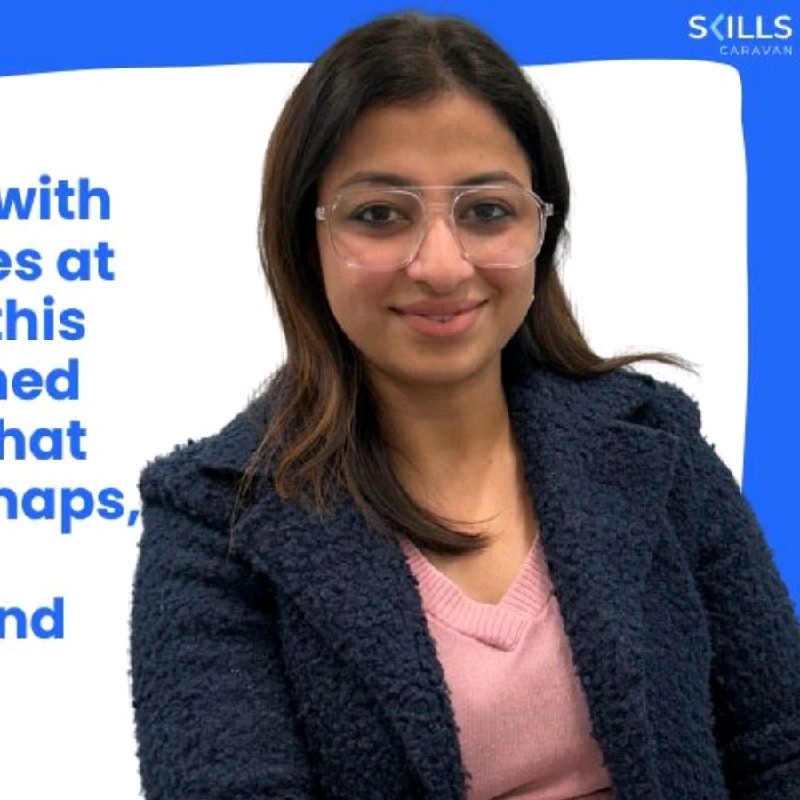

Shreya Verma is the VP of Product and Customer Success at Skills Caravan, where she leverages her decade-long expertise in learning & development (L&D) and human resources to shape an impactful, learner-centric platform. Her deep understanding of user needs, honed through hands-on L&D roles in leading companies, empowers her to translate insights into high-engagement interventions. At Skills Caravan, she bridges the gap between technology and people, ensuring learning experiences are not only effective but genuinely meaningful.




.png)
.png)
.png)
%20(1).png)
.png)


.webp)








Skillsoft is a global leader in corporate learning, providing digital training and education solutions to help businesses improve workforce productivity, reduce risk, and increase innovation.

FinShiksha provides a practical and industry-relevant approach to finance education, with courses designed by industry experts and delivered through interactive and engaging methods.

Wall Street Prep offers best-in-class financial training for aspiring finance professionals and corporate clients.

Udemy Business offers an unparalleled learning experience for organizations looking to upskill their workforce with over 155,000 courses taught by expert instructors.


.webp)


