


Skillsoft
Skillsoft is a global leader in corporate learning, providing digital training and education solutions to help businesses improve workforce productivity, reduce risk, and increase innovation.

.webp)
If you lead learning inside a Global Capability Center in India, the hardest part of buying an LMS for GCC India operations is not the evaluation. It is the paragraph you have to write afterwards — the one that explains to a group function eight time zones away why the platform they standardised on, paid for, and built their reporting around is not sufficient for the centre they are most proud of.
That paragraph fails when it reads as a complaint about the global tool. It succeeds when it reads as a coverage gap: a defined population and a defined regulatory obligation the global contract does not reach, closed by a layer that reports upward into the system headquarters already trusts. This guide is written to be that paper — the argument, the architecture, the objections you will get, and the numbers to answer them.
Do not propose replacing the global platform. Propose a second layer beneath it, with a defined boundary. The global platform stays the system of record — enterprise competency taxonomy, mandatory global policy training, employee master data, and the completion reporting that rolls up to the board.
The India layer becomes the system of delivery — high-volume cohort onboarding, statutory Indian compliance with audit-grade evidence, regional-language courseware, and the contractor and vendor population that never enters the global HRIS. Completion data flows one way, India to global, mapped to the global taxonomy. Nothing flows back.
Framed this way, you are not asking headquarters to admit a mistake. You are asking them to extend coverage to a population their licence never included.
Establish the scale argument first, because it stops the request from looking parochial. India's centres are no longer a delivery annexe of the parent — they are large enough, and turn over enough people, to have operating requirements of their own.
Read the last two cards together, and the business case is half-built. Attrition of 12 to 15 percent on a 2,000-person centre means 250 to 300 people to onboard every year before a single growth hire. With hiring volumes falling while revenue climbs, the mandate has shifted from recruiting capability to building it internally — an L&D problem, not a talent acquisition one. For the wider Indian platform market, our roundup of the top 10 learning management systems in India covers the field this layer would be chosen from.
The answer has to be specific, because a general one gets refused. Headquarters has heard "it doesn't work for us" from every region and learned to discount it. What survives is a gap that can be named, sized, and tied to a cost or an obligation. Six recur across Indian centres, each stated below in the form that travels upward.
Global platforms are provisioned for steady-state headcount and trickle hiring. Indian centres hire in cohorts and backfill continuously against 12 to 15 percent attrition — a 2,000-person centre onboards 250 to 300 people a year before any growth.
Say it as: throughput requirement the global licence was not sized forPOSH, DPDP awareness, and Indian labour code training are legal obligations sitting with the Indian entity. Globally licensed catalogues rarely carry them, and almost never in a form that produces evidence an Indian auditor or Internal Committee will accept.
Say it as: unevidenced statutory exposure carried by the entityGlobal platforms typically localise the interface, not the courseware. For engineering populations in English, this rarely matters. For facilities, security, transport and support staff on the same campus, it decides whether training lands at all.
Say it as: content localisation, not interface translationContractors, BOT-model staff, managed-service teams and vendor engineers work inside the centre but sit outside the global HRIS — so they sit outside the global LMS. In many centres, this is a quarter of the people on site.
Say it as: population the global provisioning model cannot reachEnterprise libraries are built for the parent's home market. Indian centres need role-specific technical content, campus-hire foundational programmes, and India-context manager training that global catalogues cover thinly or not at all.
Say it as: catalogue coverage gap against the India role mixA content or configuration change routed through a global L&D queue takes weeks. When a regulator updates a requirement or a hiring cohort lands in three weeks, the queue is the constraint — not the platform's capability.
Say it as: operating cadence mismatch, not a product defectNotice what is absent: any claim that the global platform is bad. Every gap above is a scope or sizing issue, and scope issues are solvable without anyone losing an argument. A request framed as "the global platform is inadequate" invites a defence of it. One framed as "it does not extend to these 600 contractors or to POSH evidencing" invites a solution.
Headquarters will defend a platform decision indefinitely. They will not defend a coverage gap they were unaware existed. Choose which conversation you are having.
Language is where India L&D leads most often overreach, weakening otherwise strong papers. If your centre is 1,800 software engineers, arguing for Hindi courseware will not survive contact with the parents' data — those employees interviewed in English. The credible version is narrower and harder to refuse: the campus population global reporting does not see. Facilities, security, transport and support staff, plus first-line hires from tier-two cities where English is a working second language.
That distinction also determines what you need from a platform. Interface translation is table stakes; multilingual courseware with assessments in the same language is not. Our breakdown of multilingual LMS requirements for regional-language training sets out how to test the difference in a demo rather than after signature.
What the global stack does well — say this out loud in the paper. Enterprise platforms hold the competency taxonomy that makes talent portable across regions, the mandatory policy training group must evidence centrally, and the reporting line the board reads. None of that should move. A proposal conceding this clearly is read as considered; one that does not is read as a land grab.
Every workable arrangement between a parent's learning stack and an India centre resolves to the same architecture, whether or not anyone names it. One system holds the truth about people and capability; another does the work of getting training in front of them. Problems begin when both try to do both jobs — which is what happens when a second platform arrives without an agreed boundary.
Completion events flow one way only — India layer to global platform — on a scheduled sync, mapped to the global competency taxonomy. Employee master data flows the other way, global to India, via HRIS provisioning. No field is written by both systems.
Group L&D's real fear is not cost. It is fragmentation — two systems disagreeing about whether someone completed mandatory training, with nobody able to say which is right. Every regional platform request they have refused was refused on that basis, usually correctly.
A one-way boundary removes that fear, and belongs on the first page of the paper rather than in the appendix. Four commitments carry the argument.
This is also where the category question gets settled. A delivery layer that only tracks completions cannot reconcile to a global competency model — it has no concept of proficiency to map onto. Our comparison of LMS, LXP and skills platforms explains where each category stops — which matters more here than in a standalone purchase, because the India layer must speak the parent's language on day one.
The sentence that does the work. In the paper's first paragraph, write: "This proposal does not move any data, training, or reporting currently held by the global platform." Then keep it true. Reviewers who read only the opening approve on that sentence alone; those who read further spend their attention on parts that need scrutiny rather than checking whether you are quietly proposing a migration.
This is the table to put in the appendix of the paper, because it converts an architectural argument into a line-by-line decision anyone can audit. Every row states which layer owns the capability and why, which is the level of specificity that turns an LMS for GCC India request from a preference into a scoping document. Rows marked partial are the ones your reviewers will spend their time on, so they are stated plainly rather than smoothed over.
| Capability | Global platform | India layer | Why the split falls here |
|---|---|---|---|
| Competency taxonomy | Owns | Consumes | Talent portability across regions depends on one shared vocabulary |
| Employee master data | Owns | Receives | Provisioned from global HRIS; India layer never authors employee records |
| Global policy & ethics training | Owns | None | Group legal obligation must be evidenced where group can see it |
| Board-level reporting | Owns | Feeds | One reporting surface; India activity appears inside it, not beside it |
| Cohort onboarding | Partial | Owns | Volume and cadence exceed what the global licence was sized for |
| POSH & Indian statutory training | Rarely covers | Owns | Obligation sits with the Indian entity; evidence must satisfy Indian audit |
| Regional-language courseware | Interface only | Owns | Content localisation is a different capability from interface translation |
| Contractor & vendor training | Cannot reach | Owns | Population sits outside global HRIS, therefore outside global provisioning |
| India technical & manager content | Thin | Owns | Local publishing cadence; global queue latency is the binding constraint |
| Skills & proficiency data | Consolidates | Generates | India assesses against the global model and syncs results upward |
| Campus-hire foundational programmes | Not designed for | Owns | India-specific intake pattern with no equivalent in the parent market |
| Leadership & global mobility | Owns | Nominates | Cross-region succession must stay in one system to function |
Three rows say partial, and each is a negotiation rather than a fact. Cohort onboarding is partial because the global platform can technically deliver it — the constraint is licence sizing, admin throughput, and configuration latency, not capability. If your parent will fund extra seats and delegate admin rights to India, that row moves back to global. Ask explicitly; the answer is occasionally yes, and a paper showing you asked beats one that assumed.
Regional-language courseware is partial in the opposite direction: it looks solvable and usually is not. Global platforms translate navigation, and some machine-translate captions. Neither produces an assessment a facilities supervisor can pass in Marathi. Test it in the parent's own system before writing the row — the fastest way to turn a contested claim into a demonstrated one.
The most persuasive line in any regional platform paper is a screenshot of the global system failing a test the reviewer suggested. Ask them to pick the test.
Skills and proficiency data matter most long-term and get the least attention early. If the India layer generates proficiency assessments that reconcile to the parent's competency model, the centre stops reporting activity and starts reporting capability — the currency headquarters already uses for every other region. Our guide to evaluating an enterprise LMS platform covers how to test taxonomy mapping in a demo rather than trusting the integration slide.
Fill this table with your own data before circulating it. Replace each justification with a number from your centre: how many contractors, how many cohort hires last year, how many statutory sessions the Internal Committee needed evidence for, how many days the last global content request took. A generic matrix reads as theory; the same matrix with your headcounts reads as an operations review, and those get approved.
Every regional platform proposal meets the same four objections, usually in the same order, from four different people. Prepare all four in writing before the first call. The pattern in each answer is identical: concede the legitimate concern, then narrow scope until it no longer applies.
Concede this immediately — it is true, and refusing it looks naive about their job. Then narrow: the exception is not regional preference; it is a population and a jurisdiction. Any region with a contractor workforce outside the HRIS and a national statutory obligation qualifies on the same test, and most have neither. Offer that test as policy rather than resisting it: a written qualification rule other regions must also meet makes you the author of the standard instead of the exception to it.
Closing line: "Apply the same two criteria to every region. We are asking to be assessed, not exempted."Never answer this with platform features — answer with the cost of the gap. Take the year's India onboarding cohort, multiply by days between joining and productive contribution, price those days at loaded cost, then show the reduction a purpose-built path delivers. On a centre of any size, this dwarfs an incremental licence. Add the second figure: what remediating an unevidenced statutory finding costs, including legal time and the parent's disclosure obligation. Finance discounts soft benefits and takes exposure seriously.
Closing line: "The licence is the smallest number in this paper. Here are the two larger ones."The objection most likely to be fatal and the easiest to pre-empt, because it is answered with documents rather than argument. Arrive with the data boundary diagram, one-way sync specification, vendor residency position, signed processing agreement, and SSO model already drafted. On privacy, the honest framing helps you: Indian learner data is already in scope for India's data protection regime wherever the platform sits, so a locally hosted layer with documented residency often improves the parent's position rather than complicating it.
Closing line: "Here is the boundary document. Please mark it up rather than approve it."The internal objection nobody writes down. It is a reputational concern inside the parent relationship, answered by who owns the framing. A centre adopting a delivery layer to hit onboarding and compliance targets is operating maturely; one quietly running spreadsheets and a shared drive because the global tool does not fit is the version that looks weak — and that is usually the status quo being defended. Make the comparison explicit: the alternative to a second layer is rarely full global adoption; it is undocumented workarounds.
Closing line: "The choice is a governed second layer or the ungoverned one we already run."The most effective artefact in the paper is a mock-up of the rollup report as it will look once the India layer is live. It answers the fragmentation objection visually and in advance: the reviewer sees their own dashboard, unchanged in structure, with coverage that used to be missing.
Row three is the row that wins the argument. Before the India layer, that population produced no reportable data at all — it did not appear at 0%, it did not appear.
Two of those rows are new information rather than better numbers, and the distinction is worth stating aloud. You are not offering an improvement on a metric they already track — you are closing a blind spot in a report they present to a board, which is a materially different sale. Building proficiency measures that reconcile upward is covered in our overview of skills benchmarking, and the measurement discipline behind the day-45 row is set out in our guide to measuring training ROI with an LMS.
Do not send the paper cold. Circulate the boundary diagram to IT and privacy a fortnight early and ask them to find problems with it. Reviewers who have already marked up a document defend their own comments in the meeting rather than the objection they would otherwise raise. Two weeks, and the character of the discussion changes completely.
The shortlist for an LMS for GCC India deployment differs from a standalone India LMS shortlist, because the winning platform must do something most evaluations never test: reconcile its own data to somebody else's competency model, on somebody else's schedule, without becoming a second employee master. Ranked by fit for that role, with the do-nothing option included because it is sometimes correct.
Best fit where the India layer must speak the parent's competency language
Built around a competency framework and skill matrix rather than a course catalogue — the property that lets India-generated proficiency data map cleanly onto a global taxonomy instead of arriving as unmatched completion rows. Open API and native Indian HRMS connectors (Keka, Darwinbox, greytHR, Zoho People, plus SAP SuccessFactors and Workday) cover both the local stack and the parent's system of record. Statutory Indian content with audit-grade evidencing, regional-language courseware, a complimentary 7,500-plus course library, INR-native billing, and India data residency. Clients include Hero MotoCorp, IndusInd Bank, Indian Oil and Tata Mutual Funds.
Best for: centres needing taxonomy reconciliation, statutory evidencing and contractor coverage in one layer Watch-out: India-focused footprint — a parent wanting one vendor across all regions will prefer a global platformBest for centres with large frontline or shared-services populations
Chennai-founded, reporting over four million learners and 400-plus customers, with real depth in mobile-first and multilingual delivery across India, the Gulf and Southeast Asia. Strong where the India population extends beyond desk-based engineering into operations, support and facilities. The constraint for a two-layer architecture is integration posture: GetApp's vendor-verified listing records no publicly available API, and reviewers describe external integrations as complex — which matters more here than in a standalone purchase, because the sync back to the parent is the whole design.
Best for: multi-country centres, frontline-heavy populations, fast agile rollouts Watch-out: confirm API access in writing before designing the sync boundaryBest when the parent insists on a single vendor across regions
Sometimes the politically easiest answer is a second instance of a platform the group already knows. Docebo's automation depth and multi-tenancy make regional instances workable, and procurement friction drops to near zero when the vendor is pre-cleared. Trade-offs: USD billing at renewal, thinner India statutory content out of the box, and Indian HRMS connectors that need configuring rather than arriving ready.
Best for: low procurement friction, groups with existing vendor relationships, multi-region consistency Watch-out: you inherit the global platform's India gaps in a new instance unless you fund content separatelyBest for engineering-heavy centres where internal experts author content
Its collaborative authoring model fits the GCC pattern unusually well: senior engineers hold knowledge the parent's catalogue will never contain, and the platform is designed for them to publish directly rather than route requests through L&D — which addresses the change-latency gap head-on. Weaker on the two gaps that usually justify the layer in the first place: Indian statutory content and regional-language courseware.
Best for: product and R&D centres, internal knowledge capture, fast local publishing Watch-out: does not solve statutory compliance or contractor coverage; may need pairingBest for smaller centres with a delivery-only mandate and tight budgets
Both are established Indian platforms with rupee billing, same-time-zone support, and enough coverage to run onboarding and compliance competently. The right answer when the India layer's job is delivery alone, and nobody is asking it for skills data. Neither leads on competency modelling, so the taxonomy reconciliation described earlier stays a manual exercise.
Best for: centres under roughly 800 people, delivery-only scope, cost-led procurement Watch-out: lighter skills architecture; upward reporting stays a spreadsheet jobOften the correct answer — and worth testing properly before proposing anything
If India headcount is below roughly 300 and growing slowly, the contractor population is small, and the parent will fund extra seats plus delegated admin rights, extending the global platform beats adding a layer on almost every measure. No boundary to design, no second contract, no integration risk, no political cost. Test this route seriously and document why it fails before proposing an alternative — a paper showing the cheaper option was evaluated and rejected on evidence is far harder to refuse than one that never mentions it.
Best for: smaller centres, low contractor ratio, cooperative group L&D, English-only populations Watch-out: fails at scale on onboarding throughput, statutory evidencing and non-employee coverageWhichever route you take, one criterion differs from a normal purchase: test integration and taxonomy mapping first, not learner experience. A platform with a beautiful interface that cannot sync cleanly to the parent fails politically within two quarters regardless of how learners rate it. Our guide to choosing the right learning management system covers the general selection method this adapts.
The learning conversation is decided by L&D; the approval is decided by whoever owns identity, data and risk. They will not ask about course libraries. They ask a short list of precise questions, and the proposals that clear review arrive with the answers already written. Below is that list.
| Question | What they are testing | The answer that clears review |
|---|---|---|
| Who authenticates users? | Whether a second credential store is being created | Parent's identity provider via SSO; no local passwords for employees. Non-employees on a separate, clearly scoped directory |
| Where is the data hosted? | Residency, and whether cross-border transfer is introduced | India region hosting with the region named in the contract, not inferred from the vendor's website |
| What personal data does it hold? | Scope creep beyond what learning requires | A field-level list. Name, employee ID, role, completions. Not compensation, not performance ratings, not personal contact details unless required |
| Which system wins on conflict? | The fragmentation risk, stated technically | No field is written by both systems. Provide the field ownership map, not a reassurance |
| What happens on exit? | Vendor lock-in and data portability | Export format, notice period and cost written into the contract before signature, not at renewal |
| Who are the sub-processors? | Fourth-party risk the parent inherits | A named list with locations, plus notification terms for changes to it |
| How is the sync secured? | The new attack surface the integration creates | Authenticated API over TLS, scoped credentials, logged transfers, defined failure behaviour |
| What is the retention period? | Compliance with both group policy and Indian obligations | Statutory records retained per Indian requirement; everything else on group's schedule. State both explicitly |
India's Digital Personal Data Protection framework applies to personal data processed in India regardless of where the platform is hosted. The parent's global system holding Indian learner records is therefore already in scope — a point most group privacy teams have registered but not resolved. An India-hosted layer with documented residency, explicit consent handling and a signed processing agreement is a tidier position than the status quo, not a messier one.
Lead with that. "This reduces an exposure you already carry" is received very differently from "we have thought about privacy". Bring the vendor's processing agreement to the first review rather than promising it later, and let the reviewer mark it up.
This is not legal advice. Data protection obligations depend on your entity structure, the categories of data processed and the parent's own regulatory position. Involve the group's privacy counsel and your Indian legal team before committing to any architecture described here.
Someone, well-intentioned, loads a global policy course into the India layer so learners have "everything in one place". Two completion records now exist for one obligation, they diverge within a quarter, and the fragmentation objection is proven correct in front of the people who raised it. Lock this in configuration, not policy.
The sync breaks and nobody notices for six weeks, because nothing visibly changes at either end. Instrument it: define expected transfer volume, alert on deviation, and make sync health a named line in the monthly L&D report so its absence is conspicuous.
Non-employees enter through a local directory and never leave it, because offboarding runs through an HRIS they were never in. Six months on, the layer holds hundreds of active accounts for people who left. Define the deprovisioning trigger — usually vendor contract end — during design, not after the first audit finds it.
All three are integration failures rather than platform failures, which is why the HRMS connection deserves more scrutiny during evaluation than any learner-facing feature. Our guide to integrating an LMS with HRMS covers the provisioning and deprovisioning patterns that prevent the third one entirely.
Write the field ownership map before you shortlist. One page, three columns: data field, owning system, sync direction. It takes an afternoon, it is the artefact IT and privacy will actually read, and building it early frequently changes the shortlist — you discover which vendors genuinely support one-way syncing on a defined boundary and which simply agree in a sales call.
Finance reads one figure and forms a view before reading anything else, so choose which figure that is. The instinct is to lead with licence cost and defend it. The stronger approach leads with the cost of the gap and presents the licence as the smaller number that closes it — because on any centre above a few hundred people, that is arithmetically what it is.
Indian enterprise platforms are quote-based, so published figures are indicative at best. What is comparable is the structure of each cost element and what drives it upward once you are inside the contract.
| Cost element | How it behaves | What to confirm before signing |
|---|---|---|
| Platform licence | Per user per year, banded by headcount; INR-native with Indian vendors | Whether contractors count as licensed users, and at what rate |
| Implementation | One-off; typically 20–50% of first-year subscription on enterprise deals | Whether the sync to the parent platform is in scope or a separate line |
| Integration | Self-served with API access; a quoted project without it | API availability in writing — this is the single largest cost variable |
| Content | Included library versus separately licensed marketplace | Whether Indian statutory content is included or an add-on |
| Statutory evidencing | Usually bundled; occasionally a compliance module upsell | That audit exports are included, not a premium reporting tier |
| Renewal uplift | Stated percentage, or unstated and therefore unbounded | A capped uplift written into the contract |
| Currency | INR-native removes forex exposure; USD-billed does not | Billing currency and whether the parent or the entity is the contracting party |
Below is the structure finance teams respond to. Fill it with your own figures — the shape matters more than the illustrative numbers, and reviewers trust a model they can challenge line by line more than a total they cannot.
2,000-person centre · 14% attrition · 280 annual hires including backfill
Price recovered days at loaded cost for the relevant role mix. On most centres of this size, the recovered-productivity figure alone exceeds the total first-year cost of the layer, before any compliance exposure is counted.
Two refinements make this harder to argue with. Use loaded cost rather than salary — finance will do that conversion anyway, and doing it yourself signals you understand their model. And present the productivity figure as a range with the assumption behind each end named. A range with stated assumptions reads as analysis; a single confident number reads as advocacy and gets discounted.
Be equally candid about what the layer does not save. It does not reduce the global licence — those seats stay. It does not remove L&D headcount; running two layers well takes at least a part-time administrator in India. Naming both unprompted buys more credibility than any benefit you could add. On where learning budgets leak more broadly, our guide to cutting eLearning costs while protecting training ROI covers the line items that most often turn out to be avoidable.
Ask for the pilot budget, not the programme budget. A three-month pilot at one cohort's scale is approved well below the level that requires a steering committee, and it converts the debate from a forecast argument into an evidence one. Once the pilot produces a real day-45 proficiency number against a real baseline, the extension conversation is procedural. Most successful two-layer setups were approved twice, and the first approval was small.
Sequence matters more than speed, because the rollout does two jobs at once: standing up a platform and producing the evidence that converts a pilot into a programme. Get the order wrong — content before boundary, launch before baseline — and you finish with a working system and no argument.
Step four is the one to protect when the timeline compresses, and it will. Taxonomy mapping produces nothing visible in week seven, making it the natural candidate for deferral — and deferring it is how two-layer setups quietly become two disconnected systems. Everything else can slip a fortnight; this cannot, because retrofitting a competency mapping onto a populated system is an order of magnitude harder than doing it on an empty one. The model is covered in our guide to competency-based learning systems.
Onboarding is the recommended first use case for one reason: it is the only one where the business already agrees a problem exists. Hiring managers complain about ramp time unprompted, so the pilot has a sponsor before you ask for one. Our employee onboarding overview covers the path design, and the broader sequencing logic is in our guide to LMS implementation strategies.
Invite group L&D to co-own the pilot. Name someone from the global team as reviewer on the taxonomy mapping and give them a standing slot in the weekly check-in. It slows week four by a few days and changes the politics entirely — after 90 days the result belongs to both teams, and the extension request arrives with an advocate at headquarters rather than an assessor.
Most proposals for an LMS for GCC India rollout fail on presentation rather than substance. The gap is real, the numbers work, and the paper still gets deferred — usually for one of six reasons, all avoidable in the drafting.
Nobody at headquarters is evaluating a platform. They are evaluating whether to permit an exception to a standard. Open with the population and the obligation; the vendor should not appear until the second half.
Someone in the approval chain chose it, defended it and is measured on its adoption. Every sentence describing its shortcomings turns a potential ally into a defendant. Describe gaps in coverage, never deficiencies in the product.
A paper that never seriously evaluates extending the global platform reads as a decision looking for justification. Evaluate it, cost it, show why it fails at your volumes — and it becomes far harder to refuse.
Full-scope requests attract steering committees and quarterly cycles. A three-month pilot at one cohort's scale is approved several levels lower and converts the argument from forecast to evidence.
They will be consulted eventually, and late consultation reads as being managed. Bring them in at boundary-design stage, before the vendor conversation, and ask them to find problems rather than sign off.
It produces nothing visible for weeks, so it slips. Skip it and the second layer becomes a disconnected system within two quarters — which is precisely the outcome group L&D predicted, and they will remember.
India's centres are no longer regional outposts running a parent's playbook. With 2,117 GCCs, 2.36 million professionals, and attrition that has a mid-sized centre onboarding hundreds of people a year, operating requirements have outgrown what a single global learning contract was scoped to cover. That is a sizing fact, not a criticism of anyone's platform choice.
Proposals that succeed share one structural feature: they give headquarters more control, not less. One reporting surface, one competency vocabulary, one direction of data flow, and a previously invisible population now appearing in a board-level report. Ask for a pilot, capture a baseline before launching it, and let one cohort's result make the argument a forecast never could.
If the category boundary is still unsettled, our guide to what an LXP is sets out where delivery ends and capability measurement begins, and our compliance training software overview covers the statutory evidencing the India layer has to produce.
Send us your field ownership map and the parent platform you run. We will show you exactly how the sync and taxonomy mapping would work — and tell you plainly if extending your global platform is the better answer.
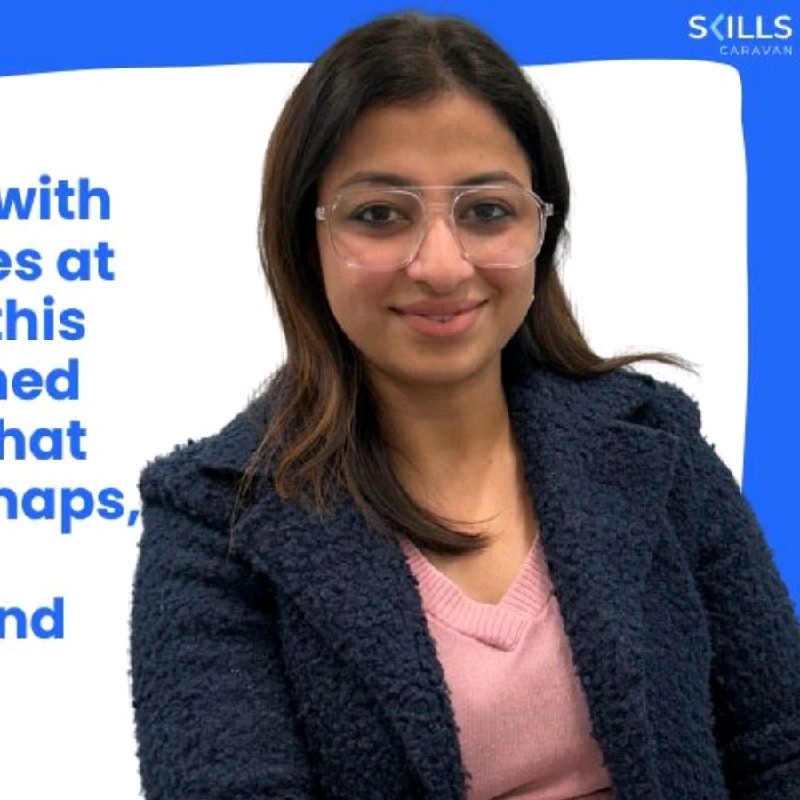

Shreya Verma is the VP of Product and Customer Success at Skills Caravan, where she leverages her decade-long expertise in learning & development (L&D) and human resources to shape an impactful, learner-centric platform. Her deep understanding of user needs, honed through hands-on L&D roles in leading companies, empowers her to translate insights into high-engagement interventions. At Skills Caravan, she bridges the gap between technology and people, ensuring learning experiences are not only effective but genuinely meaningful.




.png)
.png)
.png)
%20(1).png)
.png)


.webp)








Skillsoft is a global leader in corporate learning, providing digital training and education solutions to help businesses improve workforce productivity, reduce risk, and increase innovation.

FinShiksha provides a practical and industry-relevant approach to finance education, with courses designed by industry experts and delivered through interactive and engaging methods.

Wall Street Prep offers best-in-class financial training for aspiring finance professionals and corporate clients.

Udemy Business offers an unparalleled learning experience for organizations looking to upskill their workforce with over 155,000 courses taught by expert instructors.


.webp)


