


Skillsoft
Skillsoft is a global leader in corporate learning, providing digital training and education solutions to help businesses improve workforce productivity, reduce risk, and increase innovation.


.webp)
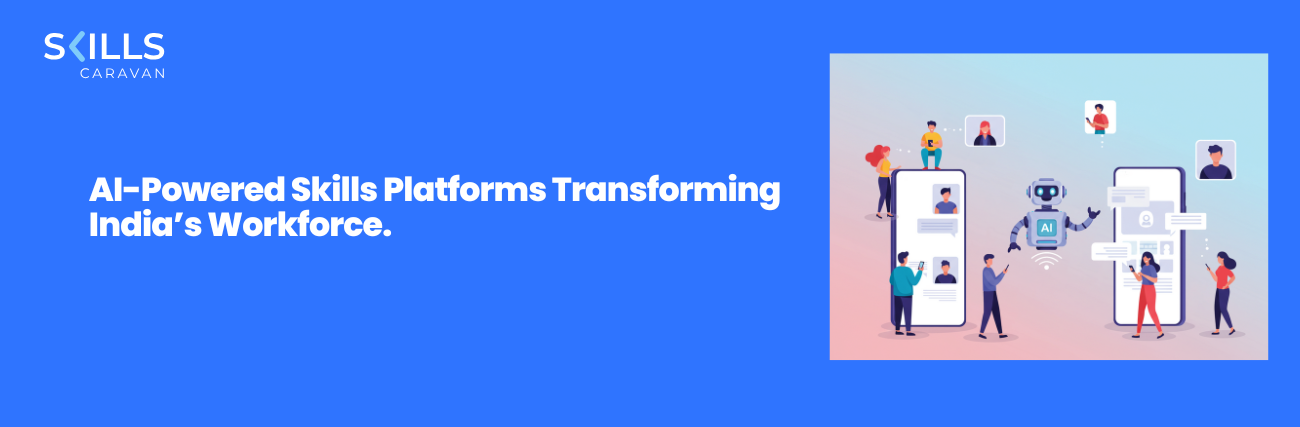
India’s workforce is changing faster than ever. New technologies, automation, and changing job roles are making traditional training models outdated. Today, organizations are more interested in the skills employees actually have and can use on the job, rather than just the number of courses they have completed.
This change has led to the rise of skills-based learning platforms, supported by AI-driven skills platforms and smart skill matrix tools. These resources help organizations shift from guessing to using data for workforce development.
In this blog, we will explain what these platforms are, why they matter in India, and how companies can use them to build teams ready for the future.
A skills-based learning platform focuses on building, measuring, and improving job-relevant skills, rather than just delivering generic training content.
Unlike traditional learning management systems (LMS) that prioritize course completion, skills-based platforms answer more meaningful questions:
This model ensures learning outcomes translate into real productivity, not just certificates.
Many Indian organizations still rely on legacy LMS tools. While these systems were effective for compliance training, they struggle in today’s skills-driven environment.
Common limitations include:
As digital transformation accelerates across Indian industries—from IT and BFSI to manufacturing and retail—these gaps become costly.
That’s where AI-powered skills platforms step in.
An AI-powered skills platform uses artificial intelligence to continuously analyze workforce data, learning behavior, and role requirements to provide smart skill insights and recommendations.
Instead of manually defining every skill and mapping it to every role, AI helps automate and optimize the process.
For Indian enterprises managing scale and speed, AI removes human bias and significantly reduces administrative overhead.
An AI-powered skills platform turns learning into a strategic workforce intelligence system, not just a training tool.
At the core of skills-based learning lies the skill matrix platform.
A skill matrix is a structured framework that visually represents:
Traditionally, skill matrices were maintained in spreadsheets—static, outdated, and difficult to scale. A modern skill matrix platform digitizes this process and integrates it with learning, performance, and workforce planning.
For Indian companies facing high attrition and frequent internal movements, skill matrix platforms bring much-needed structure and fairness.
When AI and skill matrices work in isolation, value is limited. When combined, they become transformative.
Here’s how the ecosystem works:
This closed-loop system ensures learning stays aligned with real business needs, not assumptions.
Organizations adopting this approach see measurable improvements across people, performance, and planning.
In India’s competitive talent market, this often becomes a retention and productivity advantage.
Skills-based learning is no longer limited to large enterprises. It benefits organizations of all sizes and sectors.
Whether you’re in IT services, manufacturing, BFSI, healthcare, or EdTech, the model adapts well to the realities of Indian organizations.
Not all platforms are equal. When evaluating options, focus on capability over features.
Avoid tools that look impressive but fail to deliver actionable insights.
India is moving rapidly towards a skills-first economy. Government initiatives, digital adoption, and evolving job roles are reinforcing this shift.
In the coming years, we’ll see:
Organizations that adopt skills-based learning platforms today will be far better positioned for tomorrow.


Zainab is an experienced LearnTech leader with a strong track record of building and scaling digital learning solutions across the Middle East, Africa, APAC, the UK, and the USA. With deep expertise in Generative AI, capability development, and data-driven learning strategies, she has helped organizations modernize their learning ecosystems, enhance employee readiness, and deliver impactful, scalable L&D outcomes. Her work blends innovation with strategic clarity, enabling enterprises to adopt future-ready learning models that drive sustainable growth.



.png)
.png)
.png)
%20(1).png)
.png)


.webp)







Skillsoft is a global leader in corporate learning, providing digital training and education solutions to help businesses improve workforce productivity, reduce risk, and increase innovation.

FinShiksha provides a practical and industry-relevant approach to finance education, with courses designed by industry experts and delivered through interactive and engaging methods.

Wall Street Prep offers best-in-class financial training for aspiring finance professionals and corporate clients.

Udemy Business offers an unparalleled learning experience for organizations looking to upskill their workforce with over 155,000 courses taught by expert instructors.


.webp)


