


Skillsoft
Skillsoft is a global leader in corporate learning, providing digital training and education solutions to help businesses improve workforce productivity, reduce risk, and increase innovation.

.png)
.webp)
Two of the most common shortlists an Indian L&D buyer lands on look nothing alike under the hood. Zoho Learn is built by Zoho, an Indian company, bills in rupees, and pairs a knowledge base with a course builder. TalentLMS is a polished, training-first platform built by Epignosis, billed in US dollars, and trusted by 70,000+ teams worldwide. Both are affordable, both are easy to start, and both are routinely recommended for small and mid-sized teams — which is exactly why the honest Zoho Learn vs TalentLMS India verdict depends less on a feature checklist and more on how your team actually works, pays, and complies.
This guide runs the two platforms head to head through an India lens specifically: pricing in INR rather than USD, DPDP Act 2023 data handling, POSH Act 2013 training content, Hindi and regional-language delivery for frontline staff, and integration with Indian HRMS platforms like Keka, Darwinbox, greytHR, and Zoho People. It is written for the HR or L&D leader who has both pricing pages open in separate tabs and wants a straight answer rather than a directory listing. For the wider field beyond these two, our roundup of the top 10 LMS platforms in India goes wider than this two-way race.
Choose Zoho Learn if you are a small Indian team that wants a combined knowledge base and light training tool at the lowest INR cost — especially if you already run on Zoho. Choose TalentLMS if your priority is structured, engaging, gamified course training across employees, customers, and partners, and you can work with USD billing. Choose neither, and look at an India-built skills platform, if you need competency mapping, POSH and DPDP-ready compliance, Hindi and regional-language delivery, and native Keka, Darwinbox, or greytHR integration.
If you only have two minutes, the box above is your shortlist. If you are about to commit budget, the sections below give you the head-to-head detail — a full feature table, INR pricing, compliance fit, and the honest trade-offs each platform makes — so the decision is yours to defend, not ours to assert.
Most comparisons treat these two as interchangeable LMS products. They are not. The first thing to understand is that they were designed to solve slightly different problems, and that difference in DNA explains almost every trade-off that follows. One is a knowledge platform that also trains; the other is a training platform, full stop.
Zoho Learn pairs a knowledge management system — manuals, SOPs, team wikis, searchable documentation — with a course builder that handles lessons, quizzes, assignments, drip scheduling, and reporting. Role-based access and team workspaces sit on top.
It is part of the broader Zoho suite, so it connects natively to Zoho People, Zoho CRM, Mail, and Cliq. For a team already living in Zoho, Learn is the training and knowledge layer that slots into the tools they already pay for.
TalentLMS is purpose-built to deliver structured courses. It supports SCORM, xAPI, and cmi5 content, an assessment engine, learning paths, gamification, and TalentCraft AI for generating courses from documents and video.
Its "branches" feature lets you run separate training portals for employees, customers, and partners from one account, and a paid TalentLibrary adds 700+ ready-made courses. It connects to 30+ tools like Zoom, Salesforce, Okta, and BambooHR.
Read those two descriptions again, and the core tension is obvious. Zoho Learn is broader but shallower on pure training depth; TalentLMS is narrower but deeper on the craft of building and delivering engaging courses. If your real need is "capture what our team knows and run some training on it," Zoho Learn's combined model is genuinely useful. If your need is "run polished, gamified, multi-audience course programmes," TalentLMS is built for exactly that.
Both, importantly, sit at the simpler end of the market. Neither is an enterprise skills platform with competency frameworks and skills analytics — and for many Indian SMBs, that is a feature, not a flaw. If you want to ground the vocabulary before going deeper, our explainer on how to compare learning management software lays out the categories these two sit inside.
A generic global comparison of these two platforms would weigh course authoring, gamification, and integrations, and call it a day. For an Indian team, four India-specific factors quietly decide more than any feature list — and they happen to be the dimensions where Zoho Learn and TalentLMS diverge most sharply.
Zoho Learn is billed in INR by an Indian company, so your cost is fixed and predictable. TalentLMS is billed in USD; the rupee figure on your invoice moves with the exchange rate at every renewal, and you handle forex and GST on top. Over a multi-year contract, that variability is a real budgeting factor, not a rounding error.
The Digital Personal Data Protection Act 2023 governs how employee learning data is stored and processed in India. Zoho operates India data centres and keeps data within its own infrastructure, which simplifies the residency conversation. TalentLMS is GDPR-compliant and secure, but hosted outside India by default, so DPDP alignment needs deliberate configuration and documentation.
The POSH Act 2013 makes awareness training and an Internal Complaints Committee effectively mandatory for organisations with 10 or more employees. Neither platform ships a maintained POSH library — both let you upload your own course, but you create or source the India-specific compliance content yourself on either one.
Both can host content in any language you build, but neither bundles ready India-localised content in Hindi, Tamil, Telugu, Marathi, Bengali, or Kannada. On integration, Zoho Learn connects deeply to Zoho People; neither has a native connector for India-first HRMS like Keka, Darwinbox, or greytHR.
The pattern worth noticing: Zoho Learn wins the India lens on billing and data residency because it is an Indian product. TalentLMS wins on training depth because it is a specialist. But on the two things many Indian teams need most — ready POSH content and native Indian HRMS integration — both fall short, which is why the comparison rarely ends as a clean two-horse race.
If compliance is central to your decision, our guide to running compliance training through an LMS in the AI era covers what "POSH-ready" should actually mean before you sign anything.
Put on a single screen, the Zoho Learn vs TalentLMS India decision resolves into a handful of dimensions that actually move budgets and learning outcomes — origin and billing, training depth, India compliance fit, and integration. The table below scores both on each, with the rupee figures held at an illustrative ₹84 to the dollar so you can read like-for-like.
| Dimension | Zoho Learn | TalentLMS |
|---|---|---|
| Built by / origin | Zoho Corporation — Indian company, Tamil Nadu | Epignosis — US-headquartered |
| Billing currency | INR-native, fixed | USD — rupee cost moves with forex |
| Free tier | Up to 5 users | 5 users / 10 courses |
| Entry paid price | ~₹60–₹85 per user/mo | Core ~$149/mo (~₹12,500) for up to 100 users |
| Core design | Knowledge base + training combined | Training-first LMS |
| Content standards | Native lessons, quizzes; lighter SCORM | SCORM 1.2, xAPI, cmi5 |
| AI course creation | Limited | TalentCraft AI (generate from docs/video) |
| Gamification | Basic | Strong — points, badges, leaderboards, levels |
| Multi-audience portals | Team workspaces | Branches — employees, customers, partners |
| Ready content library | None bundled | TalentLibrary 700+ courses (paid add-on) |
| Knowledge management | Strong — manuals, SOPs, wikis | Not a focus |
| Skills analytics / competency mapping | No | No |
| India data residency (DPDP) | India data centres | Hosted outside India by default |
| POSH content out of the box | No — bring your own | No — bring your own |
| Indian HRMS integration | Zoho People native; others limited | 30+ tools, but no Keka / Darwinbox / greytHR |
| Best for | Small Zoho-ecosystem teams; KM + light training | Polished, gamified multi-audience course training |
The honest takeaway from the grid: there is no row where both lose badly and none where one dominates across the board. Zoho Learn leads on origin, billing, data residency, and knowledge management; TalentLMS leads on training depth, gamification, content standards, and a ready library. They tie at zero on the enterprise capabilities of skills analytics and competency mapping, which is the clearest signal of where each platform's ceiling sits.
If those two "no" rows matter to you, it is worth understanding the category above a basic LMS. Our breakdown of LMS vs LXP vs skills platforms explains what skills analytics and competency mapping add — and why neither of these two delivers them.
Zoho Learn's pitch to an Indian team is unusually clean: it is made at home, billed in rupees, and it does two jobs — knowledge management and training — that smaller organisations usually buy separately. If your company runs documentation in scattered Google Docs and training in someone's head, Learn consolidates both into one searchable, role-controlled place for a price that barely registers on the budget.
The deepest advantage shows up when you already use Zoho. Because Learn shares identity and data with Zoho People, Zoho CRM, and the rest of the suite, onboarding flows, employee records, and access controls carry over without a separate integration project. For a team standardised on Zoho, that single-vendor simplicity is worth more than a feature spec sheet suggests.
Free for up to 5 users. Paid plans start at roughly ₹60–₹85 per user/month, with the per-user rate dropping as you cross 25, 50, and 100 users. 30-day free trial of the Professional plan. Billed in INR.
Startups and small businesses — especially those already on Zoho — that want to centralise institutional knowledge and run light, structured training without a heavy LMS budget. If your training is mostly onboarding, SOP walk-throughs, and the occasional quiz, Zoho Learn covers it comfortably. If you need the depth a dedicated training engine provides, read the next section before deciding — and our primer on what a corporate LMS should do sets a useful baseline for that judgement.
TalentLMS earns its reputation on the part of the job Zoho Learn treats as secondary: making training feel good to build and good to take. Course creation is fast, the learner interface is clean, gamification is genuinely engaging, and TalentCraft AI turns a document or video into a draft course in minutes. With 70,000+ teams using it worldwide, it is a mature, well-supported product that almost any non-technical admin can run from day one.
Its standout structural feature is branches — separate, branded training portals inside one account. That makes TalentLMS unusually good at serving multiple audiences: train employees in one branch, customers in another, channel partners in a third, all without buying separate systems. For an Indian SaaS company or franchise that trains people outside its own payroll, that capability alone can settle the decision.
Free for 5 users / 10 courses. Core ~$149/mo for up to 100 users (~₹12,500/mo at ₹84/$), Grow ~$299/mo (~₹25,000/mo), Pro ~$579/mo (~₹48,600/mo); Enterprise custom. 20% off on annual billing; a Flex add-on switches to active-user pricing. Billed in USD.
Indian SMBs and mid-market teams whose priority is high-quality, engaging course training — onboarding, product, sales, and soft-skills programmes — and especially those who need to train customers or partners alongside employees. The trade-off you accept is USD billing and the need to bring your own India compliance content. If your training ambitions are mostly about polish and engagement rather than skills data, TalentLMS is hard to beat at its price.
Feature tables tell you what each platform can do; they do not tell you which one is right for you. The cleaner way to decide is to match the platform to your team's actual situation. Here are the five most common Indian team profiles, along with an honest recommendation for each.
If your HR sits in Zoho People and your sales in Zoho CRM, Learn is the obvious choice. The shared identity, data, and billing eliminate the need for an integration project entirely, and you keep everything with one Indian vendor, billed in rupees.
For teams whose biggest gap is scattered documentation — SOPs, process manuals, tribal knowledge — Learn's combined wiki-and-courses model solves two problems with one low-cost subscription. Training is the bonus, not the burden.
If you are running real onboarding, product, sales, or soft-skills programmes and you want gamification, branching, SCORM content, and a polished learner experience, TalentLMS is built for exactly this, and Zoho Learn is not.
A SaaS company, franchise, or dealer network that trains audiences beyond its own payroll needs separate branded portals. TalentLMS's branches handle that cleanly; on Zoho Learn, it is a stretch. Just budget for USD billing.
If you need competency mapping and skills analytics, ready POSH and DPDP-aligned compliance, Hindi and regional-language content, and native integration with Keka, Darwinbox, or greytHR, both platforms hit their ceiling. An India-built skills platform is the better fit — see how that native Keka HRMS integration automates compliance and onboarding from a single employee record.
Notice that four of the five profiles point cleanly to Zoho Learn or TalentLMS — for many Indian teams, this really is a simple two-way choice, and you should pick and move on. It is only the fifth profile, the enterprise one, where both platforms run out of road, and the decision opens up.
When you reduce the Zoho Learn vs TalentLMS India choice to a line item in your L&D budget, two structural facts dominate everything else. First, Zoho Learn is priced per user in rupees, so a small team can run it for almost nothing. Second, TalentLMS is priced in US dollars in flat tiers, so it is cheap per head only once you fill the tier. The table below holds the dollar at an illustrative ₹84 so you can compare honestly.
| Plan level | Zoho Learn | TalentLMS |
|---|---|---|
| Free | Up to 5 users, INR-native | 5 users / 10 courses |
| Entry paid | ~₹60–₹85 per user/mo (Professional) | Core ~$149/mo (~₹12,500) for up to 100 users |
| Mid tier | Per-user rate drops past 25 / 50 / 100 users | Grow ~$299/mo (~₹25,000/mo) |
| Upper tier | Volume pricing on request | Pro ~$579/mo (~₹48,600/mo); Enterprise custom |
| Pricing model | Per registered user | Flat tier by user cap; Flex add-on = active users |
| Annual discount | Yes, on annual billing | 20% off annual billing |
| Forex exposure | None — billed in INR | Yes — rupee cost shifts with USD rate |
| Content included | None bundled | TalentLibrary 700+ courses (paid add-on) |
The break-even logic is the crux. For a 10-to-30-person team, Zoho Learn at ₹60–₹85 per user is dramatically cheaper than TalentLMS's ~₹12,500/month Core tier. But TalentLMS's Core is a flat price for up to 100 users — so a 90-person company pays the same ~₹12,500/month, which works out to roughly ₹140 per user, in the same ballpark as Zoho's per-seat rate, while getting far more training depth. The more users you pack into a TalentLMS tier, the better its per-head value looks.
Two costs the sticker price hides. On TalentLMS, confirm whether you are billed on registered or active users (the Flex add-on changes this) and budget for forex movement at renewal. On Zoho Learn, the platform is cheap, but you supply all the content — factor in the cost of building or licensing courses, since neither platform bundles a compliance or skilling library.
Cheapest licence rarely equals lowest total cost of ownership once you add content, admin time, and integration. To turn any of these quotes into a business case your CFO will accept, our framework on maximising learning platform ROI moves the conversation from licence cost to learning impact.
So, how should you settle the Zoho Learn vs TalentLMS India question for your own organisation? Start by being honest about what you are really buying. If you are buying a place to keep knowledge and run light training cheaply in rupees, Zoho Learn wins. If you are buying engaging, polished, multi-audience course training and can live with USD billing, TalentLMS wins. Each is the right answer to a different question — and most teams know within a minute which question is theirs.
You are a small Indian team, already on Zoho or budget-led, who needs a knowledge base plus light training in INR with India data residency.
Your priority is high-quality course training with gamification and branches for employees, customers, and partners — and USD billing is acceptable.
There is a third profile this comparison keeps surfacing: the Indian enterprise that needs more than either platform was built to give. If your real requirements are competency mapping and skills analytics, POSH and DPDP-aligned compliance content ready to assign, Hindi and regional-language delivery for a frontline workforce, and native integration with Keka, Darwinbox, greytHR, or Zoho People, then a knowledge tool and an SMB LMS will both be stretched past their design.
That is the gap an India-built skills platform fills. Skills Caravan bills in INR like Zoho, matches the training depth conversation, and adds what both omit — an AI competency framework, real skills analytics, a complimentary library of 7,500+ courses, India compliance content, and native Indian HRMS connectors. For teams whose learning maturity has outgrown "host courses and track completions," it is the more defensible long-term choice. You can weigh it on the learning experience platform overview and against your role map with skills benchmarking.
Zoho Learn and TalentLMS are both strong, affordable choices for different jobs. Zoho Learn is the Indian-built, INR-native knowledge-and-training tool for small teams; TalentLMS is the polished, training-first specialist for engaging multi-audience programmes. Decide which sentence is yours, and the choice is easy.
The only wrong move is forcing either one to do an enterprise skills job it was never built for. If that is where you are headed, shortlist an India-built skills platform alongside them before you sign — and compare on total cost of ownership in rupees, not sticker price.
A 30-minute India-focused walkthrough: INR pricing modelled against Zoho Learn and TalentLMS, POSH and DPDP readiness, Keka/Darwinbox integration, and the included 7,500+ course library.
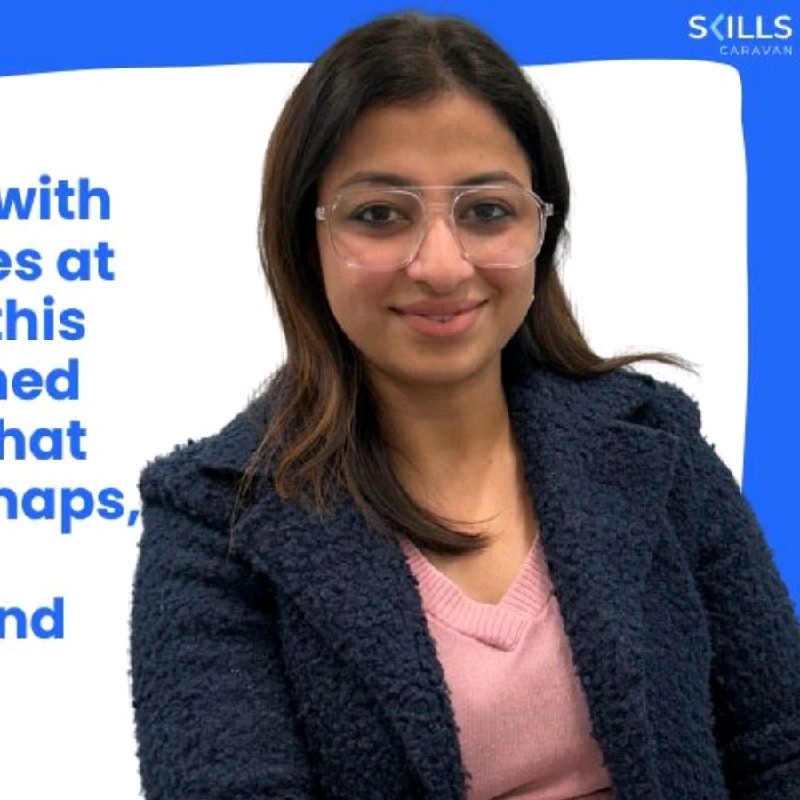

Shreya Verma is the VP of Product and Customer Success at Skills Caravan, where she leverages her decade-long expertise in learning & development (L&D) and human resources to shape an impactful, learner-centric platform. Her deep understanding of user needs, honed through hands-on L&D roles in leading companies, empowers her to translate insights into high-engagement interventions. At Skills Caravan, she bridges the gap between technology and people, ensuring learning experiences are not only effective but genuinely meaningful.


.png)
.png)
.png)
%20(1).png)
.png)


.webp)




Skillsoft is a global leader in corporate learning, providing digital training and education solutions to help businesses improve workforce productivity, reduce risk, and increase innovation.

FinShiksha provides a practical and industry-relevant approach to finance education, with courses designed by industry experts and delivered through interactive and engaging methods.

Wall Street Prep offers best-in-class financial training for aspiring finance professionals and corporate clients.

Udemy Business offers an unparalleled learning experience for organizations looking to upskill their workforce with over 155,000 courses taught by expert instructors.


.webp)


