


Skillsoft
Skillsoft is a global leader in corporate learning, providing digital training and education solutions to help businesses improve workforce productivity, reduce risk, and increase innovation.

.webp)
.webp)
"Training" and "development" are often used as if they were the same thing, and both sit under the same L&D umbrella. But they are not interchangeable — they have different goals, timeframes, and methods, and confusing them leads to real problems: running a one-off course when someone needs a growth path, or building a leadership programme when the team just needs to learn a tool. Knowing which is which lets you apply the right approach to the right need.
This guide sets out the difference between training and development across ten clear dimensions, with examples, and shows why the strongest organisations invest in both. For the function they both belong to, see our guide to training and development in HRM.
Training is short-term and job-focused — it builds the skills someone needs for their current role. Development is long-term and growth-focused — it grows a person's potential for future roles.
Training prepares people for the job they have; development prepares them for the person they could become.
The sections below define each, lay out all ten differences side by side, give examples, and show how to build a strategy that uses both.
Clean definitions first, because the ten differences all flow from these two ideas. The distinction is one of purpose: fixing the present versus building the future.
A structured, short-term process of teaching the specific skills or knowledge a person needs to perform their current job well. It is role-specific, has clear objectives, and shows results fairly quickly.
Examples: onboarding on a system, a safety procedure, upskilling on new software.
A broader, long-term process of growing a person's knowledge, behaviour, and potential for future roles and career progression. It goes beyond the current job to build capability over time.
Examples: a leadership programme, mentoring, stretch assignments, job rotation.
The relationship between them is important: training is often a step inside development. A manager on a two-year path to a director role might complete several specific training courses along the way. So they are not opposites — training is narrow and immediate, development is broad and ongoing, and one frequently serves the other. With the definitions clear, the ten concrete differences come next.
The clearest way to see the difference between training and development is to compare them across the dimensions that actually change how you run each. Here are the ten that matter most.
| # | Dimension | Training | Development |
|---|---|---|---|
| 1 | Focus | The current job and its tasks | The whole person and future roles |
| 2 | Timeframe | Short-term | Long-term, ongoing |
| 3 | Scope | Narrow, specific skills | Broad capability and behaviour |
| 4 | Goal | Improve present performance | Grow future potential |
| 5 | Driven by | The organisation and role needs | The individual and their career |
| 6 | Orientation | Reactive — fills a defined gap | Proactive — builds for what's next |
| 7 | Methods | Courses, workshops, e-learning | Coaching, mentoring, stretch roles |
| 8 | Measured by | Task performance, completion | Progression, growth over time |
| 9 | Scope of change | Skill-level | Mindset and career-level |
| 10 | Outcome | Competent in the current role | Ready for bigger roles |
Read down the two columns and a clear pattern appears: training is narrow, immediate, and role-bound, while development is broad, ongoing, and person-bound. The next section digs into the handful of these that matter most in practice.
Ten distinctions are useful, but four of them do the heavy lifting — get these right and the rest follow. These are the ones that most change how you design a programme.
Training targets a task the role requires; development targets the person's whole capability. This one distinction decides almost everything else about how you approach it.
Training has a start, an end, and a quick result. Development is continuous and unfolds over months and years, so it needs a plan, not just an event.
Training is usually pushed by the business to close a gap. Development works best when the individual owns it, with the organisation enabling and guiding.
You judge training by whether the task improved soon after. You judge development by how far someone has grown over a longer horizon — a different metric entirely.
The practical takeaway: if the need is a specific, present-role skill, design training — clear objective, short course, quick check. If the need is future capability or a career step, design development — a longer path with coaching and experience. Seeing this in real examples makes it concrete, which is next.
The theory lands when you see the same person and need handled two different ways. Notice how each training example fixes a present-role need, while each development example builds longer-term capability.
| Situation | Training approach | Development approach |
|---|---|---|
| New hire joins | Onboard them on the tools and processes of the role | Set a growth plan toward where they could go in 2–3 years |
| New software rolled out | Upskill the team on how to use it | Build data-fluency and adaptability for future tools |
| Rising manager | Teach the specific reporting and review process | Leadership programme and mentoring for a director role |
| Sales team underperforms | Coach a specific closing technique | Develop strategic account thinking over time |
| Compliance requirement | Run the mandatory procedure training | Build a broader risk-and-judgement mindset |
The two columns are not either/or — the best answer is usually both, sequenced. The training gets the person effective now; the development keeps them growing. For the development side specifically, see our guide to building an individual development plan. Why both belong in one strategy is next.
Understanding the difference is not about choosing a side — it is about using each for what it does well. Lean on only one and a predictable weakness appears.
The answer is a single, connected strategy: training keeps performance sharp now, development builds capability and keeps good people engaged for the long run. The two reinforce each other — and a strong learning culture is what holds them together. See our guide to building a learning culture. A checklist for combining them is next.
Knowing the difference between training and development is only useful if it shapes what you build. This checklist turns the distinction into a practical L&D plan.
Work through this and you stop treating every learning need the same way — the most common cause of wasted L&D budget. Speaking of which, the mistakes to avoid are next.
Confusing the two concepts causes the same recurring errors. Each has a clear fix.
Running a one-off course when someone needs a growth path.
If the need is future capability, design development — a plan with coaching and experience, not a single event.
Building a leadership programme when the gap is a specific tool skill.
For a defined present-role gap, targeted training is faster and cheaper than broad development.
Judging development by short-term completion metrics.
Measure development by progression over time; save completion metrics for training.
Investing only in training and wondering why people leave.
Add development — growth and a visible path are among the strongest retention drivers.
Treating training and development as two disconnected programmes.
Connect them — training steps should ladder up into longer development journeys.
Avoid these, and both become sharp tools rather than interchangeable buzzwords. Running both well at scale is what a single learning platform makes possible — the final section.
The difference between training and development matters most when you have to run both — and running them as two disconnected efforts is where most teams struggle. Skills Caravan brings them together in one system.
Delivers role-specific learning that closes defined skill gaps, with completion and capability tracked.
Supports personalised, long-term learning journeys tied to future roles and career growth.
Maps capability as it grows, so you can see both present competence and long-term progression.
Connects learning to competencies and career paths, so people see where each course leads.
Ties a short-term training need to a longer development journey — no two disconnected systems.
The result is an L&D function that sharpens performance today and builds potential for tomorrow, in one place. To direct the learning inside it, see our guide to upskilling and reskilling.
Close today's skill gaps and build tomorrow's leaders — targeted training and long-term development in a single platform. See Skills Caravan on a live demo.
Book a demo
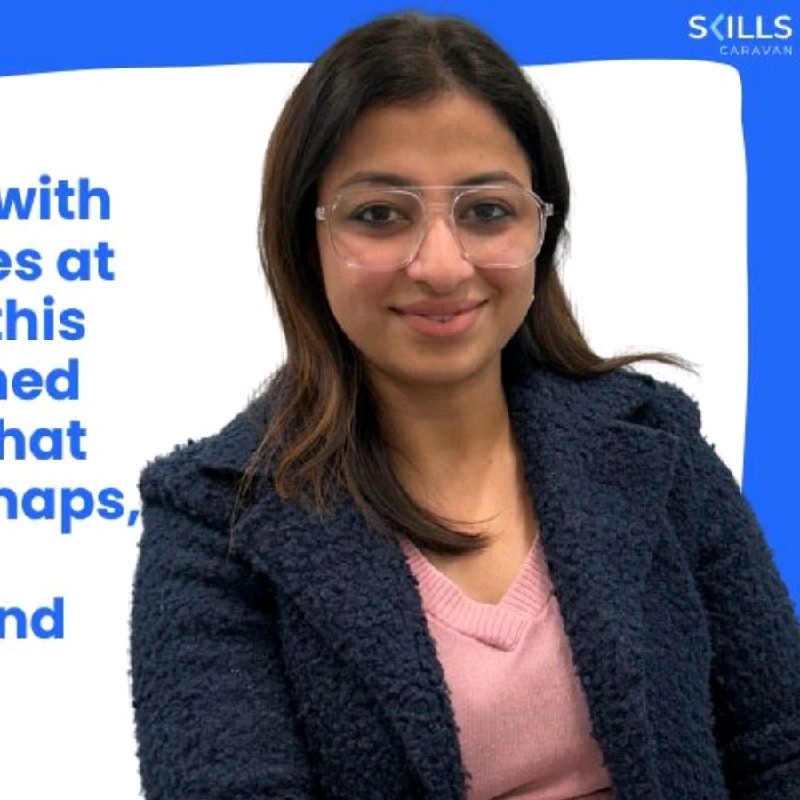

Shreya Verma is the VP of Product and Customer Success at Skills Caravan, where she leverages her decade-long expertise in learning & development (L&D) and human resources to shape an impactful, learner-centric platform. Her deep understanding of user needs, honed through hands-on L&D roles in leading companies, empowers her to translate insights into high-engagement interventions. At Skills Caravan, she bridges the gap between technology and people, ensuring learning experiences are not only effective but genuinely meaningful.



.png)
.png)
.png)
%20(1).png)
.png)


.webp)







Skillsoft is a global leader in corporate learning, providing digital training and education solutions to help businesses improve workforce productivity, reduce risk, and increase innovation.

FinShiksha provides a practical and industry-relevant approach to finance education, with courses designed by industry experts and delivered through interactive and engaging methods.

Wall Street Prep offers best-in-class financial training for aspiring finance professionals and corporate clients.

Udemy Business offers an unparalleled learning experience for organizations looking to upskill their workforce with over 155,000 courses taught by expert instructors.


.webp)


