


Skillsoft
Skillsoft is a global leader in corporate learning, providing digital training and education solutions to help businesses improve workforce productivity, reduce risk, and increase innovation.

.webp)
Most evaluations of a custom competency framework LMS start from the wrong question. Buyers ask how good the platform is at building a competency framework, when the more useful question for an established organisation is whether the platform will accept the framework it already has. Those are different capabilities, and a vendor can be excellent at the first while being unable to do the second at all.
This matters because competency frameworks are among the few pieces of talent infrastructure that enterprises genuinely build themselves. They accumulate over years, get argued over by function heads, survive reorganisations, and end up encoding how a specific company thinks about seniority and capability. An organisation in that position is not shopping for a framework. It is shopping for somewhere to put the one it has.
Framework upload is the ability to load your own competency frameworks into a learning platform through a structured template, rather than accepting frameworks the platform generates or rebuilding them by hand inside its interface.
The test is not whether a platform can import a list of skills. Nearly all of them can. The test is whether it can represent a framework the way enterprises actually hold one: different competencies by department, and different expected proficiency by level within each department. Skills Caravan delivers this as a feature called CF Upload.
The distinction is worth being precise about, because the two capabilities get marketed in the same breath and they are not interchangeable. Here is how they differ in practice.
| Capability | What the platform does | Right for |
|---|---|---|
| AI generation | Produces a competency framework for a department or role from a prompt or job description | Organisations with no frameworks, or frameworks for only part of the business |
| Manual build | You enter competencies one at a time through the platform's own screens | Small scope — a few roles, one department, a pilot |
| Flat skill import | Accepts a list of skills, usually without department or level structure | Skills tagging and search, not competency assessment |
| Framework upload | Accepts your existing frameworks with department and level structure intact | Established organisations rolling out across many departments at once |
If you are still deciding what your framework should contain, this article is the wrong one. Start with building a competency framework with AI instead, and come back when you have something to upload.
What follows is what the capability involves, where the generated framework is genuinely the better option, what happens to a framework after it lands in the platform, and the questions worth asking a vendor before you assume any of this is included. It is published by Skills Caravan, so read it as an informed industry view rather than neutral arbitration — the sections on where this approach is the wrong choice are the ones to read most closely.
Automatic framework generation is one of the more genuinely useful things AI does in a learning platform. Describe a department, and you get a structured set of competencies with proficiency levels, in seconds rather than in the weeks a working group would take. For an organisation starting from nothing, that is a real head start and there is no reason to refuse it.
The problem is that generation solves a design problem, and an established enterprise usually does not have a design problem. It has a migration problem. Those need opposite things from a platform.
The task was never to help them build a framework. It was to get the frameworks they already had into the platform cleanly.
Consider what an enterprise framework represents by the time it is mature. Function heads have negotiated which competencies belong to their teams. Levels have been calibrated against how the company actually promotes people, which rarely matches a generic seniority ladder. Language has been chosen deliberately, sometimes because a previous phrasing caused a dispute. Appraisal cycles reference it. In some organisations, so do compensation bands.
A generated framework cannot know any of that. It produces something defensible and generic, which is exactly what you want if you have nothing, and exactly what you do not want if you have spent years arriving at something specific.
Once a generated framework is on screen, function heads start comparing it to their own and reopening arguments that were closed years ago. The platform has accidentally reintroduced a debate the organisation had already finished having.
The generated version lives in the learning platform while the real one lives in an HR document. Assessments then run against a framework that nobody outside L&D recognises, and managers quietly discount the results.
Rejecting the generated framework without an upload path leaves manual entry as the only option. That is workable for one department and unworkable for twenty, so the rollout narrows to a pilot group and stays there. The scope shrinks to match the data-entry effort rather than the business need.
The third failure is the quietest and the most expensive. Nobody records a decision to limit the programme; the limit simply emerges from how long it takes to type frameworks into a screen. An organisation that intended to put competency-based development in front of every employee ends up serving a few hundred, and the platform gets judged on that reduced footprint.
If you are not sure your existing framework is worth preserving, that is a fair question and a different one. Is your competency framework outdated? works through the signs that it needs rebuilding rather than migrating — and if it does, generation becomes the better route.
The point is not that generated frameworks are inferior. It is that framework generation and framework migration are separate jobs, and a platform that only does the first will force organisations in the second position into either a compromise they can see or a rebuild they cannot afford. Which is why the more revealing question in an evaluation is not how the AI builds a framework, but what happens when you decline to use it.
Uploading your own framework is the right call in a specific situation, not universally. There are several positions where insisting on your own frameworks costs more than it returns, and it is worth being honest about them before treating upload as the feature that decides a purchase.
Partial coverage is the most common state, and mixing sources is usually better than waiting. Upload the departments that are settled, generate drafts for the rest, and let the function heads edit from a starting point rather than a blank page. Insisting that everything be authored in-house before anything goes live is what turns a rollout into a two-year project.
Some organisations have documents that describe roles but never define graded proficiency. If there is no notion of what "good" looks like at each level, there is nothing to assess against, and uploading the documents will not create one. Generation gives you a graded structure you can then correct, which is faster than retrofitting levels by hand.
Appraisal frameworks tend toward behavioural language that rates a person. Development frameworks need capability language that maps to something learnable. A framework full of items like "demonstrates ownership" will assess cleanly and then produce development plans nobody can act on, because no course teaches ownership. Where most of the framework reads this way, a generated development-oriented framework is the more useful input, with your appraisal language kept where it belongs.
If departments are being merged or levels recalibrated in the next two quarters, uploading the current structure means uploading something that will be wrong shortly. Generating against the new structure once it settles is less work than migrating twice.
If the reason your framework has not been adopted is that managers do not believe in it, no upload path fixes that. The framework will land in the platform, assessments will run, and the results will be ignored exactly as they were before, only now with a software licence attached. That is an organisational problem and buying a platform will not solve it — it will document it.
Worth saying plainly: framework upload is an efficiency and fidelity feature. It removes data-entry work and it keeps your definitions intact. It does not make a weak framework strong, and it does not create management buy-in that was not already there. If you are hoping it will, the honest recommendation is to fix the framework or the buy-in first, because the platform will faithfully reproduce whichever problem you bring it.
For a fuller comparison of the two structural approaches — a fixed framework versus a matrix that updates continuously — dynamic skill matrix vs static competency framework covers the trade-off in more depth than fits here.
Where none of the above applies — where the frameworks exist, are graded, are development-oriented, and are trusted — the argument for uploading them is straightforward. You already own the hard part. What remains is whether the platform can take it without asking you to rebuild it.
In a custom competency framework LMS the upload mechanism is the whole feature, so it is worth looking at what the mechanism has to handle. Skills Caravan built CF Upload for organisations arriving with frameworks already finished, and the design constraint was not the file format — it was structure. A framework upload that loses the shape of the original has not migrated anything; it has flattened it.
Three dimensions have to survive the upload, and they are the three that generic skill imports usually drop.
Competencies are not held company-wide. Engineering, finance and customer success expect different things, and a framework that merges them produces gap analysis nobody trusts, because an engineer is assessed against competencies that were written for someone else. The template has to carry department as a first-class field rather than as a tag applied afterwards.
This is the dimension most often lost, and losing it changes the output more than losing anything else. In a real framework the same competency appears at several levels with different expectations — a first-line analyst and a regional lead may both be assessed on stakeholder management, at very different thresholds. If the upload flattens that to a single expectation, everyone senior looks proficient and everyone junior looks deficient, and the plans that follow are wrong in both directions.
Assessment needs a target, not just a list. Each competency-and-level pair has to arrive with the proficiency expected at that level, because that is the number the assessment compares against to produce a gap. A framework without expected proficiency can be stored but not assessed.
| What the import carries | Flat skill import | Manual build | CF Upload |
|---|---|---|---|
| Competency list | Yes | Yes | Yes |
| Department structure | Usually not | Yes | Yes |
| Level within department | No | Yes | Yes |
| Expected proficiency per level | No | Yes | Yes |
| Editable after loading | Varies | Yes | Yes |
| Effort at twenty departments | Low, but incomplete | High — the practical ceiling | Fill and upload |
The middle column is the honest comparison. Manual build gets everything right; it simply does not scale, and that is precisely the constraint that decides how many departments a rollout actually reaches. What CF Upload changes is not fidelity but throughput — framework creation becomes a fill-and-upload step rather than a rebuild, and editing afterwards stays available for the inevitable corrections.
Ask for the template during evaluation rather than after purchase. Its column headers tell you immediately whether department, level and expected proficiency are supported, which is faster and more reliable than any answer a sales conversation will give you. If a vendor cannot send the file, treat the capability as unproven.
One clarification that matters more than it sounds: nothing about uploading your own framework switches off the platform's intelligence. The assessment, the gap calculation, the course matching and the sequencing all still run. You have changed the input, not the engine — and what a competency-based LMS does with that input is the same either way.
The framework is an input, not a deliverable. Getting it uploaded is the unglamorous prerequisite for the thing an organisation actually wants, which is a development plan per person rather than a development plan per job title. That chain runs in a fixed order, and each step depends on the structure the upload preserved.
People are mapped to their department and their level within it, which determines which slice of the framework applies to them. This is why level structure had to survive the upload — it is the lookup that decides what a given person is measured against at all.
The assessment covers the competencies expected at that person's level, not the full company framework. Someone in a first role is not assessed on competencies the organisation expects three levels up, which keeps the exercise credible to the person taking it.
Comparing assessed proficiency against expected proficiency produces a gap profile specific to the individual. Two people with identical job titles routinely produce different profiles, which is the entire argument for doing this per person rather than per role.
The platform assembles an Individual Development Plan targeting the identified gaps, selecting courses that address them. The plan is derived from the framework the organisation defined, so what it recommends is traceable back to a standard the business already agreed on.
The framework is the input. The personal plan is the output. Everything in between is arithmetic on the structure you uploaded.
The traceability in step four is worth dwelling on, because it is the practical difference between a development plan people follow and one they close. When a recommendation can be explained as "this addresses the gap between your assessed level and what this organisation expects at your level," it carries an authority that a generic recommendation does not. The reasoning is inspectable, and it rests on a definition the company owns.
It also changes the conversation with managers. A plan generated from the company's own framework is defensible in a one-to-one in a way that a plan generated from a platform's inferred framework is not, because the manager recognises the standard being applied. That recognition is most of what determines whether the plan gets discussed or ignored.
The gap-analysis step is the one most organisations underestimate. How to conduct a skill gap analysis covers the method itself, and how to create an individual development plan covers what a good plan looks like once the gaps are known.
None of this is unique to uploaded frameworks — the same chain runs on a generated one. What the upload changes is whose definition sits at the top of it. For an organisation that spent years arriving at that definition, having it be the thing driving every individual plan is the point of the exercise, and it is why the fidelity questions in the previous section matter well beyond the import itself.
A plan is only as good as what it can point at. An accurate gap profile that recommends a mediocre course has produced an administrative record, not development, and this is where a lot of competency programmes quietly fail — the framework is right, the assessment is right, and the recommendation is whatever happened to be available.
Most enterprises are already paying for good content. They hold a licence with a provider like Coursera, they have free and open libraries available, and they may have built internal courses of their own for induction or process training. The problem is rarely a shortage of material. It is that the material sits in separate places, and the recommendation engine can only choose from whichever place it can see.
If the platform defaults to its own free library, learners are recommended free courses even where a licensed course on the same skill is better. The organisation keeps paying for the licence and keeps not using it, and the renewal conversation eventually reflects that.
Where the answer is "check the other library too", most people do not. A plan that requires the learner to search a second system for a better option is a plan that will be completed with the first option found.
Induction and process training built in-house is often the most relevant content the organisation has, and the easiest to lose track of because it lives outside any commercial catalogue.
The fix is structural rather than clever: list everything in one catalogue so that selection happens across all of it. In the Skills Caravan rollout this article draws on, Coursera was integrated alongside the free libraries already present and internal courses built inside the same system, all listed together. The AI then selects the most relevant course for each specific gap from the combined set, regardless of which library it came from.
Paid provider content you already hold a contract for, surfaced on equal terms with everything else rather than sitting behind a separate login.
Broad coverage at no incremental cost, which is often the right answer for foundational or widely taught skills.
Custom material built for your own processes, systems and induction — content no external library can supply.
What this buys is not more content. It is better selection from content already paid for. When the engine can compare a licensed course and a free course on the same gap, the plan gets the better one, and the licence starts justifying itself. When it cannot, the plan gets whatever is nearest.
Worth asking a vendor directly whether your existing licences integrate into the same catalogue or sit alongside it as a separate destination. The words used are similar; the outcomes are not. Content library structure is a reasonable place to see what a combined catalogue looks like in practice.
This is also the answer to a fair objection about uploaded frameworks — that a company-specific framework will produce competencies no catalogue covers. It happens, and the honest response is that a combined catalogue makes it less likely rather than impossible. Where a genuine gap in coverage remains, building an internal course is the route, which is why internal authoring belongs in the same system rather than in a separate tool.
A framework can be uploaded perfectly, assessed accurately, and turned into a well-targeted plan that nobody ever opens. Between the plan existing and the plan being used sits a login, and a separate set of credentials is enough friction to lose a meaningful share of an organisation on its own.
This is the least interesting part of a competency programme and among the most decisive. People do not maintain a mental list of secondary systems. If reaching the learning platform requires remembering a username that differs from every other username they have, the visit happens once — during the launch email — and then stops.
Access should disappear into the tools people already use, not add one more thing to remember.
In the rollout described here, the LXP was integrated with the company's own workspace so employees move from their daily environment straight into their learning through a single sign-on. There are no separate credentials to remember or lose. That is a deliberately unremarkable outcome, and unremarkable is the goal — the measure of success is that nobody thinks about it.
The attribute question is the one that gets skipped. Most evaluations test whether login works and stop there. But an organisation with twenty departments and several levels each has a large mapping to keep current, and every promotion, transfer and new joiner changes it. If that mapping is not fed from the system of record, it becomes a manual maintenance task that decays quietly — and the symptom appears months later as assessments that feel wrong to the people taking them.
For the broader picture on identity and integration requirements in an enterprise evaluation, LMS security and integration requirements covers the full checklist, and LMS and HRMS integration covers where the attribute data should come from.
Taken together with the previous two sections, the pattern behind this rollout is consistent: the company kept its own competency frameworks, its own licensed content, and its own login. The platform flexed around all three rather than asking the organisation to adopt its versions. That is what allowed the programme to reach the entire user base instead of a pilot group — not because any single feature was remarkable, but because none of them required the business to change something it had already decided.
This is published by a vendor that sells the capability being described, so the limits of the evidence should be stated rather than left for the reader to infer.
The rollout this article draws on was documented qualitatively. The organisation reported that turnaround time to stand frameworks up across the business dropped considerably once upload replaced manual entry, and that the programme reached its entire user base rather than a pilot group. Neither of those was measured against a recorded baseline.
So there is no percentage in this article, no timeframe, and no count of departments or users. That is not an oversight. Converting "dropped considerably" into a figure would be inventing data, and a made-up efficiency statistic is worth less than an honest absence of one — particularly in a category where comparison tables circulate numbers that trace back to a single unverified source.
Measure it yourself during evaluation. Time how long it takes your team to build one department's framework manually in a trial environment, then multiply by your department count. That gives you a defensible figure grounded in your own framework's complexity, which no vendor benchmark can supply — the effort scales with how many levels and competencies you hold, and that varies enormously between organisations.
The rollout referenced here is a single organisation: enterprise software, India, across its full user base. It is not a controlled comparison; there is no matched organisation that did the same programme with manual entry, and the outcome is one company's experience rather than evidence about a category. A different organisation with a simpler framework might see no meaningful difference between upload and manual build, because at three departments manual build is perfectly adequate.
The most useful thing you can do with this article is turn its claims into trial tasks. Ask for the upload template, load one real department with its actual levels, and check whether what comes out the other side matches what you put in. That test takes an afternoon and settles the question better than any amount of reading.
Descriptive account based on a Skills Caravan client implementation in the enterprise software sector in India. No client-reported figures were available for this rollout; nothing in this article is quantified.
Shortlisting a custom competency framework LMS is faster than a general platform evaluation, because one capability either exists or it does not, and a single artefact settles it. Ask every vendor for the upload template in the first conversation. What arrives — or fails to — will separate the list more sharply than a feature matrix.
Ask for the actual file. Its column headers reveal whether department, level and expected proficiency are first-class fields. A vendor who has built the capability can send it the same day; one who describes it in prose while promising the file later is often describing a roadmap.
Not a sample. Take your most structurally awkward department — the one with the most levels or the competencies that repeat across them — and put it through. Simple departments pass on every platform and tell you nothing.
Confirm that the same competency at two levels still carries two different expected proficiencies. This is the specific thing that gets silently flattened, and it is invisible until you look for it deliberately.
Frameworks change. Test whether an uploaded framework stays editable in place, and whether re-uploading a revised file updates the existing framework or creates a duplicate alongside it. The second behaviour becomes a data-hygiene problem within a year.
Export is the question vendors are least prepared for and the one that matters most at renewal. A framework you can upload but not export has become dependent on the platform holding it, which is precisely the position you were avoiding by keeping your own framework in the first place.
| Ask | What a good answer sounds like | Read as a warning |
|---|---|---|
| Can we upload our own frameworks? | Yes, here is the template — with the file attached | "Our AI generates them for you" (answers a different question) |
| Does it support level within department? | A named field, demonstrated in the trial | "You can tag levels afterwards" (tagging is not structure) |
| Do uploaded frameworks stay editable? | Yes, edited in place like any other framework | "Re-upload to change them" (means no in-place editing) |
| Can we export them? | Yes, in the same structure, self-service | "Raise a support request" (means no export function) |
| Is it on our plan? | Confirmed in writing against your quoted tier | "That's available on Enterprise" (a repricing, arriving late) |
| Do our licences join the same catalogue? | Listed together; recommendations draw across all of it | "It's accessible from the platform" (a link, not integration) |
The right-hand column is where most of the value is. None of those answers is dishonest, and every one of them describes something real — they simply describe something narrower than the question asked. Hearing the difference in a first call saves discovering it in month three of an implementation.
If you are running a broader platform selection at the same time, how to evaluate an enterprise LMS platform covers the scoring method, and corporate LMS RFP requirements has language you can lift straight into a requirements document.
The failures around a custom competency framework LMS are rarely technical. The upload works; the problems come from decisions made around it, usually early and usually without anyone noticing they were decisions at all.
Teams pilot with the simplest department because it is quickest to prepare. Every platform handles it, so the trial proves nothing about the awkward department with seven levels and overlapping competencies — which is the one that will actually break. Pilot with the hard case.
A framework can import successfully while collapsing to one expected proficiency per competency. Nothing errors. It surfaces months later as assessments that feel wrong to everyone senior and everyone junior, at which point the cause is hard to trace back to the import.
Migration is a good moment to check whether the framework still describes the business. Uploading a structure written for an organisation that has since reorganised twice puts a stale standard at the centre of everyone's development plan, and gives it fresh authority it does not deserve.
Accurate gaps pointing at a thin catalogue produce plans full of loosely relevant courses. The framework work then gets blamed for a content problem. Confirm that licensed, free and internal libraries list together before assuming the plans will be any good.
Import gets tested during evaluation because it is what you need on day one. Export gets tested at renewal, under time pressure, when discovering it does not exist is expensive. Ask in the first conversation instead.
If your organisation has no frameworks, generation is a genuine head start and the rest of this article is not urgent. If your frameworks exist, are graded, are development-oriented and are trusted, then the platform question is narrow: will it accept what you already have, with the department and level structure intact, and will it give the framework back if you leave?
Everything else in a competency programme — assessment, gap analysis, personalised plans, content matching — runs the same way regardless. What upload changes is whose definition sits at the top of it. For an organisation that spent years arriving at that definition, that is not a minor preference. It is the difference between a rollout that reaches everyone and a pilot that never grows.
See the upload template, load one of your own departments with its real levels, and check what comes out against what went in.
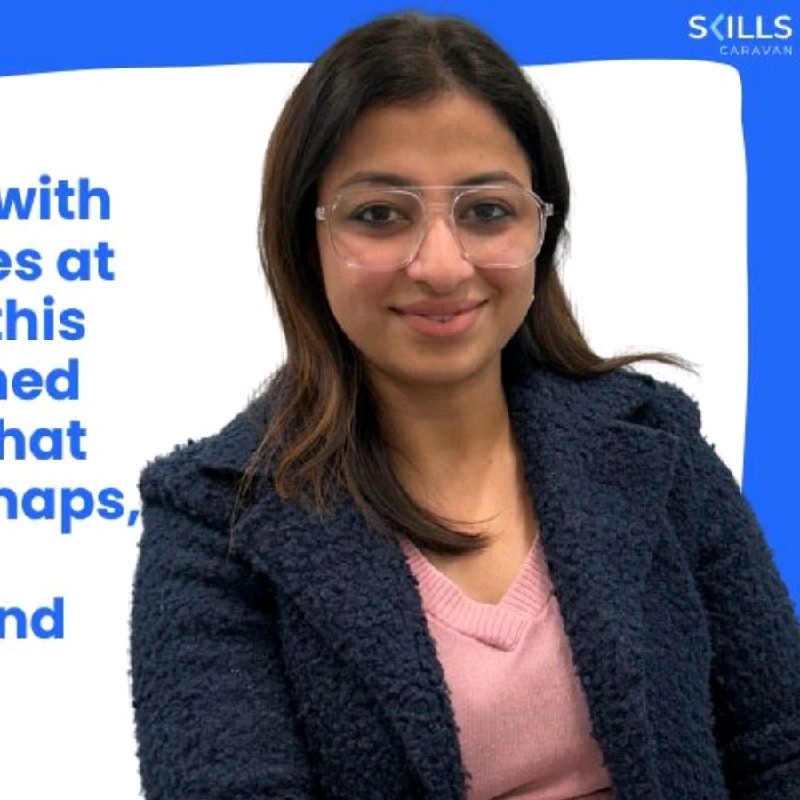

Shreya Verma is the VP of Product and Customer Success at Skills Caravan, where she leverages her decade-long expertise in learning & development (L&D) and human resources to shape an impactful, learner-centric platform. Her deep understanding of user needs, honed through hands-on L&D roles in leading companies, empowers her to translate insights into high-engagement interventions. At Skills Caravan, she bridges the gap between technology and people, ensuring learning experiences are not only effective but genuinely meaningful.



.png)
.png)
.png)
%20(1).png)
.png)


.webp)







Skillsoft is a global leader in corporate learning, providing digital training and education solutions to help businesses improve workforce productivity, reduce risk, and increase innovation.

FinShiksha provides a practical and industry-relevant approach to finance education, with courses designed by industry experts and delivered through interactive and engaging methods.

Wall Street Prep offers best-in-class financial training for aspiring finance professionals and corporate clients.

Udemy Business offers an unparalleled learning experience for organizations looking to upskill their workforce with over 155,000 courses taught by expert instructors.


.webp)


