


Skillsoft
Skillsoft is a global leader in corporate learning, providing digital training and education solutions to help businesses improve workforce productivity, reduce risk, and increase innovation.

.webp)
Almost every skills initiative starts one layer too high. A company decides to build a competency framework, map roles to capabilities, run a gap analysis, generate development plans — and somewhere in week three, someone asks whether "stakeholder management" and "influencing without authority" are the same thing. Nobody knows. Two functions have been using both terms for a year, meaning slightly different things, and the entire framework is now resting on a vocabulary that was never agreed. That vocabulary is the skills taxonomy, and this is the layer where skills programmes quietly fail.
It is an unglamorous artefact. It is a list of skills with definitions and a structure, which sounds like something an intern could assemble in a fortnight. In practice it is the single highest-leverage piece of infrastructure in workforce development, because everything built on top inherits its faults — and it is very hard to fix retroactively once role definitions, learning content and assessment data all reference it.
It is your organisation's agreed list of skills, structured so that each skill has one clear name, a definition, and a place in a hierarchy of groups and sub-groups. That is the whole artefact. Its purpose is not to be comprehensive or impressive; it is to make sure that when two people in different parts of the business say the same word, they mean the same capability.
Everything downstream depends on it. Competency frameworks assign skills from it to roles. Skill matrices show who holds which. Gap analyses compare held against required. Development plans target specific ones. Learning content gets tagged against it. Internal mobility matches people to openings through it. Each of those is a layer on the same foundation, which is why a vague or contested taxonomy produces confident-looking outputs built on sand.
Read that stack from the bottom, and the argument makes itself. Organisations routinely invest heavily in the top three layers while treating the base as an administrative detail delegated to whoever has capacity. The result is a framework that works within each function and falls apart the moment you try to compare across them.
A competency framework built on a contested vocabulary produces confident outputs and incomparable data. It looks like progress right up until someone asks a question that spans two departments.
What follows is about the taxonomy itself — how to scope it, how granular to make it, where to get the first version, who should own it, and how to stop it going stale. It deliberately does not cover what you do with it afterwards; for that, our guide to competency-based workforce development covers the framework layer, and our skills intelligence guide covers what becomes possible once the data is trustworthy.
Taxonomies rarely fail loudly. They fail by becoming quietly untrustworthy, at which point people stop using the words and start describing capabilities in their own language again — and the expensive framework above becomes decoration. Five failure modes account for most of it, and each has a tell you can check for today.
The most common failure by a distance. A workshop-driven process where every function adds everything it can think of, and nobody is empowered to say no, produces thousands of entries. It looks thorough. It is unusable: managers cannot find the right skill, so they pick approximately the right one, and the data becomes noise.
The tell: a manager needs more than about a minute to find the skill they mean, or routinely picks whichever of three similar ones appears first.The same capability entered twice under different names because two functions were submitted independently — "stakeholder management" and "influencing without authority", "data analysis" and "analytical thinking". Both get used, both accumulate assessment data, and neither gives you a complete picture of who actually has the skill.
The tell: you cannot answer "how many people have this skill" without checking two or three entries and adding them up.One entry says "communication," and another says "writing incident post-mortems in the agreed template". Both are legitimate skills; they are not the same size. When granularity is inconsistent, assessment scores stop being comparable, because a rating against a huge vague skill means something entirely different from a rating against a precise one.
The tell: some skills are held by almost everyone and others by almost nobody, purely as a function of how broadly they were written.A list of skill names with no accompanying definition is not a taxonomy; it is a word cloud with structure. Without a definition, every assessor supplies their own, which means a rating of four out of five encodes the assessor's interpretation as much as the person's ability.
The tell: two managers rating the same person on the same skill produce very different scores, and both can justify them.The quietest failure and the most terminal. The taxonomy is built as a project, delivered, and then has no owner. New skills cannot be added because there is no process, so people work around it. Obsolete skills are never retired. Within about eighteen months, it describes an organisation that no longer exists.
The tell: nothing has been added or retired in the last year, and nobody can name the person who would approve a change.Notice how much of this traces back to size. A taxonomy with a few hundred well-defined skills can realistically be reviewed for duplicates, kept consistent in granularity, and maintained by one owner. A taxonomy with several thousand cannot be reviewed by anybody, which is precisely why the synonyms and inconsistencies survive in it. Size is not just one failure mode among five — it is the condition that makes the others unfixable.
Nobody abandons a taxonomy in a meeting. They start describing what someone can do in their own words again, and one day you notice the framework nobody references.
A diagnostic you can run this week. Take three job descriptions from three different functions and highlight every capability word. Then check each one against your existing skills list. How many map cleanly to exactly one entry? How many map to two or three overlapping entries? How many are not there at all? That ratio tells you more about the health of your taxonomy than any audit, and it takes about an hour.
If several of those tell you sound familiar, the problem is usually structural rather than a matter of effort. Our guide on whether your competency framework is outdated covers the symptoms at the framework layer that a decaying vocabulary produces underneath.
If you get one thing right, make it this. Granularity — how big a single skill is — determines whether the taxonomy is usable, whether assessment data is comparable, and whether maintenance is survivable. It is also almost impossible to change later, because by then thousands of assessments reference the entries you defined.
The trade-off is genuine in both directions. Skills defined too broadly are easy to maintain and useless to act on: knowing someone is "good at communication" does not tell you what to do next. Skills defined too narrowly are precise and unmaintainable: they multiply endlessly, go obsolete quickly, and produce a list nobody can navigate.
"Leadership" · "Communication" · "Technical skills" · "Customer focus"
Fails test one — no specific learning develops "leadership" as a single thing, and everyone rates themselves a four.
"Giving developmental feedback" · "Writing a business case" · "SQL query optimisation" · "De-escalating an unhappy customer"
Both tests pass — targetable by specific learning, and observably present or absent.
"Using the v4.2 expense module" · "Formatting the Tuesday report" · "Operating the third-floor printer"
Fails maintainability — obsolete within a year, applies to few people, and multiplies without limit.
There is no universal figure, and be suspicious of anyone who offers one, because the honest answer depends on the size and diversity of your organisation. The useful framing is a constraint rather than a target: the taxonomy should be small enough that a single owner could review the whole thing in a working week. If it is larger than that, nobody will ever review it, which guarantees the duplicate and consistency failures from the previous section.
That constraint tends to push organisations toward hundreds rather than thousands of skills, with a hierarchy that groups them so no one ever has to scan the full list. It also means resisting the instinct toward completeness. A taxonomy is not trying to describe every capability that exists in your workforce; it is trying to describe the ones you intend to develop, assess, or hire against. Skills nobody will ever act on are a cost without benefit.
The rule that keeps size under control. Every new skill needs a named use — a role that requires it, a gap being tracked, or learning being tagged to it. "It exists in our business" is not sufficient justification, because everything exists in your business. Applying this at the point of addition is far easier than pruning a bloated taxonomy two years later, when each entry has assessment history attached and removing it destroys data.
Once granularity is settled, the next question is where the first version comes from — and the answer is seldom a blank page. For how this granularity decision plays out at the framework layer above, our guide to competency-based learning platforms covers how skills get attached to roles and levels.
A working skills taxonomy is a small data model, not a spreadsheet of names. The fields below are what each entry needs for the thing to function as infrastructure rather than as a reference document. Four are genuinely required; the rest earn their place depending on what you intend to do with the data.
| Field | What it is | Why it matters | Status |
|---|---|---|---|
| Skill name | One agreed label, phrased consistently across the whole taxonomy | The vocabulary itself. Inconsistent phrasing is how synonyms creep in | REQUIRED |
| Definition | One or two sentences describing what having this skill means in practice | Without it, every assessor invents their own, and ratings stop being comparable | REQUIRED |
| Parent group | Where it sits in the hierarchy — category and sub-category | Makes a few hundred skills navigable. Without structure, people cannot find things | REQUIRED |
| Unique identifier | A stable ID that never changes, even if the display name is reworded | Lets you rename a skill without orphaning years of assessment data attached to it | REQUIRED |
| Proficiency scale | The levels this skill can be held at, with descriptors per level | Needed at the moment you assess rather than just record presence or absence | STRONGLY ADVISED |
| Synonyms / aliases | Other terms people use for the same thing, mapped to this entry | Lets someone searching the wrong word still find the right skill — a direct fix for duplicates | STRONGLY ADVISED |
| Owner / domain expert | Who decides what is correct for this skill | Makes maintenance possible. An unowned skill is one nobody will ever update | ADVISED |
| Status and dates | Active, emerging or retired, with the date last reviewed | Lets you retire skills without deleting history, and shows what has gone stale | ADVISED |
| Related skills | Links to adjacent or prerequisite skills | Only needed if you want adjacency-based recommendations or career pathing | IF NEEDED |
The unique identifier. It looks like unnecessary engineering when you are building a list in a spreadsheet, and it is the single field that determines whether the taxonomy can evolve. If assessments, learning content, and role definitions all reference a skill by its display name, then renaming that skill — which you will need to do — silently breaks every reference. With a stable ID underneath, the label becomes editable and the history survives.
Note what that entry does not contain: no list of courses, no assessment questions, no role mappings. Those belong in the layers above and change far more often than the skill definition does. Keeping them out is what stops the taxonomy from becoming a dumping ground that has to be re-approved every time a course is retired.
Separate the taxonomy from what references it. The most common structural mistake after granularity is embedding role mappings and content links inside the taxonomy itself. Roles change constantly, content is replaced constantly, and skills change slowly — mixing them means the slow-moving asset inherits the churn of the fast-moving ones. Keep the taxonomy as a clean reference list, and let frameworks, matrices, and content point at it by ID.
For what the layer above looks like once this data model is in place, our guide to skill-centric LMS frameworks covers how platforms consume this structure, and our skills benchmarking page covers the assessment layer that proficiency scales feed.
Not a blank page and not a workshop. Both feel like the responsible approach, and both produce worse results than the alternative, for the same reason: people are far better at reacting to a draft than at generating one from nothing.
Step two is the one organisations skip, and it is the one that prevents the size failure. Circulating an unfiltered starting library invites addition rather than curation, and the resulting draft is almost impossible to shrink afterwards — every entry has someone who argued for it.
People are poor at inventing a taxonomy and excellent at criticising one. Give them something wrong to fix rather than a blank page to fill.
On the India-specific point worth noting: multinational organisations often inherit a taxonomy from a global parent written in language that does not match how work is described locally, and adopting it unchanged produces a vocabulary nobody uses. Adapting the naming to local usage while keeping the underlying IDs aligned to the global structure is usually the workable compromise — it preserves global reporting while giving Indian managers terms they recognise.
For how this connects to workforce planning once built, our guide to skills-based workforce planning covers the planning layer, and our overview of implementing a skills-based learning strategy covers the wider programme this sits inside.
A taxonomy is not a deliverable. It is a maintained asset, and the difference shows up about eighteen months after launch, when the organisation has reorganised, three new technologies have arrived, and a dozen roles exist that did not before. Whether the taxonomy absorbed those changes or was quietly abandoned comes down entirely to who owned it.
The two failure patterns are symmetrical. No owner means gradual decay — nobody is wrong, nothing gets updated, and the thing dies of neglect. Ownership by committee means paralysis — every change needs consensus, requests queue, and people route around the process. What works is a single accountable owner holding the standard, with subject-matter authority delegated to named people by domain.
Additions on request. A new skill can be proposed any time and decided within days. Anything slower gets worked around.
Light review of fast-moving areas, particularly technology. Check emerging skills and obvious obsolescence only.
Full review. Structure, duplicates, retirements, definition quality, and whether granularity has drifted between functions.
Reorganisation, acquisition, or entering a new line of business. These change the skill landscape faster than any calendar.
The continuous-addition path is the one most governance models get wrong. If adding a skill requires waiting for the annual review, people will not wait — they will use an approximate existing skill, or record the capability outside the system entirely. Either way, the data degrades, and the governance process designed to protect quality is what destroys it.
A taxonomy that cannot absorb a new skill for eleven months will be worked around within twelve. Slow governance does not protect data quality — it routes around itself.
Organisations are far better at adding skills than removing them, which is how taxonomies bloat past the point of maintainability. Retirement needs to be a normal, unremarkable act, and it needs to preserve history: mark the skill retired rather than deleting it, so existing assessment records remain interpretable while the skill stops appearing in new role definitions or searches. This is exactly what the status field and stable identifier from the data model exist to support.
The health metric to watch. Count additions and retirements over the past twelve months. A taxonomy with no changes is not stable — it is unmaintained, and almost certainly describes an organisation that has moved on without it. A taxonomy with additions but no retirements is bloating, and will hit the size ceiling within a couple of years. Roughly balanced movement in both directions is the signal that governance is actually running.
For how ownership of this connects to the broader skills programme, our skills intelligence guide covers the organisational capability this supports, and our overview of skills-based learning platforms in India covers where the taxonomy lives operationally.
Taxonomy health is measurable, and the measures are behavioural rather than structural. A tidy, well-formatted taxonomy that nobody references is failing; a slightly messy one whose words appear everywhere is succeeding. These are the signals worth tracking, in rough order of how much they tell you.
These bars illustrate the shape of a healthy profile rather than reporting measured figures. Track your own; the direction of travel matters far more than any absolute number.
People use the taxonomy's words without being told to. When a hiring manager writes a job description, a team lead runs a development conversation, and someone titles a piece of internal training — and all three reach for the same term for the same capability, unprompted — the taxonomy has been adopted. That is the real objective. Everything on the chart above is a proxy for it.
Conversely, the clearest sign of failure is a parallel vocabulary. If job postings describe capabilities in language that does not appear anywhere in your taxonomy, people have concluded it is easier to describe things themselves than to find the right entry. At that point, the taxonomy still exists and has stopped functioning.
A large block of skills that appear in no role, no assessment, and no content tag. These are usually artefacts of an over-inclusive first draft. They are not harmless — they clutter search results and make the right skill harder to find, which is what drives people to pick approximately-correct entries.
If almost everyone rates as proficient on most skills, the skills are probably defined too broadly to discriminate, or the proficiency descriptors are too vague. Either way, the assessment data cannot support decisions, and the cause sits in the taxonomy rather than in the assessment process.
When a team keeps its own skills spreadsheet alongside the official taxonomy, it is telling you the official one does not serve them — usually because their additions were rejected or the granularity does not fit their work. Worth investigating rather than policing.
Review the tail before you review the structure. When an annual review comes round, the instinct is to examine the hierarchy. The faster win is almost always to list every skill with zero references and ask, one by one, whether it should be retired. That single pass usually removes a meaningful share of the taxonomy, improves search quality immediately, and requires no structural debate.
For the measurement discipline behind tracking any of this, our guide to measuring training effectiveness covers instrumenting learning data properly, and our skill gap analysis guide covers the analysis this data feeds.
This article is published by Skills Caravan, a learning platform vendor, and platform vendors have an obvious interest in organisations building structured skills data. So the honest section first: three situations where building a taxonomy is the wrong use of your time.
In a small or single-function team where everyone knows who can do what, writing it down formally adds administration without adding clarity. The trigger for needing one is structural, not about headcount: different managers using different words for the same capability, or being unable to answer who can do something without asking around.
A taxonomy is infrastructure, and infrastructure with nothing built on it is cost. If you are not going to map roles, assess anyone, tag content, or inform development plans, then the list will be built, admired, and abandoned. Build it when the first genuine consumer exists, not in anticipation of one.
If your learning programme has no content people want, or no manager engagement, a taxonomy will not fix that and will absorb months of effort that the actual problem needed. Structured skills data makes a working programme far more powerful. It does not rescue one that is not working.
Most figures circulating on this topic come from vendor marketing with no traceable methodology. Rather than repeat numbers we cannot stand behind, this guide argues from mechanism and named failure modes. That makes it less quotable and more reliable, and we would rather it be the second thing.
The two-question test and the reviewable-in-a-week constraint are practical rules of thumb that work across most organisations. They are not derived from research, and a highly technical or highly regulated business may legitimately need finer granularity in some domains than the test would suggest.
Deliberately. Building competency frameworks, running gap analyses, and creating development plans are substantial topics with their own guides, and folding them in here would have produced a survey of everything and a guide to nothing. Links throughout point to the layers above.
A learning platform can host, suggest, and maintain a taxonomy, and a good one reduces the maintenance burden considerably. But the granularity, scope and ownership decisions in this guide are organisational, not technical. Choosing a platform first and letting its default library become your taxonomy by accident is how organisations end up with a vocabulary that describes someone else's business.
A platform's default skills library is a good starting point and a poor finishing point. If you never edited it, it is describing the vendor's idea of your business.
The honest summary. This is unglamorous, high-leverage infrastructure that most organisations build too late, too large, and without an owner. Get granularity and ownership right and everything above it becomes possible. Get them wrong, and you will have expensive frameworks resting on a vocabulary nobody trusts — which is harder to fix than to prevent, because by then the data depends on it.
If you have decided it is worth doing, the next section covers how to run it as a project. For the platform layer that will eventually host this, our guide to evaluating an enterprise LMS platform covers what to test, including how a platform handles skills data.
Building a skills taxonomy is best run as three short phases with a real consumer waiting at the end of each, rather than as a long design exercise that delivers everything at once. The sequencing below is deliberately biased toward getting something in use early, because nothing improves a taxonomy faster than people trying to apply it to real roles.
The second and third questions matter most and are the least asked. Renaming and retiring are ordinary maintenance activities that will happen dozens of times a year — a platform that treats a rename as creating a new skill, or a retirement as a deletion, will quietly destroy your history and force you to choose between accurate naming and continuous data. The export question is the insurance: a taxonomy you cannot get out is a taxonomy you do not own.
The sequencing that avoids the usual failure. Name the owner, cut the starting library before circulating it, complete one function properly, publish while imperfect, then extend under governance. The two steps organisations skip are the hard cut in phase one and the named owner — and skipping either produces the oversized, unmaintained taxonomy this whole guide is about avoiding.
For what becomes possible once this is running, our guide to building individual development plans covers the most common first consumer, and our upskilling strategies overview covers the programme this data ultimately serves.
Almost every troubled skills taxonomy can be traced to one of five decisions made early, when the consequences were invisible. Each is far cheaper to avoid than to correct.
Trying to capture every capability that exists in the business produces a list nobody can navigate. The taxonomy should cover what you intend to develop, assess or hire against. Skills nobody will ever act on are pure cost, and they make the useful ones harder to find.
The fastest route to incomparable data. When engineering writes precise skills and marketing writes broad ones, a proficiency rating means different things in different parts of the business, and any cross-functional analysis is meaningless. Granularity must be held centrally.
A skill name with no definition delegates the definition to every assessor individually. The data that results encodes their interpretations rather than people's actual capability, and it will not survive scrutiny the first time someone questions a rating.
Delivered, celebrated, and then unowned. Within about eighteen months it describes an organisation that no longer exists. The launch is the beginning of the work, not the end of it, and the budget should reflect that.
A built-in skills library is an excellent starting point and a poor finishing point. Adopted without editing, it describes the vendor's generic idea of an organisation rather than yours — and people notice, because the words do not match how they talk about their work.
It is the vocabulary layer beneath every competency framework, skill matrix, gap analysis and development plan you will ever build. It is unglamorous, it is rarely resourced properly, and everything above it inherits its faults.
Two decisions carry most of the outcome. Granularity — skills specific enough that learning can target them and a manager can tell who has them, coarse enough that one person could review the whole list in a week. And ownership — one named person who holds the standard, with domain experts deciding what is correct in their areas.
Start from an existing library rather than a blank page, cut it hard before anyone sees it, complete one function properly as the worked example, publish before it is finished, and govern it continuously. And if you have no downstream consumer for the data yet, wait until you do — infrastructure with nothing built on it is just cost.
For the layers built on top of this, our guides to competency-based workforce development and skill gap analysis cover the framework and analysis stages, while our corporate training overview covers the programme they serve.
The hardest part of a taxonomy is the first draft. Tell us your functions and the roles you want to map first, and we will show you a starting structure to react to — plus how renaming, retiring and tagging work in practice, which is where most taxonomies eventually break.
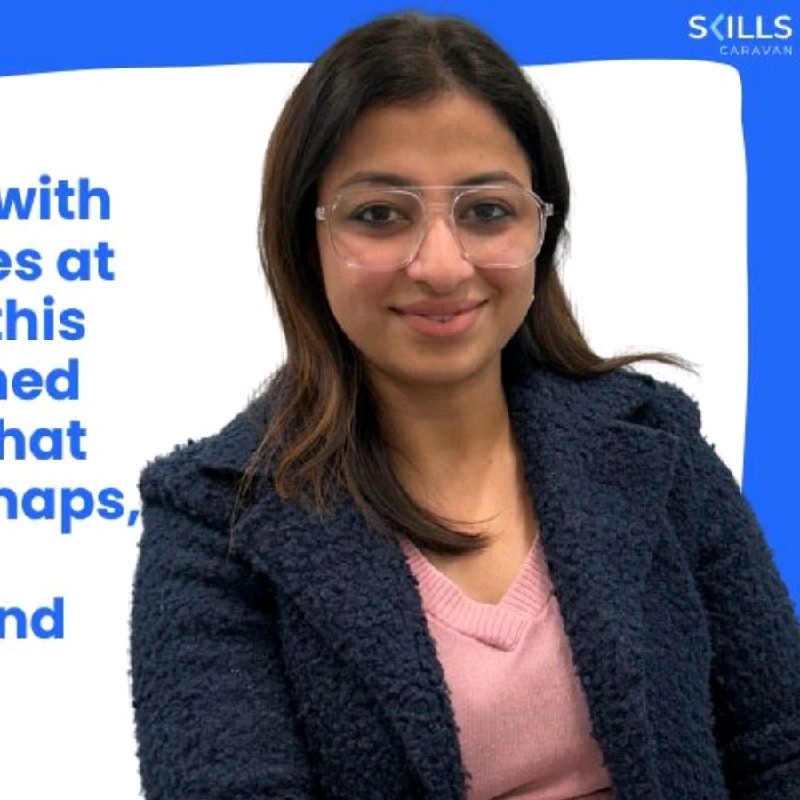

Shreya Verma is the VP of Product and Customer Success at Skills Caravan, where she leverages her decade-long expertise in learning & development (L&D) and human resources to shape an impactful, learner-centric platform. Her deep understanding of user needs, honed through hands-on L&D roles in leading companies, empowers her to translate insights into high-engagement interventions. At Skills Caravan, she bridges the gap between technology and people, ensuring learning experiences are not only effective but genuinely meaningful.





.png)
.png)
.png)
%20(1).png)
.png)


.webp)







Skillsoft is a global leader in corporate learning, providing digital training and education solutions to help businesses improve workforce productivity, reduce risk, and increase innovation.

FinShiksha provides a practical and industry-relevant approach to finance education, with courses designed by industry experts and delivered through interactive and engaging methods.

Wall Street Prep offers best-in-class financial training for aspiring finance professionals and corporate clients.

Udemy Business offers an unparalleled learning experience for organizations looking to upskill their workforce with over 155,000 courses taught by expert instructors.


.webp)


